

Sun in CancerMoon in LibraFirst Quarter
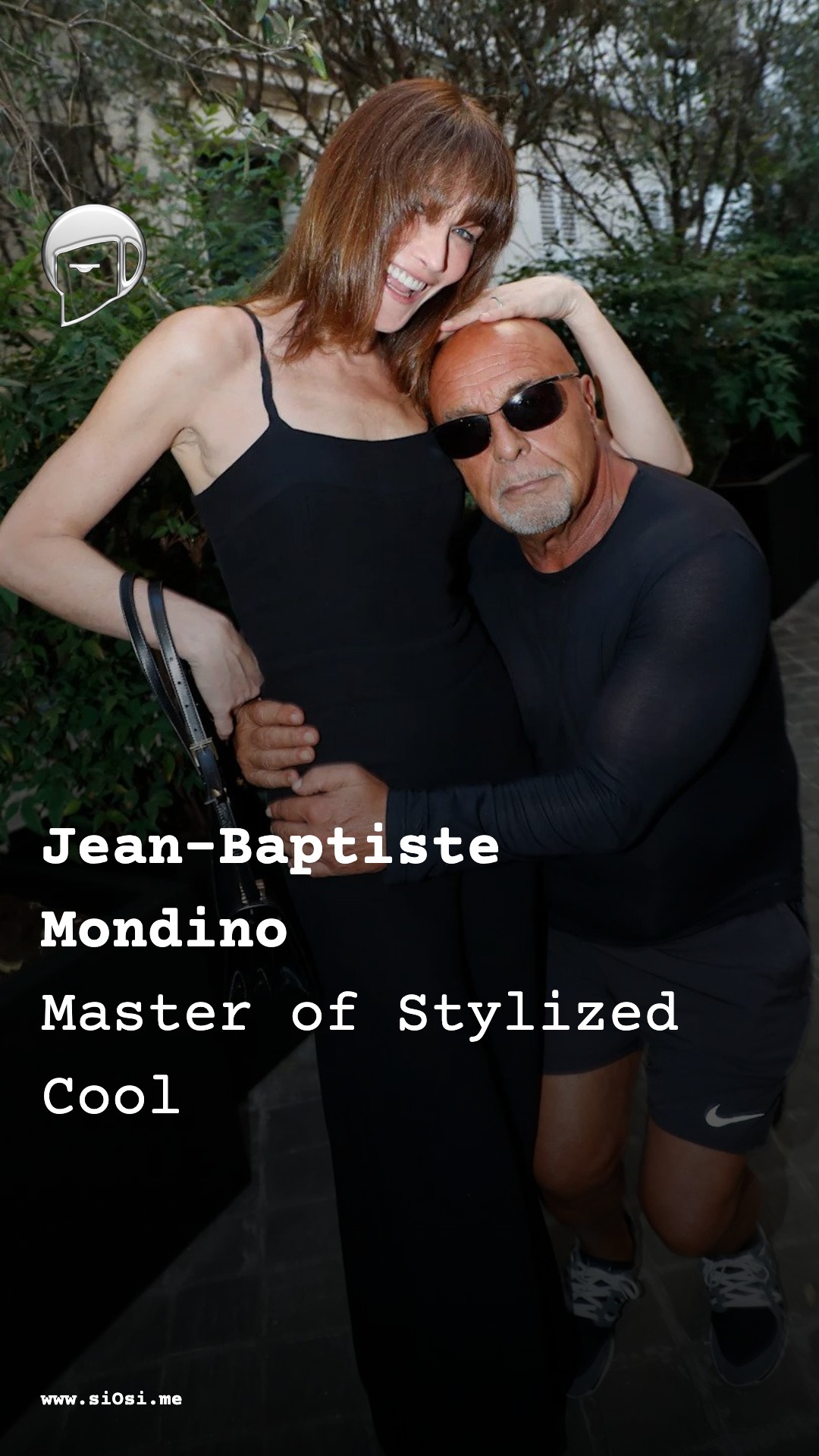
Jean-Baptiste Mondino: Master of Stylized Cool
Born on July 21, 1949, Jean-Baptiste Mondino redefined beauty and style with his signature precision of line, stark high-contrast lighting, and cool erotic reserve. His fashion photography and music videos treat the body as architecture—sharp silhouettes, graphic makeup, and sculptural hair creating images of polished tension and urban glamour. At síOsí we honor this legacy of disciplined sensuality and minimalist intensity that still shapes how we see desire and design today. From metallic highlights on leather to choreographed stillness that pulses with inner rhythm, Mondino’s work reminds us that true style is a composed state of being, never excess.
Jean-Baptiste Mondino, born 21 July 1949 in Aubervilliers, arrives in visual culture as a practitioner of voltage: images charged with sleek danger, erotic clarity, and a knowing, almost musical minimalism. His work sits at the intersection of fashion photography and the music video, and in that crossing he reshaped how beauty, style, and the body could appear—cool, stylized, hyper-controlled, yet pierced by feeling.
Visual language: line, light, and the choreographed body
Mondino’s imagery is built on precision of line and severity of composition. Photographs and videos lean toward clean, graphic frames: a single figure against a pared-down background, an object or gesture isolated so that it becomes almost ideographic. Bodies are often arranged as if they were typography—curves and angles standing in for letters, punctuation, rhythm.
-
Silhouette His silhouettes tend to be sharply cut: shoulders squared or exaggerated, waists cinched or erased, limbs extended so they form diagonals that slice the frame. Clothing often reads as contour rather than mere garment: tailored jackets, sculptural dresses, athletic wear that maps muscle and bone. He favors silhouettes that are either rigorously architectural or provocatively stripped down, making the body itself the primary shape.
-
Light and contrast Mondino’s signature is a crystalline use of light: high contrast, often with a stark, studio-like clarity that removes visual noise and leaves only essential form. Highlights on skin and fabric are carefully controlled so that a cheekbone, a leather lapel, or the curve of a calf becomes the focal point. Shadows are not atmospheric blur but deliberate, graphic masses—black as punctuation. This gives his work a modernist discipline: even sensual scenes feel edited, tightened, never loose.
-
Color and monochrome While he works in both color and black-and-white, his approach to color is similarly selective. Palettes tend to be restricted: a dominant red against neutrals, pure white against black, a metallic glint against flesh tones. Color is used to mark attitude—red as aggression or erotic charge, whites as cool, antiseptic futurism, blacks as urban sophistication. In monochrome work, gradation is minimal; there is a crisp division between tones that enhances the sense of control and stylization.
-
Movement and stillness In his music videos, movement is choreographed with photographic rigor: gestures repeat, bodies loop through poses like visual riffs. The camera often lingers on a single action—a head turn, a cigarette exhale, a step—in a way that makes movement feel sculptural. Even when the frame is in motion, the mood is not chaotic; it is composed, like dance. In still photography, Mondino’s subjects frequently hold poses that feel mid-gesture—caught between action and stasis—suggesting an inner tempo, a beat the viewer can almost hear.
Texture, fabric, and the surface of desire
Mondino is acutely sensitive to surface—the texture of skin, fabric, metal, hair. Beauty in his images lives in the tactile.
-
Fabric and fashion His collaborations with major fashion houses place garments not as soft background but as protagonists. Latex, leather, silk, technical sports fabrics, and sharply tailored wool all appear with almost fetishistic clarity: creases, reflections, seams made visible. Clothing is often styled to emphasize a specific sensation—tightness, gloss, weightlessness. A coat may hang with monastic severity; a dress may cling like liquid. Mondino’s camera turns fabric into touchable idea: we imagine how it feels, cool, heavy, resistant, yielding.
-
Skin and cosmetic surface Skin in his work is usually polished: makeup is graphic rather than diffused, with defined brows, strong mouths, and sculpted cheekbones. There is little interest in soft-focus prettiness; instead, faces are sharpened, almost engraved by light. The result is an aesthetic where the human surface becomes both inviting and armoured—sensual but not vulnerable. Highlights on collarbones, shoulders, and hands give a sense of corporeal reality while maintaining a stylized distance.
-
Hair as architecture Hairstyles are frequently treated as structural elements—sleek bobs, razor-sharp cuts, or heightened volume that extends the silhouette. Hair is rarely incidental; it carries attitude. Slicked-back styles read as severity and control, while more sculptural or unconventional arrangements suggest artifice and performance. In all cases, hair contributes to Mondino’s overarching interest in the body as constructed form.
Emotional presence: cool eroticism and ironic glamour
Emotion in Mondino’s work operates on a double register: surface cool overlaying latent heat. The viewer senses desire, tension, and play, but for the most part these feelings are delivered with a composure bordering on aloofness.
-
Erotic reserve His images often flirt with eroticism—bare skin, suggestive poses, fetish-adjacent styling—but they do so with an emotional restraint. The gaze may be direct, challenging; mouths may be slightly parted, bodies angled in invitation. Yet the framing feels deliberate, almost clinical. Desire becomes an aesthetic object, looked at rather than surrendered to. This distance has been crucial in shaping late 20th-century and early 21st-century fashion imagery, where sexuality is stylized rather than purely emotive.
-
Irony and self-awareness Mondino’s visual language frequently carries a trace of irony: an awareness that glamour is performance. The deliberate poses, the heightened styling, the theatrical lighting all suggest that beauty is being staged, examined, perhaps gently teased. This makes his work feel contemporary even decades later; it rarely lapses into naive romanticism. Instead, beauty is a game with rules we are invited to study.
-
Urban sophistication The emotional climate is often metropolitan—cool night air, club interiors, studio spaces, glossy surfaces. There is little pastoral softness. His imagery suggests cities, music, fashion shows, hotel corridors, polished floors. The feeling is of being inside culture’s constructed spaces, where bodies move with purpose and attitude. This has helped cement Mondino as a visual architect of pop-modern urban style.
Philosophy of beauty and the body
Though Mondino is primarily a visual practitioner rather than a written theorist, his consistent aesthetic suggests a tacit philosophy.
-
The body as designed object The human figure in his work is treated as something that can be edited, refined, engineered through styling, lighting, and posture. Beauty is not framed as natural spontaneity; it is orchestrated. The body becomes a site of design, aligned with the constructed nature of fashion and pop music imagery. This aligns with broader late 20th-century shifts toward understanding identity and appearance as performative rather than innate.
-
Minimalism as intensity Mondino tends to strip away environmental detail to intensify the figure. Backgrounds are often plain or tightly controlled; props are few; color fields are limited. This minimalist approach is not about softness or calm but about concentration—forcing attention onto a gesture, a garment, a face. Beauty is something distilled, not excess.
-
Spectacle with containment Even in videos that lean toward spectacle, Mondino avoids visual sprawl. Choreography, framing, and editing impose structure. This suggests an attitude that beauty and style gain power from containment: the more precise the image, the more potent the impact. It is a kind of formalism applied to glamour.
Influence on fashion and pop visual culture
For more than four decades, Mondino’s images have been described as having “radically changed the face of the rock, pop and fashion industry,” a formulation that points to their cultural reach. His photographs and videos have appeared in influential fashion and style publications—The Face, i-D, Elle, Numéro, Vogue, Vanity Fair, T Magazine—places where visual language is forged and disseminated.
Visually, his impact can be understood as:
-
Normalization of hyper-stylized cool The cool, composed eroticism he champions has become a default mode for a great deal of editorial and music-related imagery: bodies lit with studio clarity, styled with both polish and edge, emotion expressed through micro-gestures rather than overt narrative.
-
Fusion of fashion and music aesthetics By bringing fashion’s disciplined stylization into music videos, Mondino helped erode boundaries between the runway, the magazine spread, and the pop performance. This fusion shaped how artists and brands imagine the body in motion: as an extension of editorial pose, kinetic but controlled.
-
Iconic pop-cultural imagery Several of his portraits and campaigns, compiled across three books—“Déjà vu” (1999), “Two Much” (2005), and “Three at Last” (2014)—have entered the visual canon of contemporary culture. Their endurance suggests that Mondino’s aesthetic, while of its time, also continues to resonate, particularly in the ongoing appetite for sleek, high-contrast, emotionally reserved glamour.
How the work feels today
Viewed now, Mondino’s work carries a cool, electric nostalgia. It evokes an era when fashion photography and music videos were dominant laboratories of style—yet it does not feel dated so much as archetypal.
- There is a polished tension in his images: the viewer senses desire and attitude, but they are framed with such discipline that the feeling becomes distilled, almost crystalline.
- The glow is metallic more than soft—reflections on leather and silk, shine on lips or eyes, studio lights cutting through darkness. Beauty appears as a sharpened edge, a line of light on a curve of bone.
- Emotion is contained, poised, inviting the viewer to read small signals: the angle of a chin, the firmness of a stance, the set of a mouth. This restraint continues to feel contemporary in an age saturated with more explicit, unfiltered self-display.
- The overarching impression is of a world where bodies know they are being looked at and have learned to choreograph that gaze—where style is a form of alertness, a way of inhabiting light and clothing with intelligence.
Jean-Baptiste Mondino’s visual legacy, then, is an enduring vocabulary of stylized cool, disciplined sensuality, and urban glamour—a language of beauty that treats the body as both subject and design, inviting us to see style not simply as adornment, but as a carefully composed state of being.