
Sun in LeoMoon in SagittariusWaxing Gibbous
Iman: The Sovereign Silhouette Who Rewrote Beauty
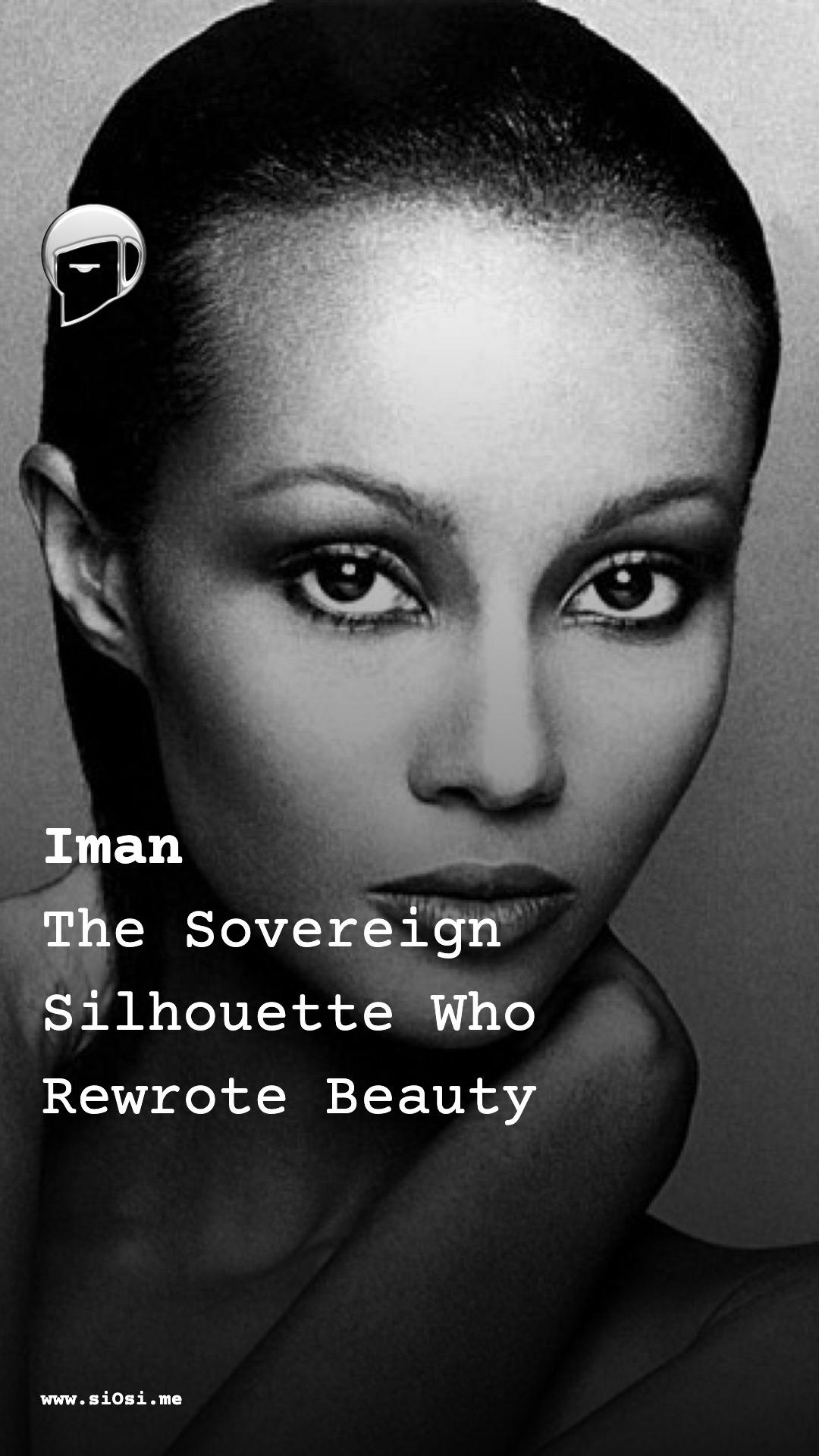
Born on this day in 1955, Iman arrived like a blueprint for modern glamour—tall, columnar lines, skin that demanded richer palettes, and a gaze of serene authority. From her gliding runway cadence to the way she turned every foundation mismatch into a call for deeper shades, she shifted fashion from exotic spectacle to self-possessed power. Her bone structure invited architectural contouring, her hair moved from romantic volume to sleek control, and her IMAN Cosmetics line treated dark skin as the primary canvas, not an afterthought. She refused token seats at the table and asked instead for the whole structure rebuilt. Today we celebrate the woman whose presence made luxury feel warmer, more mineral, and infinitely more inclusive.
Iman’s presence in fashion is a study in architectural beauty: long, lucid lines; tawny, light‑catching skin; a gaze that moves like a blade and then softens into warmth. Her impact is less a single trend than a re‑calibration of what glamour looks and feels like.
1. Silhouette and bodily presence
From the late 1970s onward, Iman’s body became a kind of visual axis around which designers reorganized their sense of proportion and poise.
-
Line and proportion She is tall, with elongated limbs and a finely structured torso, giving clothes a vertical, almost columnar clarity. On the runway and in editorial images, garments hang from her like architectural planes: draped silks fall in uninterrupted sheets; sharply tailored jackets turn her shoulders into clean, angular horizons. The effect is of a graphic, upright silhouette—never waifish, never fragile, but lean, sovereign, and measured.
-
Movement Her walk is not the loose sway of later runway tropes but a controlled, gliding cadence: shoulders back, spine lifted, steps neither hurried nor languid. This lends even the most fluid fabric a sense of deliberate intention. Chiffon, lamé, and satin follow her motion like a tide on a seawall—moving, but always held in check.
-
Emotional posture In photographs, her posture alternates between regal stillness and a subtle, animal alertness. Chin slightly lifted, neck long, she appears perpetually composed, as if already installed in the frame rather than entering it. That composure changed the emotional tone of fashion imagery around Black beauty: away from exoticized spectacle and toward sovereign self‑containment.
2. Skin, color, and light: the redefinition of "nude"
Iman’s most enduring visual revolution is chromatic: the way her skin tone demanded, and eventually received, new palettes in fashion and beauty.
-
Skin as central surface In early editorials, makeup artists and photographers had to confront the inadequacy of existing “flesh” tones, which defaulted to pale beige. Foundation shades mismatched; lighting was calibrated for lighter skin, flattening the depth and radiance of her complexion. Her presence quietly exposed these biases: every image of her became a problem to solve—how to honor dark skin with correct foundation, contour, and light.
-
IMAN Cosmetics and shade philosophy When she later founded IMAN Cosmetics, the brand’s specific focus on women of color was not an add‑on but a correction to the visual field. The line introduced deeper and warmer foundations calibrated for undertones—golden, red, neutral—treating darker complexions as a primary canvas, not a deviation. “Nude” ceased to be a single pale tone and became a spectrum; this semantic and visual shift reverberated through the wider industry.
-
Color stories and styling Designers responded to her presence with richer color stories: saffron, oxblood, emerald, ultramarine against her skin created high‑contrast drama; conversely, earth tones—camel, chocolate, rust—yielded a quiet, tonal sophistication. The emotional register of these combinations is deep and grounded, replacing the light, sugary palette often associated with Eurocentric beauty with something more mineral, sun‑baked, and resonant.
-
Lighting aesthetics Photographers learned to shape light around her: side lighting to carve cheekbones and jaw; soft diffused light to draw out golden undertones. This experimentation contributed to a broader understanding that dark skin needs light not to be corrected, but celebrated—creating a warmer, more sensuous visual atmosphere in fashion photography.
3. Face, makeup, and the geometry of glamour
Iman’s face is almost mathematically composed: strong cheekbones, a firm jawline, wide‑set eyes, an elegantly straight nose. Beauty ideals recalibrated themselves around this geometry.
-
Contour and structure Her bone structure lent itself to pronounced contouring decades before that technique became ubiquitous. Makeup artists deepened hollows beneath her cheekbones, sharpened the jaw, and highlighted brow bones and the bridge of the nose, producing a look of sculpted luminosity. This normalized strong, angular facial features as glamorous, countering softer, doll‑like ideals.
-
Eyes and brows Her eyes, often framed with kohl or smoked shadow, anchor the face with intensity. Brows are generally defined and sleek—never overly arched, more architectural than ornamental. The cumulative effect is of a gaze that reads as decisive, knowing, and unsentimental, giving fashion imagery a cooler, more intellectual sensuality.
-
Lips and chromatic mood Across decades, her lips shift from deep berries and oxblood to neutral browns and soft roses. Darker hues infuse images with nocturnal glamour; understated tones paired with strong eyes register as modern, urban, and precise. The oscillation between drama and restraint maps onto the industry’s evolving moods, but the constant is an emphasis on balance and control rather than excess.
4. Hair: from romantic volume to sleek power
Iman’s hair has moved through multiple eras, each articulating a different emotional stance toward beauty and identity.
-
Voluminous curls and waves In her early career, she is often seen with full, textured waves or curls—hair that moves, breathes, and catches light. This volume frames her face in a halo of motion, softening the severity of high fashion styling and lending images a romantic, cinematic softness. The interplay of texture and tailored clothing produced a compelling tension: wildness contained by structure.
-
Sleek, straight, and sculpted styles Later, she appears frequently with straight, glossed hair—center‑parted or pulled back—rendering her profile even more architectural. The sleekness compresses visual noise, highlighting her facial structure and the cut of the clothes. The emotional impression is one of clarity and control, consonant with her public image as a businesswoman and advocate.
-
Wigs, color, and transformation She has embraced wigs and color shifts—honey blondes, rich browns, sometimes sharper, darker tones—using hair as a medium of transformation rather than mere ornament. This willingness to move between looks underscores a philosophy of beauty as strategic fluidity: identity is not fixed, but can be re‑staged visually as needed.
5. Philosophy of beauty and the body
Iman’s aesthetic impact is inseparable from her stance toward representation, equity, and self‑definition.
-
Refusal of exoticism When first discovered, she was frequently framed as an exotic rarity—a narrative she resisted. She insisted on being seen not as a curiosity, but as a professional with agency. This resistance subtly altered the emotional tone of her images: they do not invite voyeuristic fantasy, but demand respectful looking. The body on display is not surrendered to the gaze; it meets it on equal terms.
-
Equal pay and dignity in beauty She became known for demanding equal pay to her white counterparts, a stance that carried aesthetic implications. By aligning beauty with dignity and economic recognition, she recast glamour as something earned and negotiated, not bestowed. The aura surrounding her images is consequently less submissive, more self‑possessed and contractual.
-
IMAN Cosmetics as visual activism Her cosmetics line is often described as pioneering for women of color. It did not merely serve an underserved market; it reasserted that dark skin deserves exacting, luxurious attention. The philosophy is clear: beauty is inclusive precision, and the body—particularly the Black female body—is worthy of bespoke care. This ethos introduced a warmer, more generous emotional texture into beauty culture for people historically underserved.
-
Critique of the fashion “table” In a British Vogue interview, she speaks of being "done with the seat at the table" and suggests dismantling the table altogether to reset fashion’s agenda. Visually, this translates into a rejection of tokenistic imagery—single “diverse” faces in otherwise homogeneous casts—and a push for entirely reimagined ensembles, runways, and campaigns. The emotional temperature of this stance is quietly radical: an insistence that beauty structures themselves must be rebuilt, not merely accessorized with inclusion.
6. Emotional atmosphere of her imagery
Iman’s legacy is not only visible in products or policies; it resides in a particular emotional atmosphere her images still evoke.
-
Serene authority She rarely projects overt exuberance; instead, there is a persistent calm. Even in elaborate couture, she appears centered, grounded, as if the clothes orbit her rather than the reverse. This serenity teaches an alternative emotional script for glamour: less giddy elevation, more composed sovereignty.
-
Distance and intimacy Her beauty is often described as “striking,” a word that implies distance; yet in many portraits, a subtle softness at the mouth or eyes invites intimacy. The tension between formal grandeur and human warmth gives her images longevity: they feel both iconic and reachable, monumental yet undeniably human.
-
Contemporary resonance Today, when one looks at her early editorials and campaigns, the dominant sensation is that of a door having been opened: an image of a Black woman treated not as token or trend, but as central, canonical. The glow is historical and emotional at once—a sense that standards were shifted, palettes expanded, and the visual vocabulary of beauty widened permanently.
7. How her aesthetic changed fashion’s visual language
Iman’s influence can be traced in several enduring visual shifts:
-
The normalization of deep skin tones in high luxury contexts Her repeated presence on major magazine covers and in high fashion campaigns staged dark skin as luxury’s native companion, not its occasional accent. This altered casting practices and the emotional assumptions behind them: opulence no longer belonged exclusively to pale bodies.
-
Architectural femininity Her combination of height, bone structure, and controlled movement contributed to a recalibrated ideal of femininity that was strong, linear, and commanding, rather than fragile or purely ornamental. Contemporary “power dressing” and the celebration of angular, tailored silhouettes owe part of their emotional vocabulary to this shift.
-
Beauty as self‑authored narrative Through her career decisions, activism, and entrepreneurship, she modeled an attitude in which beauty is self‑authored, not passively consumed. The visual corollary is a generation of imagery in which models and muses are framed as collaborators, thinkers, and agents—evident in more candid, introspective portraits and campaigns that foreground personality over anonymous perfection.
Iman’s birth in 1955 marks the arrival of a figure who would, decades later, alter fashion’s chromatic range, bodily ideals, and emotional timbre. Her image carries an enduring glow: the warm radiance of dark skin correctly lit; the sharp pleasure of long lines and tailored edges; the quiet, unhurried confidence of a woman who has insisted that beauty account for her fully.