

Sun in LeoMoon in CapricornWaxing Gibbous
Eggleston’s Everyday Color: Beauty in the Ordinary
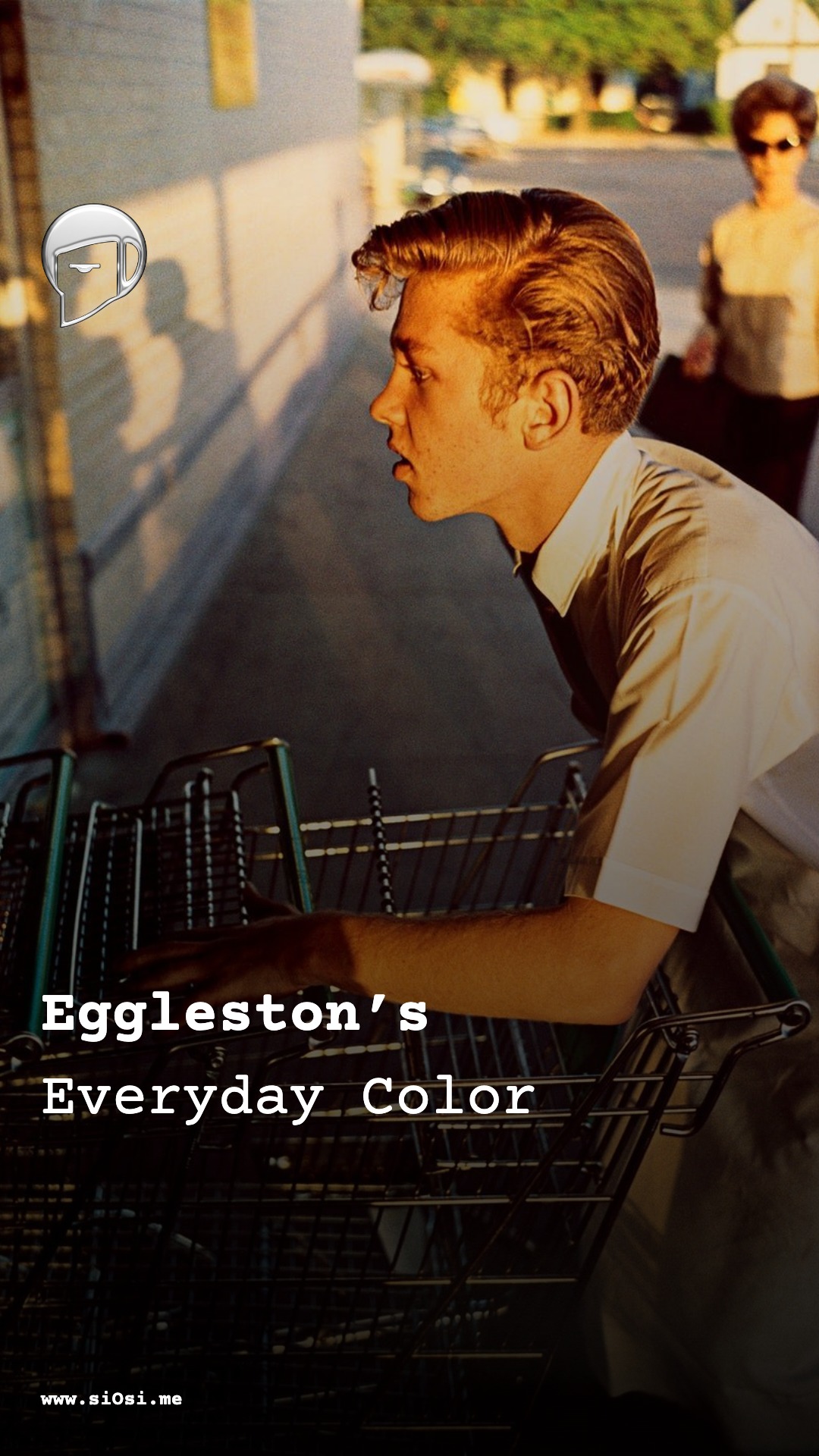
Today we celebrate William Eggleston, born 27 July 1939, whose revolutionary eye transformed the way we see beauty. By treating the everyday South—vinyl seats, neon signs, roadside diners—with the same reverence once reserved for grand portraits, he made color itself an emotional atmosphere. His dye-transfer reds feel heavy and intimate, his blues cool and distant, turning ordinary textures into quiet style statements. For síOsí, Eggleston’s lesson is clear: true elegance lives in how a body leans against a gas pump, how a faded dress catches fluorescent light, how posture and place speak louder than perfection. His photographs remind us that beauty is found, not staged—resting gestures, ambient presence, and the poetry of the unremarkable. Step into his world and see your own reflection in the overlooked surfaces of daily life.
William Eggleston’s birth on 27 July 1939 marks the arrival of a sensibility that would, decades later, alter the color, texture, and emotional temperature of photographic seeing. His work infused the everyday American landscape—especially the South—with a new chromatic gravity, turning ordinary streets, signs, and interiors into quiet theatres of mood and light.
Eggleston’s aesthetic impact lies less in spectacle than in an exacting, almost ascetic attention to visual nuance. From the 1960s onward, he approached the banal as if it were liturgical: tricycles, kitchen appliances, parking lots, roadside diners, and suburban façades were treated with the same compositional seriousness as historical painting. In doing so, he shifted the perceived locus of beauty—from idealized bodies and grand scenery to the minor, neglected corners of daily life—changing how style and visual presence could be understood.
Color as Atmosphere: The Emotional Weather of Hue
Eggleston is often described as a pioneer of color photography as art, and this is accurate in a technical sense, but aesthetically his true innovation was treating color as atmosphere, not decoration.
- He worked extensively with dye-transfer printing, a process that yields saturated yet controlled hues—deep reds, electric blues, acid greens—that do not shout so much as hum with internal tension.
- The famous red ceiling photograph, for instance, renders the color as almost oppressive: the red is not joyous but claustrophobic, a velvet weight pressing down on the viewer.
In his images, color has emotional timbre:
- Reds tend to feel combustible, sticky, as if they might stain the air.
- Blues are often hard and enamelled—on cars, signage, painted wood—suggesting distance, chill, or a mechanical cool.
- Greens lean toward chemical rather than pastoral, the green of plastics, fluorescent lighting, lawns too perfectly clipped.
This chromatic register changed fashion and visual culture by expanding the vocabulary of “beautiful” color beyond harmonious palettes and flattering tones. Eggleston demonstrated that beauty could reside in slightly sickly hues, in awkward contrasts, and in the chromatic accidents of cheap manufacture—plastic lawn chairs, faded billboards, vinyl upholstery. This influenced subsequent art and fashion photography, where saturated and “uncomfortable” combinations of color became a way to signal psychological complexity rather than error.
Silhouette, Line, and the Everyday Body
Though Eggleston rarely worked in the fashion arena, his photographs carry a strong sense of silhouette and posture, particularly in the way human figures are embedded in their built environments.
- People often appear as incidental presences—slight figures at the edge of the frame, leaning by a car, seated in a diner, walking down a sun-struck street.
- The bodies are not posed but caught in transitional gestures: mid-step, half-turned, waiting, slouching. These in-between postures convey an emotional register of boredom, restlessness, or quiet anticipation.
The silhouettes are typically:
- Unidealized: soft midsections, ordinary clothing, utilitarian shoes.
- Segmented by architecture: door frames slice torsos; awnings cast shadow bands; car roofs truncate figures.
This approach subtly reorients the relationship between the body and style. Beauty is no longer tethered to perfected physiques or orchestrated poses; it resides in how a body occupies space—in the angle of a shoulder against cheap vinyl, the way a dress falls when a person leans on a gas pump, the slight curve of a back against fluorescent light.
For fashion and visual culture, this sensibility opened space for an aesthetics of resting gestures and ambient presence. Eggleston’s world is populated not by performers but by people simply being: the way they stand, slump, or drift through color becomes a kind of choreography of ordinary grace.
Surfaces, Textures, and the Tactility of the Ordinary
One of Eggleston’s most profound contributions is his treatment of texture—plastics, paints, metals, fabrics—as the true protagonists of the frame.
His photographs linger on:
- Car exteriors and interiors: lacquered paint, cracked dashboards, vinyl seats with a faint shine of wear.
- Domestic surfaces: linoleum floors, patterned wallpaper, formica tables, refrigerator doors, tangled electrical cords.
- Street textures: asphalt, oil stains, rusted signs, peeling posters, dirt on tires.
He tends to favor close or mid-range views, allowing surfaces to occupy large portions of the image. Under his eye, these materials feel almost tactile:
- Vinyl appears sticky, faintly squeaky.
- Linoleum looks slick, slightly cold underfoot.
- Car paint is both alluring and hard, reflecting light in sharp glints.
The emotional effect is a kind of haptic melancholy: a recognition of how cheaply many of these objects were made and yet how deeply they structured daily life. In aesthetic terms, Eggleston sanctifies the era’s materials—mid-century plastics, synthetic fabrics, industrial paints—turning them into a historical record of taste and production.
Contemporary visual culture still draws from this language: the fascination with roadside Americana, motel interiors, neon signage, and “ordinary” décor in editorial photography and film owes much to Eggleston’s insistence that such textures are worthy of poetic, even reverent, attention.
Light, Contrast, and the Drama of the Unremarkable
Eggleston’s light is rarely theatrical in the traditional sense. Instead, he orchestrates an understated drama by allowing natural and artificial light to reveal the quiet strangeness of scenes.
Characteristics of his visual language:
- Daylight that is neither purely golden nor purely harsh, often mid-day brightness that flattens and exposes the flaws in surfaces.
- Fluorescent interiors that cast a faintly green or pallid tone, unsettling in their emotional neutrality.
- Shadows that are precise and unsentimental: they shape geometry rather than romanticize.
His compositions often place the primary subject slightly off-center, letting light fall in ways that feel accidental yet meticulously observed. This creates an emotional vibration between the casual and the deliberate:
- A tricycle in a driveway, lit by sharp sun, becomes monumental.
- A hand near a glass of drink in a diner, illuminated by overhead tubes, becomes intimate yet anonymous.
- A solitary figure at a roadside stand is half-consumed by shadow, emphasizing loneliness without explicit narrative.
These treatments of light and contrast altered the visual grammar of “serious” photography, suggesting that one could generate feeling not through obvious drama but through the subtle interaction of mundane forms with indifferent light. The aesthetic is one of low-key intensity: emotional depth expressed through the way a scene barely demands attention and yet cannot be looked away from once noticed.
Color Photography as Attitude: Philosophy of Beauty and the Body
According to critical accounts, Eggleston’s work was instrumental in establishing color photography as a legitimate art form in the late 20th century. But beneath this historical milestone lies a deeper philosophy of beauty and the body:
- He rejects hierarchy between “high” and “low” subject matter. A rusting car, a dingy corner store, or a cheap lampshade is approached with the same care as a portrait or landscape.
- Beauty is found, not staged. This implies an ethics of looking: to pay attention to what is usually ignored, to grant dignity to the overlooked scene.
His attitude toward the body, to the extent it appears in his work, is similarly democratic:
- People are not aestheticized through makeup, grooming, or fashion stylization; they are simply there, in their environment.
- The body is understood as inhabiting space rather than conquering it—bodies are scaled against architecture, cars, signage, and are often visually subordinated to objects.
This philosophy reframes style as embedded rather than isolated. Clothes, hair, and bodily presence are read in relation to the surrounding infrastructure—the gas station, the kitchen, the roadside diner. There is rarely an idealized figure set apart from context; instead, the visual interest lies in how a shirt’s color echoes a wall, how a hairstyle feels of its time and place, how a posture mirrors the leaning angle of a telephone pole.
In terms of beauty, Eggleston’s work suggests that the aesthetic value of a scene is inseparable from its social and material conditions. The emotional tone is often wistful, sometimes eerie, occasionally tender—but always grounded in the reality of the objects and bodies depicted.
Movement, Stillness, and Emotional Presence
Although photography is a still medium, Eggleston’s images are suffused with a sense of latent movement—the feeling that something has just happened or is about to happen, even if nothing is visible.
- Cars parked at odd angles imply arrivals or departures.
- Empty interiors suggest a recent absence.
- Figures mid-step or mid-turn carry the faint echo of narrative.
Yet the overarching impression is one of stillness—a distilled, suspended moment. This tension creates a particular emotional presence:
- Quiet unease: The strange color of a ceiling, the slightly off-kilter framing, the empty lot at a certain hour, all suggest a world that is familiar yet subtly uncanny.
- Melancholic affection: The care with which he photographs worn signage or aging buildings conveys a kind of love for environments that are in decline or caught between eras.
- Contemplative calm: Despite their occasional eeriness, many images feel patient, neither accusatory nor nostalgic, simply observant.
This emotional climate has had a lasting influence on visual culture. The contemporary fascination with liminal spaces—parking lots at dusk, empty convenience stores, faded suburbs—often carries an Egglestonian undertone: beauty found in environments that are neither purely romantic nor purely bleak, but hovering in a delicate, unresolved mood.
How the Work Feels Today
Viewed today, Eggleston’s work exudes a strange, enduring glow: the color of a world that is partially vanished yet hauntingly recognizable.
- The fashion of the figures—shirts, dresses, haircuts—often appears modest, utilitarian, quietly regional. There is little spectacle, yet their ordinariness now reads as archival: a record of how style unfolded far from catwalks and editorial sets.
- The interiors and streetscapes, once common, now seem almost museum-like. The formica, the neon, the car bodies—all have acquired patina, becoming emblems of a particular mid-to-late-20th-century American vernacular.
Emotionally, the work feels:
- Tender but unsentimental: There is care in the seeing, but little overt nostalgia.
- Electric yet muted: Colors vibrate, but gestures are small; the energy is chromatic rather than kinetic.
- Detached yet intimate: The camera does not intrude, but it lingers close enough that textures and micro-gestures become intensely present.
For contemporary viewers, Eggleston provides not just a way of looking at the past but a way of attending to the present: a reminder that the visual richness of a culture lies in its ordinary surfaces, its habitual spaces, its quiet bodies in transit. His images continue to shape how photographers, stylists, and visual thinkers understand the relationship between color, mood, and the everyday, demonstrating that beauty’s most profound expressions may occur where no one thought to look until someone, with patience and precision, did.