

Sun in CancerMoon in ScorpioFirst Quarter
Born This Day: Oscar de la Renta’s Timeless Soft Radiance
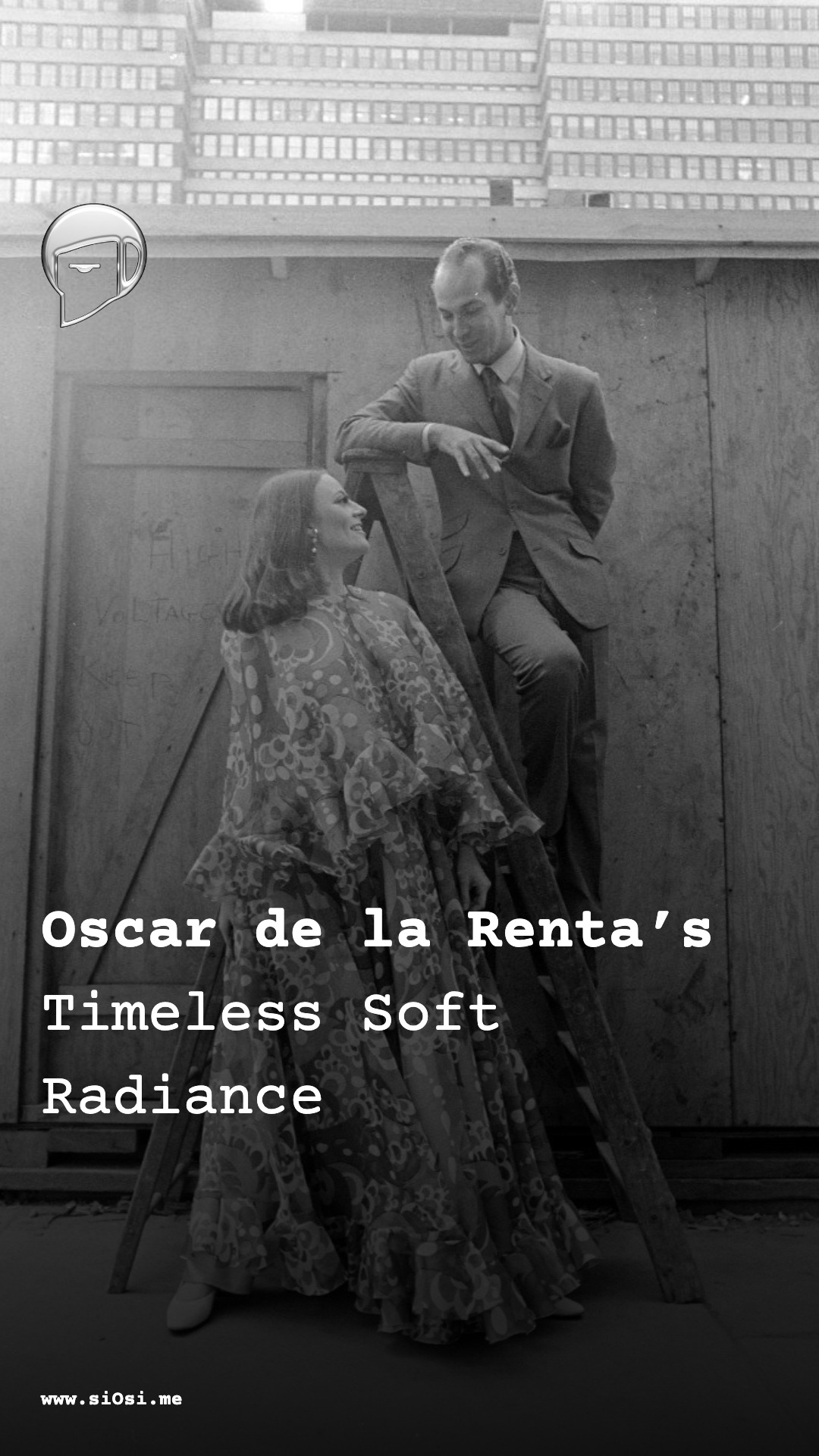
On this day in 1932, Oscar de la Renta was born, leaving behind a legacy of elegant density—clothes that glow rather than shout. His designs refined the body into a poised, luminous silhouette, full-skirted and softly tailored, where femininity felt ceremonial and glamour remained warm and inviting. From satin that catches the light to chiffon that floats with every step, his evening gowns and cocktail attire defined a supple American formality built on movement, finish, and tactility. He balanced structure and softness with fitted waists and controlled volume, creating serenity edged with splendor. Today his vision endures as soft radiance: luminous fabrics, clear contrasts, and ornate surfaces that feel generous, celebratory, and deeply alive—like candlelight on silk.
Oscar de la Renta’s lasting visual legacy is one of elegant density: clothes that do not shout, but glow. His work refined the body into a poised, luminous silhouette—often full-skirted, softly tailored, and richly ornamented—so that femininity felt ceremonial rather than severe, and glamour felt warm rather than brittle.
His aesthetic language was built from movement, finish, and tactility. De la Renta became especially identified with elegant evening gowns and cocktail attire, a field in which he helped define a supple American idea of formality: satin that catches light, chiffon that lifts and floats, embroidery that reads like jeweled handwriting across the surface of a dress. The effect was never merely decorative. His clothes suggested a woman entering a room with composure and ease, the fabric doing much of the emotional work—unfurling, reflecting, softening, framing.
What distinguishes his style most clearly is its balance between structure and softness. The line of the body is honored, but not exposed aggressively; the silhouette often creates a sense of uplift through fitted waists, controlled volume, and a polished fall of cloth. This produces a particular visual emotion: serenity edged with splendor. The body appears not conquered by fashion, but translated into grace.
De la Renta’s beauty philosophy was inseparable from this feeling. His name is associated with a social and aesthetic ideal in which polish, femininity, and refinement are expressed through texture and proportion rather than austerity. In visual terms, this means a preference for luminous fabrics, clear color contrasts, and ornate surface treatments that read as cultivated, generous, and celebratory. His work rarely feels cold; even at its most formal, it carries a human warmth, as if beauty should invite rather than intimidate.
Today, his clothes still evoke a distinctly enduring mood: soft radiance. They feel like candlelight on silk, like movement held just before a turn, like elegance made hospitable. The emotional residue is not nostalgia alone, but assurance—the sense that glamour can be composed, gracious, and deeply alive.