
Sun in LeoMoon in AquariusFull Moon · Buck Moon
Clara Bow: The Flapper Icon Who Lit Up the Jazz Age
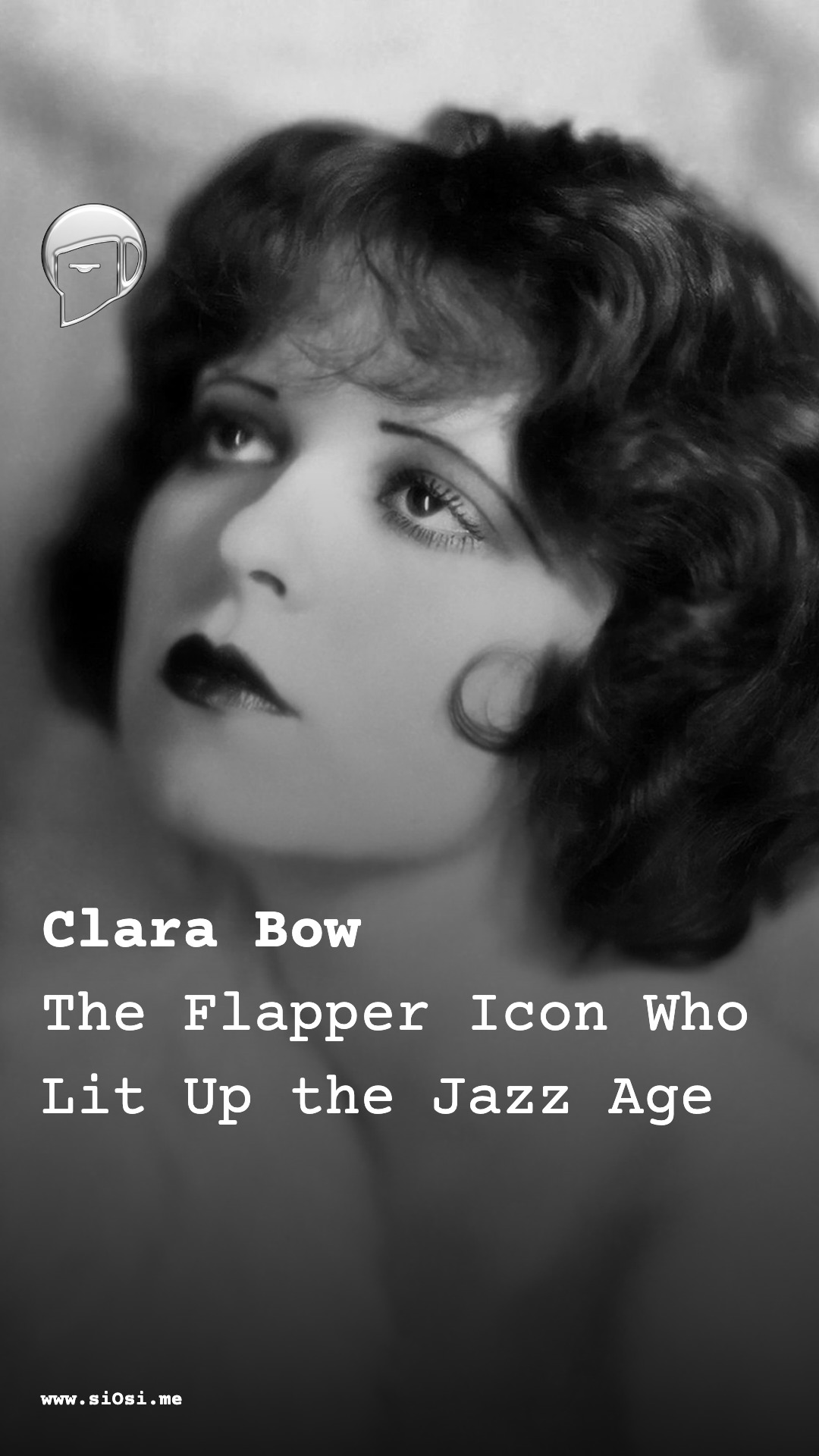
On July 29, 1905, Clara Bow arrived and instantly rewrote the rules of feminine beauty and motion. Her bobbed hair, cupid’s-bow lips, and drop-waist dresses turned the flapper silhouette into pure kinetic joy—fringe trembling, beads flashing, every step a dance. With smoldering kohl-rimmed eyes and an exuberant smile, she became the original “It Girl,” proving that beauty was about lived energy, not stiff tradition. Today her look still feels fresh: light chiffon that moves with you, graphic lips that speak volumes, and the fearless freedom of a short skirt and bare arms. At síOsí we celebrate the woman who made modernity wearable and magnetic.
Clara Bow’s birth on 29 July 1905 marks the arrival of one of the twentieth century’s most decisive visual languages of feminine modernity: a body that moved like jazz, a face drawn in kohl and lipstick into an almost graphic icon, and a silhouette that abandoned weighty tradition for light, mischievous velocity.
Her presence crystallized the flapper aesthetic at the level of feeling as much as form. In Bow, the 1920s discovered a figure of motion: she did not simply wear clothes, she animated them, turning drop‑waist dresses and beaded frocks into instruments of rhythm and flirtation. The Roaring Twenties’ new outline of the female body—a straight, boyish torso, bare arms, a hem that flashed the knee—found its most vivid exponent in her small, spring‑loaded frame. There is a sense, watching her on screen, that fabric is impatient to follow her, as if fringe and chiffon have been waiting centuries for this tempo.
Silhouette, line, and movement
Bow helped fix the flapper silhouette in the public imagination:
- Shape: The typical drop‑waist dress, hanging from the shoulders with minimal emphasis on the bust and hips, transformed the body into a vertical line interrupted only by a restless hem. On Bow, this did not read as androgyny so much as a kind of kinetic youth—her curves suggested softness, but the cut insisted on freedom of motion.
- Line and proportion: Her films are full of short skirts that, by contemporary standards, look modest, but in the 1920s appeared radically abbreviated. The line from bobbed hair down through a long, exposed neck to bare shoulders and slim arms created a new, columnar elegance built for speed rather than display.
- Movement: Dance sequences, playful pratfalls, quick turns of the head—Bow’s performances in silent films such as It make the clothes almost secondary to the movement. She flirts with the camera using her entire body: shoulders tilt, hips twist, knees bend and bounce, rendering the flapper style not static fashion but choreography. Watching her today, one feels less a posed glamour and more a restless, flickering vitality.
Color, texture, and the glow of modernity
The visual palette that surrounded Bow was that of the Jazz Age: shimmering beadwork, satin’s liquid shine, velvety blacks of evening dresses, and the pale tones of daytime frocks that made her dark eyes and lips blaze against the screen’s grayscale.
- Color (translated through black‑and‑white film): In monochrome, the contrast between her light skin and darker, carefully drawn features produced a strong graphic effect: eyes outlined, lips sculpted into a cupid’s bow, hair a dense, geometric mass framing the face. Contemporary accounts and surviving costume pieces suggest she often wore bold, fashionable colors typical of flappers—rich reds, inky blues, metallics—but on film these became tonal values: flashes of light on sequins, deep shadows in pleats.
- Texture: Sequins, beads, and fringe created surfaces expressly designed to catch light whenever she moved. On Bow, fringe trembles with laughter, beads ripple during a jazz step; fabric seems never fully at rest. Even when her dresses are simple, their lightness—silk, rayon, chiffon—allows the body to speak, to register every shrug and sway.
- Emotional atmosphere: The result is a visual world that feels liquid and slightly feverish: the glitter of nightlife, the foggier softness of studio diffusion filters, all wrapped around a face that is bright, open, and emotionally legible. Her “It Girl” persona reads as warm rather than cold, exuberant rather than aloof, giving the glamour an approachable glow.
Hair as manifesto: the bob
Few single gestures have altered the visible language of femininity as starkly as the decision to cut long hair into a bob, and Clara Bow became one of the bob’s most persuasive embodiments.
- Form: Bow’s bob is typically short, often wavy or finger‑waved, hugging the head in sculptural curves. It creates a clear, round frame for her face, a simple, decisive line that replaces the ornate coils and weighty braids of Edwardian styles with something brisk, modern, and urbane.
- Symbolism: According to contemporary commentary and later retrospectives, this haircut was read as a visual rebellion against Victorian constraints—an assertion of independence and sexual self‑possession. On Bow, the bob is never severe; its softness, its slight disarray in some stills, conveys playfulness rather than austerity.
- Emotional impact today: Looking back, the bob carries a twin feeling of nostalgia and radicalism. It evokes smoky jazz clubs and speakeasies, but it also still feels like a cut that announces a decision: to live visibly, to move freely, to author one’s own image.
Make‑up: the drawn face of desire
Bow’s make‑up crystallized a new cosmetic vocabulary of the urban young woman:
- Eyes: Her eyes were emphasized with dark liner and shadow, creating a “smoldering” look that sources note as highly influential. On silent film, these eyes become the primary communicative instrument—they flash, soften, widen with delight or pain, and the dark rims heighten the drama of every expression.
- Lips: The cupid’s bow mouth—small, sharply defined, often painted in deep tones—became a hallmark. The upper lip is drawn into two pronounced peaks; the overall effect is at once childlike and sensuous. Bow’s smile often breaks the precision of this contour, suggesting that the painted mouth is a mask she can drop at will.
- Face and skin: Her complexion appears smooth and pale on film, creating a high contrast with dark features. The face is a stage for emotion, not an impassive surface; the make‑up is expressive, almost illustrative, giving each mood a sharply visible outline.
As beauty culture expanded through magazines and advertising, women imitated these choices—bobbed hair, darkened eyes, shaped lips—turning Bow’s screen persona into a shared language of everyday glamour. The emotional charge of this look today lies in its clarity: a face openly designed to be seen, interpreted, and desired, in an era when such visibility was itself a contested freedom.
Clothing: the flapper wardrobe as attitude
Bow’s wardrobe in film and publicity photographs presents a compressed handbook of flapper fashion:
- Drop‑waist dresses: Hanging low on the hips, these dresses loosen the traditional cinched waist, visually suggesting ease, lack of constraint, and youth. They flatten hierarchy in the body—no part overly honored or controlled—allowing the wearer to run, dance, sit cross‑legged, to exist in space with less ceremony.
- Shorter hemlines: Skirts hovering around the knee made the legs visible as active limbs rather than merely modestly concealed supports. On Bow, this visibility often reads as joyfully unselfconscious; she appears ready to sprint or leap into a car, rather than carefully glide.
- Cloche hats and accessories: The close‑fitting cloche skims the skull, echoing the bob’s rounded line and reinforcing a sleek, modern outline. Long strings of beads, feathered headbands, and slim cigarette holders extend and punctuate the body’s lines, adding small arcs and verticals that accentuate movement.
- Fabrics: Lightweight silks, satins, and early synthetic materials were preferred for their drape and shine. Their responsiveness to motion—crumpling, swinging, flashing under light—turned the wearer into a living instrument for visual spectacle.
Fashion historians note that Bow “epitomized the flapper style, which represented the newfound freedom and rebellion of women,” and her clothing choices were read collectively as an invitation to experiment, to abandon corsets, and to embrace a more youthful, energetic silhouette.
Emotional presence: the “It Girl” as feeling‑image
The term “It Girl,” first popularized in connection with Bow’s performance in the 1927 film It, described a magnetic combination of charm, sex appeal, and vitality. Her emotional presence is as central to her aesthetic legacy as any garment or haircut.
- Screen affect: Bow personified the Roaring Twenties’ exuberance—playful, audacious, but also vulnerable. She could leap from comedic mischief to sudden tenderness with a few shifts of expression, making the flapper more than a caricature of carefree hedonism.
- Body language: Her posture is rarely rigid; shoulders slope and lift, hands fidget, hips cock at angles that suggest curiosity rather than pose. She is often slightly forward, leaning into the world instead of reclining away from it.
- Sex symbol with warmth: Contemporary accounts describe her as the decade’s leading sex symbol, yet the quality of her allure is animated rather than statuesque. She embodies desire as motion and spontaneity, not frozen perfection.
Seen today, her work carries a poignant brightness: the sense of a young woman discovering, through cinema, how fully she can occupy the image, even as the industry that made her would later prove harsh and unstable. There is a bittersweet shimmer to her films—the joy of a newly liberated body, the vulnerability of a face that offers itself completely to the gaze.
Philosophy of beauty and the body (as inferred through image)
Bow did not leave a codified beauty manifesto, but her visual choices and roles outline an implicit philosophy:
- Beauty as lived energy: The emphasis on movement, on clothes that facilitate rather than hinder action, suggests an understanding of beauty as kinetic, situational, and social.
- Rejection of Victorian constraint: Her bobbed hair, short skirts, and bold make‑up collectively reject the moralized, heavily structured body of the previous era. Beauty becomes less about respectability and more about self‑expression, pleasure, and participation in modern life.
- Visibility without apology: Her image embraces being seen—on screens, in magazines, in public spaces—as a condition of modern womanhood. The body is not hidden but offered, not as surrender but as assertion: “this is who I am in this moment.”
In fashion history, Bow’s style is often described as embodying the spirit of a generation “eager to break free from traditional norms,” making her both a mirror and a catalyst of changing attitudes toward the body.
How Clara Bow’s aesthetic feels now
Today, Clara Bow’s visual language still radiates a light, nervous joy:
- There is the gleam of beaded dresses caught mid‑step, the soft architecture of finger‑waved hair, the sharp little drama of dark eyes and cupid’s bow lips.
- There is also a deeper emotional undertow: the sense of a woman inventing herself in real time through clothes, gesture, and expression, under the unforgiving gaze of camera and public.
Her image retains the glow of first modernity—that early, heady phase when freedom still felt new and untested, when a bob and a short skirt could scandalize and thrill in equal measure. Watching her now, one sees not only the history of fashion and beauty, but the history of courage in appearance: the willingness to let the body declare its own era.