
Sun in LeoMoon in AquariusFull Moon · Buck Moon
Terry O'Neill: The Man Who Made Glamour Move
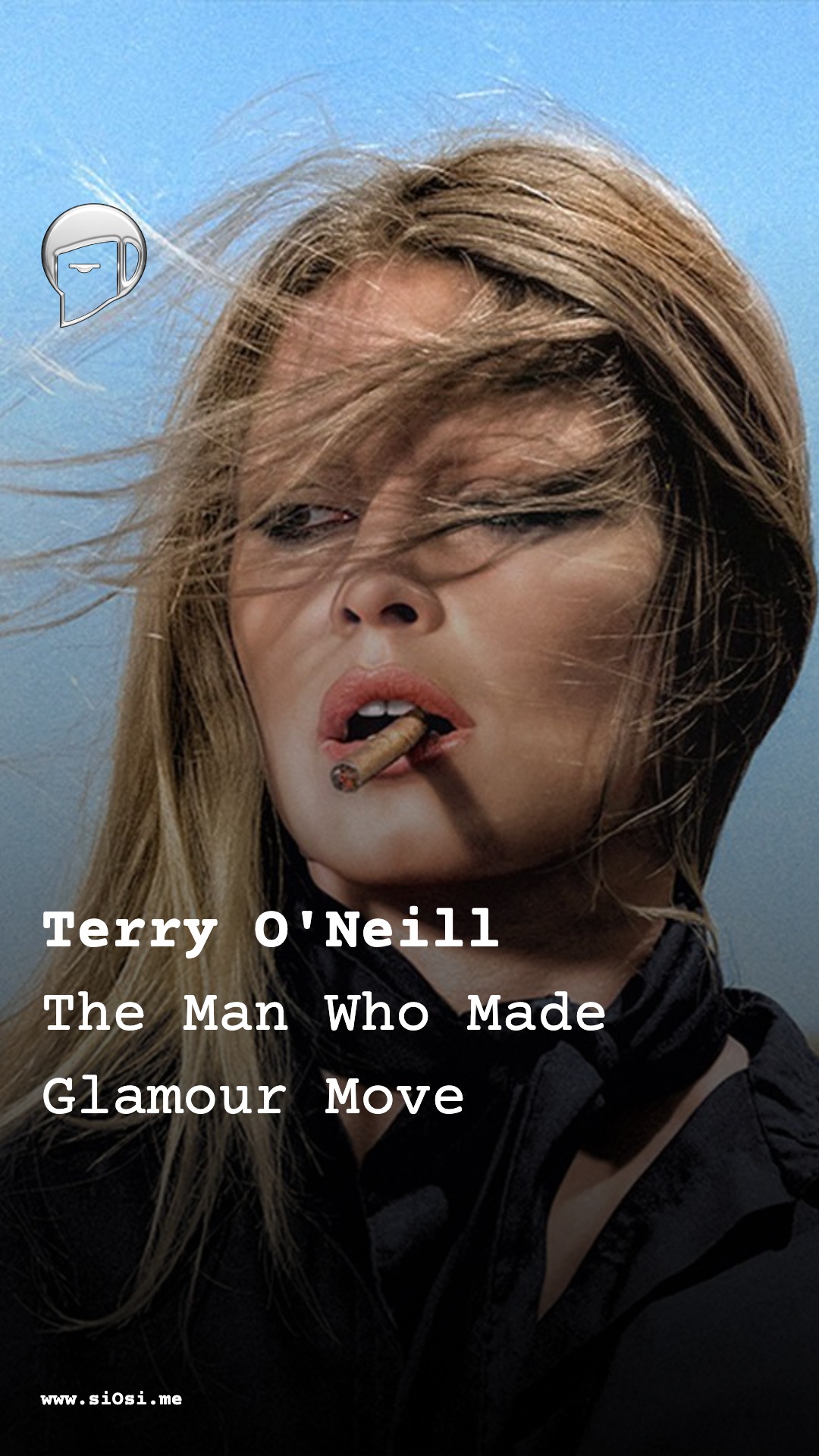
On this day in 1938, Terry O'Neill was born, bringing a jazz drummer's rhythm to photography and forever loosening the stiff lines of 1950s glamour. His candid frames captured the swinging 60s in natural light—subjects slouching, laughing, moving through real London spaces with creased fabrics and lived-in elegance. O'Neill turned ordinary gestures into style statements, proving beauty thrives in the in-between moments: a turned shoulder, soft shadows, and that quiet intimacy amid the spectacle. At síOsí we celebrate this philosophy of relaxed tailoring, conversational poise, and human glamour that still feels modern today.
Terry O’Neill’s birth in 1938 places him at the hinge of a century that would discover itself through images, and he became one of its clearest, most agile eyes. His work did not merely record fashion and beauty; it translated the visual language of postwar Britain—its nervous energy, its hunger for modernity—into a new grammar of style.
O’Neill’s photographs are best understood as atmospheres rather than simple portraits: thin, silvery membranes of time where fabric, light, and gesture crystallize into something both casual and mythic. His enduring impact lies in how he loosened glamour, allowing elegance to slump into a chair, to laugh mid‑gesture, to smoke, to slouch, to move.
Visual language: loosened glamour and candid poise
O’Neill emerged in London in the early 1960s, a former jazz drummer who brought the rhythm of that music into his images. His pictures carry a syncopated tempo: a leaning body, a twist at the waist, a sidelong glance that seems caught on the off‑beat. They feel improvised rather than staged, even when meticulously composed.
Visually, his signature language rests on several pillars:
-
A candid frame within a composed world. O’Neill was known for photographing the fashionable and famous in apparently unguarded moments: feet tucked under on a sofa, hair slightly mussed by weather, a coat half‑buttoned as if the subject has just come in from the street. The frame is meticulously chosen, but the moment appears fugitive, almost accidental.
-
Available light and soft contrast. Coming from press photography, he often favored natural or ambient lighting over heavy studio setups. The result is a gentle, breathable contrast: skin rendered as living texture, not porcelain; fabrics that hold creases, sheen, and weight. Shadows are rarely theatrical; instead they are soft, urban, and plausible, as if the subject could simply step out of the frame and keep walking.
-
Spatial looseness. O’Neill frequently situates bodies within rooms, sidewalks, hotel corridors, or studio corners, rather than isolating them against blank backdrops. Chairs, carpets, windows, cluttered tables: these are not distractions but contextual textures. Clothing becomes part of its environment—the fall of a trouser leg echoing the line of a banister, the angle of a heel rhyming with a table leg.
-
Movement held in suspension. Even in stillness, his subjects feel mid‑gesture. A turned shoulder, a weight shifted onto one hip, a hand caught halfway to the face—these micro‑movements give his images a cinematic quality. The eye senses what has just happened and what might happen next, which makes the clothing feel lived‑in rather than displayed.
This visual language quietly reshaped the image of style in the 1960s and after: less about formal presentation, more about how clothes and faces behave in time and space.
Silhouette, line, and the body
O’Neill’s work coincided with the collapse of the hourglass and the rise of more linear, boyish, and relaxed silhouettes in British and international fashion. His photographs were not mere reflections of this shift; they helped emotionally define it.
-
Relaxed tailoring. In his images, jackets rarely sit perfectly pressed; lapels spread as the wearer leans forward, sleeves crease at the elbow, trousers bag slightly at the knee. The tailoring remains sharp, but the way it is worn suggests ease rather than rigidity. The body is allowed to soften the line.
-
Long, clean axes of form. O’Neill often composes vertically, allowing a full figure to stretch through the frame, emphasizing the columnar lines of coats, boots, or slim trousers. Bodies become exclamation marks—tall, direct, modern—yet the posture is usually unmilitary, the shoulders slightly relaxed, the head inclined or tilted.
-
The conversational body. Instead of sculptural, monumental poses, his figures appear in conversation—with the photographer, with someone outside the frame, or with the room itself. The body is expressive but not theatrical; it seems to respond to whatever is happening around it. That responsiveness subtly redefines beauty as interaction rather than static perfection.
In this, O’Neill’s photography participates in a broader cultural movement away from the rigid, corseted ideals of the 1950s toward a more agile, urban, and emotionally legible body. Beauty becomes something that can slump in a trench coat at a café table and still be luminous.
Color, texture, and the emotional temperature of the image
O’Neill worked in both black‑and‑white and color, and his sensibility moves fluently between the two. Each mode expresses a distinct emotional temperature.
-
Black‑and‑white as cool lucidity. His monochrome work typically uses a smooth tonal range; blacks are rich but not oppressive, whites luminous but not blown out. Textures—wool, leather, bare skin—are rendered with clarity, giving the viewer almost tactile access to the scene. The emotional effect is cool and observational, but never detached; it feels like standing in the same room, watching quietly.
-
Color as lived atmosphere. When working in color, O’Neill often captures the faded golds, burgundies, and tobacco browns of interiors, or the muted blues and greys of London light. There is little candy‑colored pop; even the brightest palettes tend to be tempered by environmental tones—brick, pavement, weather‑worn paint. The mood is sophisticated, slightly melancholic, and deeply human.
-
Textural honesty. Fabrics in O’Neill’s photographs crease, sag, and shine where the body insists on its presence. Fur looks tangible; denim appears worn; silk casts small, realistic highlights. Makeup does not erase pores; hair strands remain visible. This textural honesty did not negate glamour—it recalibrated it, making beauty seem reachable, lived, and susceptible to time.
All of this contributes to a quiet, persistent emotional climate: a mixture of urban cool and private tenderness. In his images, style is never purely surface; it is a skin the subject inhabits, with all the vulnerabilities that implies.
Light, environment, and the psychology of space
Because O’Neill came from photojournalism, he instinctively understood how space and light could shape not only an image but a subject’s emotional presence.
-
Naturalistic light. Windows, overcast skies, street lamps, and indoor ambient light often define his scenes. Instead of sculpting faces with dramatic studio shadows, he lets the existing light lie gently over them. This makes the subjects feel anchored in a specific, believable world. The viewer registers time of day, weather, and season almost subconsciously.
-
Public spaces as intimate stages. O’Neill frequently places stylish figures in restaurants, hotel lobbies, backstage corridors, or city streets. These are not anonymous sets but recognizable kinds of space, humming with implied noise and movement. Yet his framing often carves out a moment of stillness in that bustle, giving the subject a pocket of privacy within the public world. It is a quintessentially modern feeling: alone, but not isolated, in the middle of a city.
-
The aura of distance. Even when subjects seem relaxed and candid, there is usually a small emotional distance maintained—a gap between viewer and sitter that preserves some mystery. O’Neill rarely annihilates this distance with extreme close‑ups; he allows a bit of room, a bit of air, around the subject. That air is psychological as much as visual.
This approach helped shift fashionable imagery away from the formally lit studio glamour of earlier decades, toward a more cinematic, location‑driven sensibility that would deeply influence editorial and advertising photography.
Beauty and the body: philosophy in practice
Although O’Neill did not theorize beauty in manifestos, his images articulate a coherent philosophy through practice.
-
Beauty as ordinariness intensified. His subjects are often caught in familiar actions: walking, sitting, smoking, laughing, looking away. The framing and timing of the shutter elevate these ordinary gestures into events. The body is not a distant ideal but something that moves through everyday spaces—and it is precisely this ordinariness, sharpened by style, that becomes beautiful.
-
Elegance without stiffness. There is a consistent refusal of rigidity in his work. Posture is attentive but not militarized; clothing is flattering but allowed to wrinkle; expressions are composed but not frozen. This signals a more democratic idea of glamour, one compatible with fatigue, amusement, distraction, or thought.
-
The body as character, not mannequin. O’Neill’s photographs are less about displaying garments and more about revealing personality through the way they are worn. Hair may be slightly out of place, ties a little loosened, hems not perfectly arranged. These micro‑imperfections inscribe individuality onto the body, suggesting that style is a form of self‑narration rather than mere compliance with trends.
Seen from the perspective of beauty history, this marks a subtle but crucial shift: from beauty as flawless surface to beauty as expressive presence.
Emotional tonality: quiet intimacy amid spectacle
O’Neill documented an era of explosive cultural visibility—the 1960s and beyond—yet the prevailing feeling in his work is not bombast but intimacy.
-
The calm in the storm. Even when photographing people embedded in spectacle, O’Neill’s chosen moment is often a pause: a contemplative gaze, a private smile, a cigarette lit at the edge of a crowded room. This creates a sense of layered experience—the glamour the world sees, and the inward, sometimes tired or reflective self that exists alongside it.
-
Light melancholy within modernity. Many of his images contain a faint undertone of melancholy: the dimness of a late‑night interior, the subdued palette of a rainy street, the way a figure stands slightly apart from their surroundings. This does not negate the allure of the scene; it enriches it. Beauty is not purely jubilant but tinged with the awareness of passing time.
-
Unforced charisma. O’Neill was known for gaining the trust of those he photographed, allowing their natural charisma to surface without visible strain. The resulting emotional quality is one of unforced presence: the subject appears fully themselves, not overdirected. That sense of authenticity has become a touchstone in later decades, especially as visual culture has become more self‑conscious and staged.
Today, this emotional palette reads as strikingly modern, even against the grain of more hyper‑styled contemporary imagery.
Influence on fashion and visual culture
While O’Neill is often described in terms of the celebrity milieu he captured, his true influence lies in how he altered the tone of fashion and beauty photography.
-
From pedestal to proximity. Earlier mid‑century glamour placed its subjects on a pedestal—literally and figuratively. O’Neill, like a small circle of contemporaries, moves the viewer closer, into the same room, onto the same pavement. The distance between viewer and image narrows, not through intrusive closeness, but through shared atmosphere. Fashion becomes something one might inhabit, not merely admire.
-
Editorial realism. His blending of documentary instinct with editorial polish helped normalize a more “real” look in fashion imagery: hair with movement, makeup that allows skin, clothes demonstrating use rather than pristine stillness. This sensibility paved the way for later generations of photographers who would further explore street‑style aesthetics, backstage candor, and narrative fashion stories.
-
Time as an aesthetic dimension. O’Neill’s photographs often carry a strong sense of temporal context: they look like moments in unfolding days, not isolated icons. Over time, this has influenced how fashion narratives are constructed—less as static tableaux, more as glimpses from a longer, imagined storyline.
His contribution, then, is not simply a gallery of memorable images, but a redefinition of how style can be seen: as lived, temporal, flawed, and emotionally resonant.
How his work feels now
Viewed today, O’Neill’s photographs emanate a quiet, persistent glow. Their power lies less in nostalgia for a particular era and more in their articulation of a specific emotional geometry between body, clothing, light, and space.
They feel:
-
Airy yet grounded. There is space to breathe in his images—negative space around a seated figure, a stretch of pavement ahead of a walking body—yet each frame is anchored by small, concrete details: the fold of a coat, the grain of a tabletop, the tilt of a shoulder.
-
Intimate but not invasive. The viewer is invited into the scene but not all the way into the subject’s psyche; some privacy remains. This restraint feels unusually elegant in a visual era flooded with oversharing.
-
Humanly glamorous. Perhaps his greatest legacy is the sense that glamour need not be inhuman. It can coexist with fatigue, doubt, amusement, vulnerability. The clothes and faces in his photographs shimmer not because they are flawless, but because they are recognizably, beautifully lived‑in.
Terry O’Neill’s aesthetic impact is therefore not just historical but ongoing: a reminder that style is most powerful when it admits time, movement, and feeling into the frame.