
Sun in LibraMoon in GeminiThird Quarter
Annie Leibovitz and the Art of Cinematic Portraits
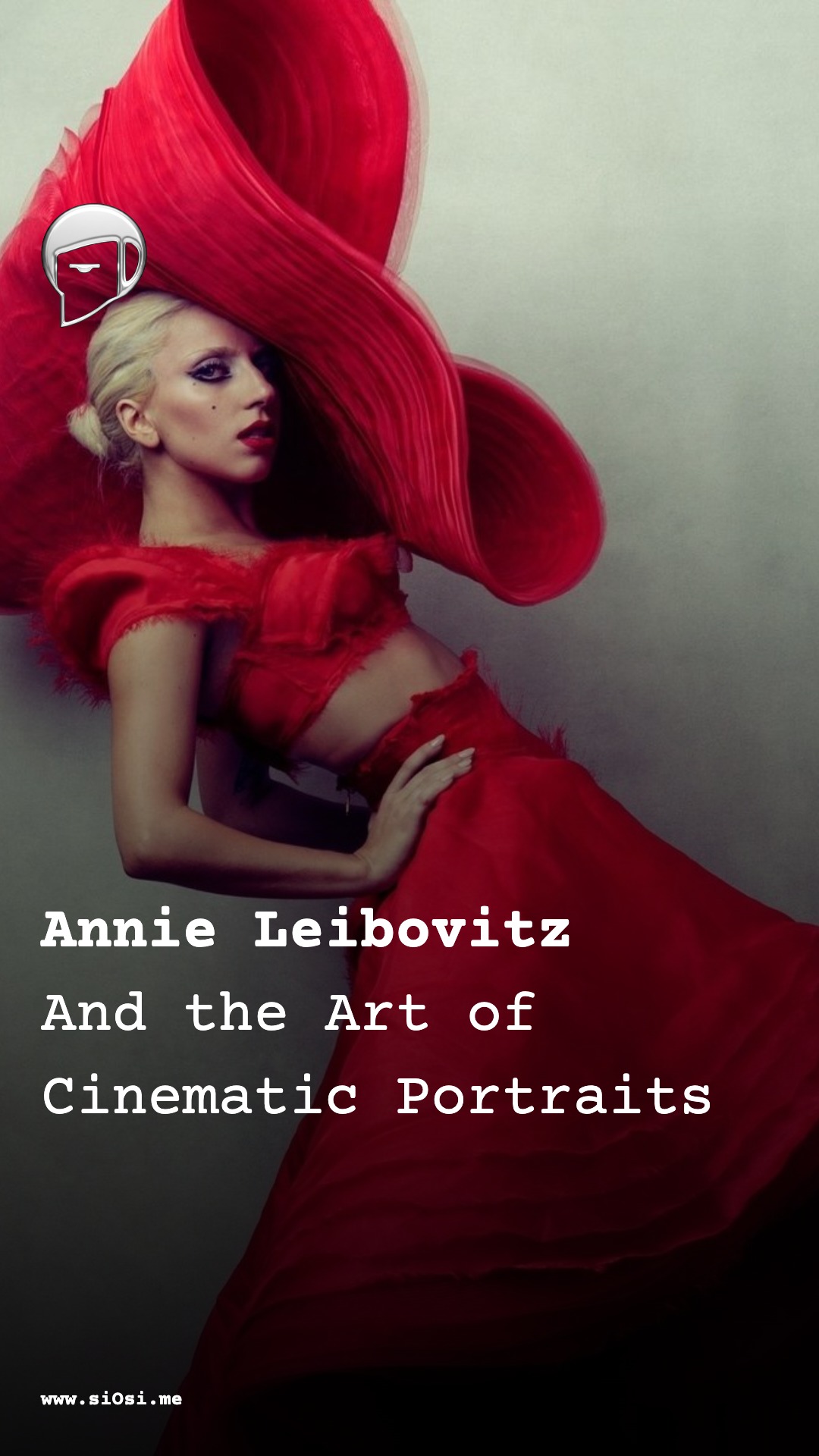
Annie Leibovitz turns every frame into a quiet story you can almost step inside. Her soft directional light wraps around skin and fabric like a second character, making even the grandest setups feel intimate. Saturated reds and golds give her images that warm, lived-in glow instead of glossy perfection. Clothes get rumpled and bodies lean off-balance because she cares more about mood than flawless styling. One look and you feel the whole scene breathing.
Annie Leibovitz, born 2 October 1949, enters visual history as a portraitist of atmosphere rather than mere likeness, a maker of pictures in which beauty is inseparable from mood, staging, and light. Her work occupies a threshold between document and dream: richly colored, theatrically composed, yet grounded in the physical presence of the body.
Her influence in fashion, beauty, and style is not a matter of trend so much as a long, slow reshaping of how bodies, garments, and faces inhabit the photographic frame. She treats clothing as a secondary language – pliable, responsive, a material to be bent to the emotional pitch of the image rather than the primary subject. Beauty, for her, is narrative: a state of feeling conveyed through light, posture, and environment.
Signature visual language: light, color, and atmosphere
Leibovitz’s most distinctive language is light – not neutral illumination, but shaped, sculptural light that behaves almost like a character within the frame. Early in her career, her photographs leaned toward documentary naturalism: ambient light, minimal staging, a closeness that felt observational and immediate. Over time, this evolved into a cinematic orchestration of multiple sources, soft yet rich, often recalling the chiaroscuro of Baroque painting.
Several elements recur:
-
Soft yet dimensional lighting She frequently uses large, diffused sources, placed close to the subject so that the light wraps around skin and fabric, softening edges while maintaining clear separation between figure and ground. Shadows are gentle but precise, describing cheekbones, folds of clothing, and the curve of shoulders with a painterly tactility. This soft directional light produces faces that seem to emerge from the surrounding atmosphere, at once intimate and monumental.
-
Warm, saturated color Leibovitz’s mature work is often recognizable by its deep, saturated hues and subtle warmth. Reds, golds, and earth tones carry a kind of emotional heat; blues and greys sit dense and velvety rather than cold. Even in high‑key studio images, the palette is carefully controlled: highlights are clean, but not clinical, and color saturation is balanced to preserve texture in skin and fabric. The result is a world that feels heightened yet believable, like a memory revisited in richer tones.
-
Environmental staging and layered space She rarely allows the subject to float in empty space. Backgrounds – architectural interiors, landscape fragments, studio constructions – are lit and composed with equal intention, creating depth that supports the story rather than merely framing it. Often, she combines ambient light with strobes, exposing for the environment and then layering illuminated figures onto high‑definition backgrounds. This technique yields images that seem almost one‑dimensional at first glance – figures pressed against flattened space – yet gain drama through subtle layering of foreground and background details.
-
Theatrical yet controlled setups Her editorial and fashion work is known for elaborate, labor‑intensive setups: large teams, complex staging, scenographic environments that recall theatre and cinema. Costumes, props, and locations are arranged not to show clothing “properly” but to create a scene with its own internal logic and emotional weather. This theatrical construction gives her images a narrative density; one feels they belong to a story just before or just after the photographed moment.
Line, shape, and the body
Leibovitz’s portraiture is intensely concerned with how the body occupies space. She often chooses poses that are slightly off‑balance, unexpectedly relaxed, or gently exaggerated, creating silhouette through real human weight rather than idealized geometry. Shoulders slump, lean, or twist; hands are expressive, sometimes awkward, sometimes serene, refusing the rigid symmetry of conventional glamour photography.
-
Contour and posture Faces are frequently turned just off the axis of the camera, catching light along one cheek, leaving the other in tempered shadow, reminiscent of Rembrandt‑style portrait lighting. The line of the spine and neck becomes crucial, articulating vulnerability or authority in a single tilt. Rather than the elongated, frictionless silhouettes common in fashion photography of earlier decades, Leibovitz prefers bodies that appear lived‑in, anchored, occasionally weary, always specific.
-
Clothing as instrument, not subject Critics have observed that she uses clothing as an instrument to be bent, rumpled, or dramatized, not worshipped. Fabrics are swept into arcs, dragged along floors, or allowed to crease and fold against seated bodies. In her fashion‑adjacent work, garments often trail off the edges of the frame, echoing movement that the still image has just arrested. This approach shifts attention away from perfection of styling and toward the psychological tenor of the scene: a coat becomes protection, a gown becomes burden or release, a simple shirt becomes a marker of intimacy.
-
Composite and constructed realities Leibovitz is known for composite images in which staged bodies and environments are assembled into single, cohesive tableaux. These pictures do not attempt the seamless illusion of pure reality; instead they embrace a “storybook” quality, mimicking reality while acknowledging their own artifice. Line and shape are thus not merely found but designed, guiding the eye through arcs of arms, staircases, draped fabrics, and pools of shadow.
Texture, surface, and the face of beauty
In Leibovitz’s work, texture is never incidental. Skin is rendered with enough detail to show pores, fine lines, and the slight grain of light across cheeks and foreheads; this granular attention resists airbrushed perfection and locates beauty in the reality of surfaces.
-
Skin and realism Her lighting choices – close, soft sources with controlled shadow – allow skin to appear tactile without harshness. Imperfections remain visible, but they are absorbed into a broader sense of presence. Beauty, in this register, is less about flawlessness than about the truthfulness of a face held in light.
-
Fabrics, interiors, and material richness Velvet chairs, patterned wallpapers, aged wood, polished metal, tulle and silk all appear in her scenes, recorded with a fidelity that makes the tactile qualities of the environment part of the subject. Fashion critics have noted her facility with both black‑and‑white and vibrant color, each used to emphasize different textures: monochrome for graphic contrast and grain, color for the saturation of cloth and skin.
-
Hair and makeup: character over ideal Hair in Leibovitz’s images is often slightly undone: a curl escaping, a strand across the forehead, a shape that belongs to the person rather than to a rigid style template. Makeup follows a similar principle, enhancing bone structure or mood rather than pursuing an abstract standard of glamour. The face in her work is not a mask but an instrument of expression, permitting fatigue, joy, melancholy, and restraint to coexist on the surface.
Emotional presence and narrative beauty
One of the defining features of Leibovitz’s style is the way her images feel emotionally charged while avoiding overt melodrama. Commentators describe her photography as cinematic, narrative, and deeply atmospheric: scenes that resemble film stills more than traditional magazine shots.
-
Reinforcing public personas A major critique in early discussions of her celebrity work was that she tends not to reveal unknown aspects of her subjects but to reinforce the public image already attached to them, often with wit and striking visual amplification. This does not diminish emotional presence; rather, it heightens it by distilling persona into a single, emblematic pose, outfit, or environment.
-
Intimacy and distance Leibovitz has said that to photograph someone is, for her, a way of wishing to know them. That desire manifests in the tension between closeness and performance: the subject is staged, costumed, lit, yet there is usually a moment – a glance, a hand gesture, a subtle slackening of the mouth – where something private slips through the constructed scene. Viewers often experience this as a kind of quiet ache, an awareness that the photograph is both performance and revelation.
-
Emotional tone in lighting Her lighting schemes are designed not only to flatter but to underscore emotional states: warmth for intimacy, stark side light for intensity, colored gels for dream or disquiet. Light here is not technical solution but emotional argument, insisting on the mood the viewer should inhabit while looking.
Relationship to fashion photography and silhouette culture
Although Leibovitz has often called herself a portrait photographer rather than a fashion photographer, commentators emphasize that she occupies a liminal space between the two, balancing on the thin line where garments and identity are inseparable. She admired the fashion work of figures such as Guy Bourdin, Helmut Newton, Richard Avedon, and Irving Penn, yet refused simply to emulate them.
Her contribution to fashion and style lies in several shifts:
-
Conceptual fashion imagery Writers on fashion photography credit her with introducing strongly conceptual, theatrically staged ideas into mainstream fashion imagery, emphasizing narrative over display. Instead of showing clothing as static objects of desire, she places them in situations where they seem lived in, tested, or dreamt. This has encouraged subsequent generations of photographers and designers to treat fashion editorials as short stories rather than catalogues.
-
Personality over garment Leibovitz’s fashion‑related work insists that the wearer’s personality and psychological presence matter more than the outfit itself. This emphasis subtly shifts the axis of fashion culture: clothes become expressive tools rather than idols, and beauty becomes a question of character rendered in light and pose.
-
Influence on contemporary campaigns Analysts note that her atmosphere – theatrical yet intimate, cinematic yet human – echoes throughout contemporary luxury campaigns and magazine editorial today. Large‑scale, narrative‑heavy shoots, with complex sets and emotionally directed models, owe much to the aesthetic groundwork her images laid over several decades.
Philosophy of beauty and the body
Leibovitz’s philosophy of beauty can be read through her consistent refusal of the purely idealized image. Even at her most fantastical, bodies in her work remain weighty, specific, sometimes tired, sometimes exuberant, always marked by life. Critics point to her “controlling eye” and storybook style: she builds worlds that playfully mimic reality, yet they remain anchored in recognizable human presence.
Key aspects of this attitude include:
-
Narrative over perfection Beauty is understood as a narrative state – a moment within a longer story – rather than a static ideal. Expression, posture, and context matter more than flawlessness of skin or symmetry of feature.
-
Respect for individuality By emphasizing psychological depth, she pushes fashion imagery toward a respect for individual character. The body is not merely a hanger for clothing, nor a blank surface for makeup, but a subject with history and interiority, even when heavily staged.
-
Light as empathy Her frequent use of soft, enveloping light can be read as a visual form of empathy: it protects, reveals gently, and grants dignity to faces that might otherwise be flattened by harsher schemes. In this sense, her style carries a subtle ethical dimension, treating the photographed body as something to be understood rather than consumed.
How her work feels today
Viewed today, Annie Leibovitz’s images retain a particular glow – not merely the literal warmth of her color palettes, but an emotional radiance. They feel simultaneously grand and human, theatrical yet believable. In a visual culture saturated with quick, hyper‑stylized imagery, her photographs slow the gaze, inviting contemplation of posture, light, and the quiet drama of presence.
There is a certain calm gravity to her portraits, even when they are lavishly staged: an awareness that the person photographed is carrying a life beyond the frame. The textures, colors, and silhouettes she shaped across decades have become part of our collective visual vocabulary, so familiar that many images of contemporary fashion and celebrity still echo her compositions without naming the influence.
Born in 1949, her career unfolds across the second half of the twentieth century and into the twenty‑first, tracing changing ideals of beauty and celebrity while constantly returning to a simple, enduring question: how does a human being occupy light. Her answer, repeated yet never identical, is the soft, saturated, narrative presence that makes a Leibovitz image instantly recognizable and, still, quietly affecting.