
Sun in LibraMoon in VirgoWaning Crescent
Hyperreal Wounds and Bandaged Kids
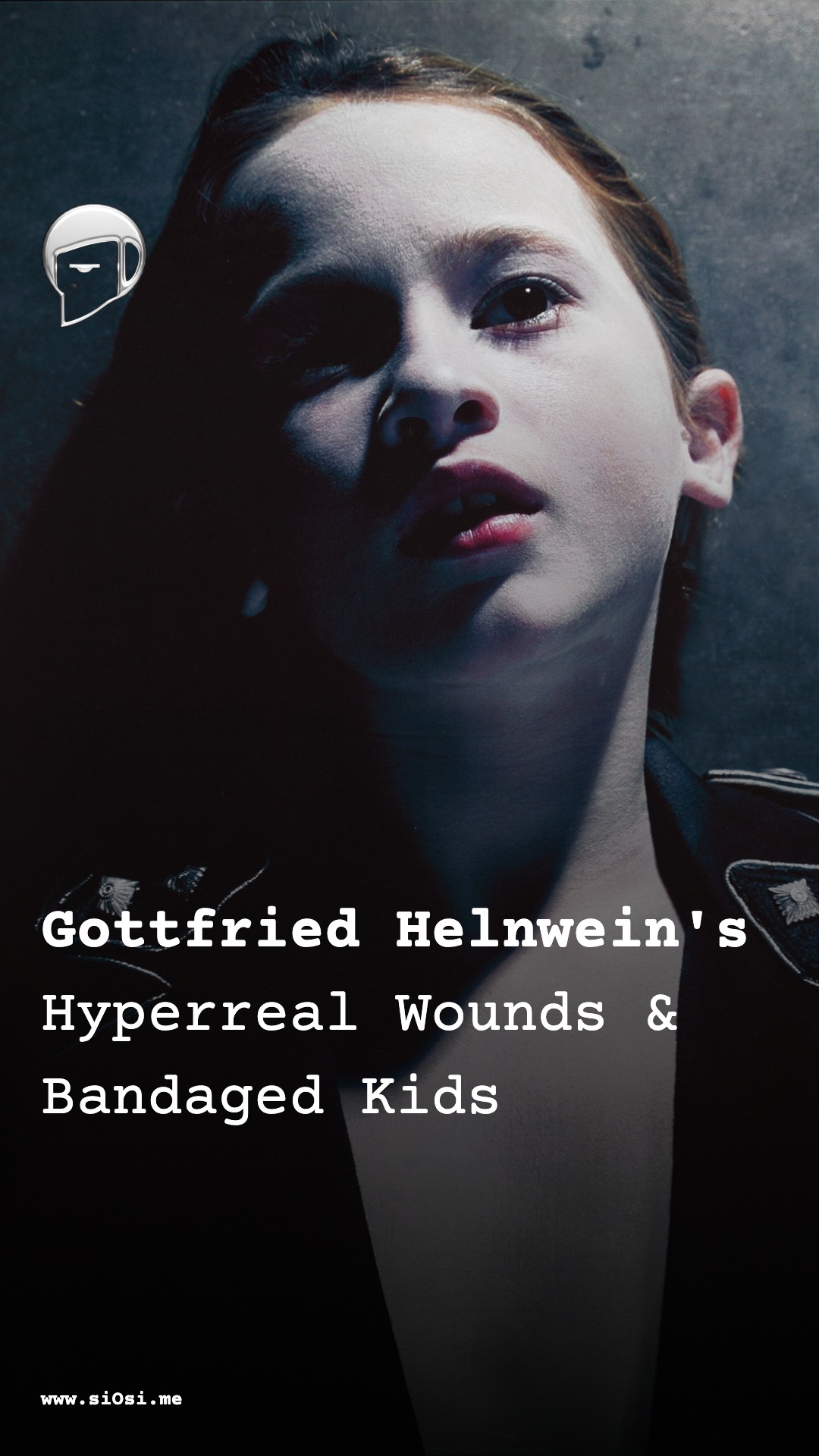
Gottfried Helnwein's bandaged children stare out like survivors from a sealed room. Pale skin meets white gauze and wet blood under cold raking light that feels straight out of film noir. Each lash and pore gets painted with scary precision so the canvas looks like a blown-up photo yet the damage stays front and center. The small figures wear stiff uniforms or medical wraps that turn innocence into something monumental and uneasy. Beauty here never stays clean.
Gottfried Helnwein, born in Vienna on 8 October 1948, made the wounded body one of the most unsettling and visually exacting presences in postwar art. His images do not treat beauty as serenity or ornament. They place beauty under pressure, exposing the fragile surface of the face and body to pain, fear, violence, and historical memory.
His principal language is hyperrealism: a photographic exactitude pushed beyond ordinary perception. Individual eyelashes, pores, folds of gauze, blood, and reflected light are rendered with such precision that the painted image can initially resemble a photograph, while its scale often exceeds the human body and approaches the monumental. This enlarged realism creates an unusual visual tension. The surface is immaculate, almost polished, yet what it depicts is injured, frightened, or psychologically withdrawn.
The child became Helnwein’s central figure, especially the bandaged child. In these works, pale faces emerge from expanses of white, grey, or near-black, their features interrupted by gauze, scars, blood, or medical coverings. The materials of care become signs of vulnerability. Bandage, plaster, metal instrument, and military garment alter the silhouette, turning the body into something at once intimate and ceremonial. The child’s small scale within the imagined world is contradicted by the immense scale of the painting, so that innocence becomes visually commanding rather than merely picturesque.
The effect is not sentimental. Helnwein unsettles familiar images of childhood as a realm of cleanliness, softness, and protection. Gentle faces are made difficult to read. Eyes may be obscured, stretched, shadowed, or replaced by the blank authority of a dressing. Blood appears not as painterly flourish but as a wet, physical interruption of the skin. The viewer is drawn toward the delicacy of the face and then forced to register its damage.
His visual style also absorbs the trivial and theatrical imagery of mass culture, including comics, advertising, film, and the polished scale of the billboard. This influence gives his work a strange mixture of popular clarity and historical darkness. Contours are legible, gestures are sharply staged, and figures often possess the frontal directness of an advertisement or fashion photograph. Yet the perfection of presentation is used against the promise of glamour. The more immaculate the image, the more disturbing the wound becomes.
Light is similarly controlled. Helnwein frequently sets pale skin and white garments against deep shadow, creating a cold, raking illumination associated with film noir and postwar cinema. The resulting contrast is tactile: smooth forehead against rough gauze, damp red against chalk-white skin, glossy photographic surface against the matte darkness surrounding the figure. His compositions often feel airless, as though the subject has been placed inside a sealed room where every detail remains visible and no gesture can escape scrutiny.
The self-portrait intensifies this philosophy of the body. Helnwein repeatedly presents himself bandaged, disfigured, or held in states of visible distress. Medical instruments pull at the mouth, eyes, and facial muscles; pigment and bodily marks interfere with the recognizable portrait. Rather than offering the artist as an autonomous, composed subject, these images make identity appear penetrable and unstable. The face becomes a site of coercion, performance, and endurance.
This transformation of the face has particular significance for beauty. Conventional portraiture depends upon symmetry, expression, and recognizability. Helnwein damages all three. Lips are stretched, eyes are hidden or widened, and skin becomes a record of impact. Yet the images retain a severe elegance through their composition and control. Their beauty lies not in wholeness but in the tension between exact form and threatened form, between the stillness of the pose and the implied violence that produced it.
Clothing in his paintings often carries the same ambiguity. Military uniforms, white coats, decorative cuffs, epaulets, and formal garments give children an adult vocabulary of authority. The silhouette can appear neat, almost ceremonial, while the face beneath it remains wounded or emotionally exposed. This contrast makes costume a psychological instrument. Fabric does not simply cover the body; it stages the collision between innocence, power, discipline, and inherited violence.
Helnwein’s work therefore changes the emotional function of style. Uniform, bandage, coat, glove, and instrument become more than visual details. They regulate posture and transform the body into an emblem. A small figure standing upright in formal clothing may appear composed, but the bandaged face denies composure. The body seems to obey a public code while silently registering injury.
His approach to beauty is inseparable from an attitude toward vulnerability. The body is not presented as a perfected object, nor as a neutral vessel for fashion or pictorial display. It is a surface where social fear becomes visible. The child functions as a figure of defenselessness, carrying anxieties that exceed the individual image. This is why the works can feel both intimate and monumental. The face is singular, but the injury seems to belong to a wider historical atmosphere.
Emotionally, Helnwein’s paintings work through delayed recognition. At first, their precision can produce admiration: the clarity of the skin, the exact fall of the cloth, the cool balance of the composition. Then the image reveals its wound. The pleasure of looking is interrupted by unease, and visual attraction becomes a form of ethical attention. His pictures do not permit beauty to remain innocent.
The continuing force of the work lies in this conflict. Helnwein’s surfaces still possess the severe glow of polished enamel, photographic light, and theatrical staging, but the glow is never comforting. It illuminates bruised skin, empty gazes, blood-darkened cloth, and faces held between childhood and historical catastrophe. The images feel cold, lucid, and strangely luminous, as though beauty has survived only by becoming a witness.