

Sun in LeoMoon in GeminiWaning Crescent
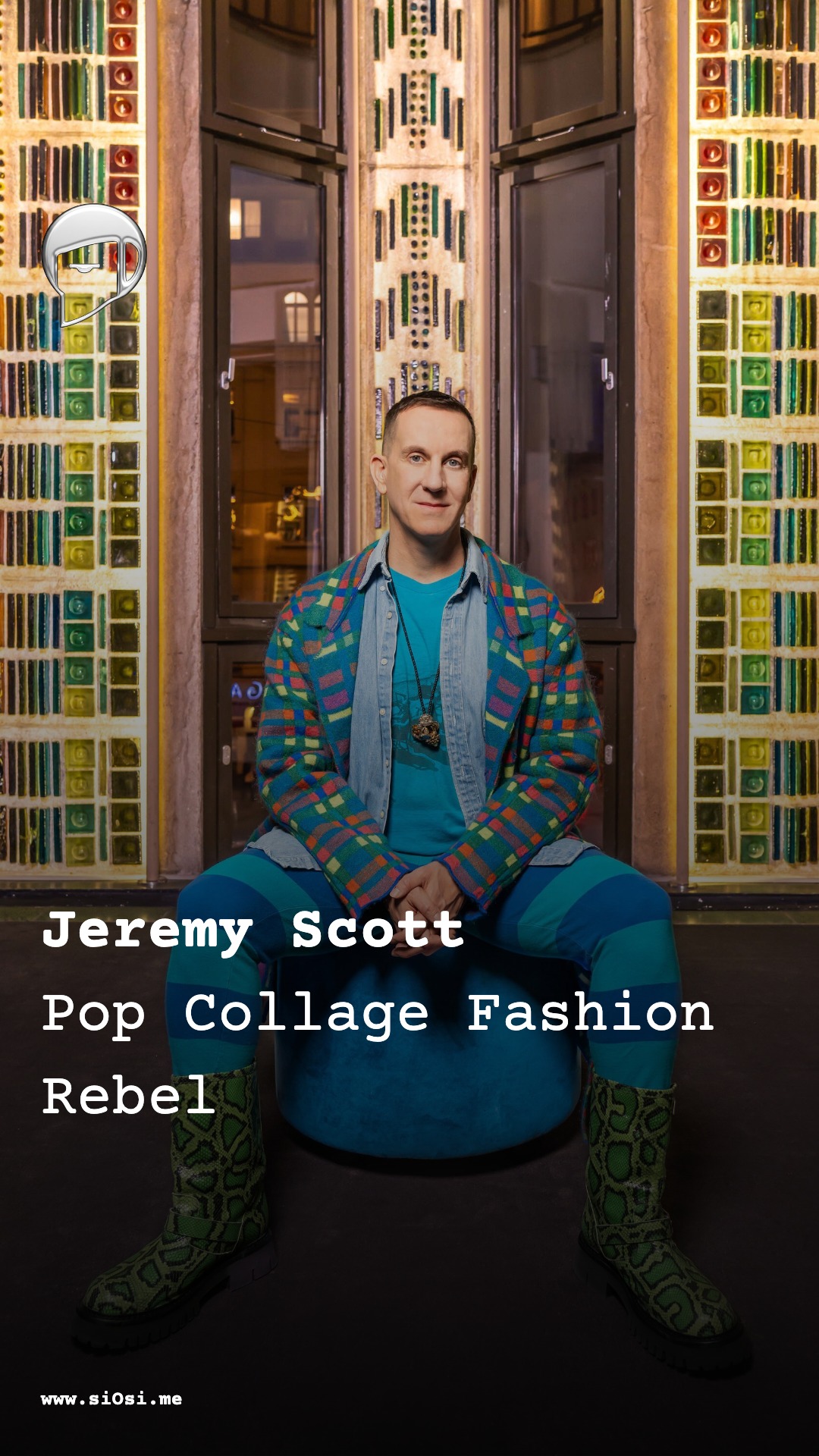
Jeremy Scott Born This Day: Pop Collage Fashion Rebel
On 8 August 1975 Jeremy Scott arrived, quietly launching a riot of saturated color, plastic shine and cartoon critique that still lights up runways today. At siOsi we celebrate the man who turned fast-food logos into couture statements and teddy-bear sneakers into cultural icons. His silhouettes swing from skin-tight billboards to puffed-up sculptures, all wrapped in vinyl, foil and the occasional trash-bag wink. Beauty here is never solemn; it is loud, camp and knowingly fake, inviting every body to play with gender, surface and desire. From his hip-hop-rooted love of street codes to the high-gloss glamour of his Moschino years, Scott proved fashion could be funny without losing feeling. Step into the hyperreal glow with siOsi and remember that kitsch, once embraced, becomes pure joy.
Jeremy Scott’s birth on 8 August 1975 feels, in retrospect, like the quiet origin of a particularly vivid way of seeing: a sensibility that would treat fashion as pop collage, cartoon hallucination, and sugar‑bright critique of consumer desire. His impact is less a single silhouette than an atmosphere – a carnival of color, wit, and artificial gloss that shifted what “beauty” could look like in an age saturated with images.
Visual language: color, line, texture, movement
Scott’s signature vocabulary is built from bold, saturated color, plastic shine, and graphic clarity. Flat primaries and neon tones, often arranged like packaging design or comic panels, give his work a poster‑like immediacy. Logos, mascots, and cartoons appear not as discreet embellishment but as all‑over surfaces: a dress reads like a billboard, a jacket like a cereal box. The lines are clean and deliberate, tracing simplified shapes that recall toys more than tailoring.
Silhouette, in his hands, oscillates between two poles. There are sharply cut, body‑con forms that hug the figure like a second skin, turning the wearer into a living signboard. There are also padded, inflated shapes – wings sprouting from sneakers, stuffed bear forms attached to shoes, voluminous outerwear – that push the body outward into sculptural play. These silhouettes are often slightly too large, too exaggerated, which produces a faint dissonance: the body is present, but it sits inside an idea, a joke, a character.
Texture is crucial. Scott repeatedly reaches for synthetic, high‑sheen materials: vinyl, faux leather, plastics, metallic foils, smooth knits printed with hard‑edged graphics. Against these, he sets deliberately “low” textures, such as pieces made from trash bags or paper hospital gowns in his early Paris collections, proposing disposability itself as an aesthetic surface. The touch implied is cool, slick, artificial; fabric looks like it might squeak, crinkle, or rustle rather than whisper.
Movement in his work is mostly about extension and spectacle. Winged sneakers trail air as the wearer walks, oversized accessories bounce, cartoon prints flicker as the garment shifts across the body. The clothes do not aspire to invisible ease: they assert themselves in motion, making every gesture slightly theatrical. A simple step becomes a performance framed by graphics, proportion, and gleam.
Beauty as pop satire: mood, attitude, emotional presence
From the beginning, Scott has treated beauty as a site of humor, satire, and affection for popular culture. His collections rework icons of American consumer life – the McDonald’s arches, Barbie’s pink, Coca‑Cola’s script, Looney Tunes characters – not with cold detachment, but with exuberant exaggeration. The emotional register is double: on the surface, delight and absurdity; beneath, a faint sense that desire itself is being parodied.
This produces a particular mood. His clothes often feel like costume in everyday drag, creating an emotional distance between wearer and garment. To put on a fast‑food logo dress or teddy‑bear sneaker is to acknowledge, with a smile, one’s complicity in a culture of branding. Beauty is no longer serene or naturally effortless; it is performative, knowingly constructed, gleefully fake.
Humor functions as a kind of shield and invitation. The work is frequently described as irreverent, playful, and provocative. That irreverence carries into emotional presence: awe is replaced by amusement, intimidation by camp pleasure. Viewers are encouraged to laugh first, then notice how their own visual habits – their familiarity with cartoons, convenience stores, and music videos – are being mirrored back at them.
Scott’s affection for hip‑hop and rap, which he has acknowledged as central to his love of fashion and style, also shapes this emotional landscape. Streetwear codes – oversized cuts, sportswear fabrics, sneakers as focal point – are filtered through his pop lens, creating a glamour that feels rooted in music culture rather than in the old couture salons. The mood is confident, loud, and unapologetically expressive, replacing restrained elegance with declarative self‑styling.
The body: philosophy of surface, gender, and self‑expression
Scott’s attitude to the body is fundamentally non‑reverential and democratizing. He treats the body as a canvas for signs, toys, and jokes, rather than as an untouchable ideal to be flattered in subtle ways. His opposition to “serious” fashion norms, noted early in his career, hinges on the idea that clothing should be fun, accessible, and unafraid of vulgarity.
Beauty, in his philosophy, is not constrained by traditional gender markers. Sources highlight his commitment to challenging conventional ideas of beauty and gender, using bold colors, graphic prints, and unexpected materials to expand what is possible. In practice, this appears in the fluid way he deploys motifs and silhouettes: the same cartoonish glamour, the same bright plastics and exaggerated forms, cross over men’s and women’s collections without anxiety. The body becomes a site of play where masculinity and femininity can both be amplified, distorted, or conflated through costume.
There is also a subtle politics of surface. By choosing trash bags, hospital paper gowns, and overtly commercial imagery, Scott draws attention to what is usually discarded or overlooked. The body is wrapped in what the culture throws away or takes for granted, transforming it into spectacle. The gesture says that beauty can emerge from the marginal and the banal, not only from luxury textiles and discreet cuts.
Yet the body is never entirely erased. Many of his garments remain close‑fitting, sculpted, aware of the figure’s curves and angles. The tension between body and surface – between flesh and cartoon – creates a vibrant unease. The wearer is both person and character, both subject and billboard. Beauty thus becomes a negotiation between self and image.
Signature codes: hair, makeup, light, and contrast
Although Scott is not primarily a makeup artist, his fashion shows and campaigns rely on beauty codes that amplify his pop sensibility. Hair is often glossy, stylized, sometimes in candy colors or extreme shapes that echo the garments’ graphic clarity. Makeup tends toward either high‑definition glamour – sharp liner, strong lip, perfected skin – or a childlike brightness that complements the cartoon context. The face is lit and framed to read clearly from a distance, like another graphic component.
Light, in imagery surrounding his work, tends to be bright, frontal, almost commercial. It flattens texture slightly, heightening color and making prints legible. Stark contrast between saturated garments and neutral backgrounds underscores the sense that the clothes are primary images, while the environment is merely supporting.
Contrast is a core device. High vs low, luxury vs trash, nostalgia vs critique: Scott’s visual language thrives on these juxtapositions. A perfectly cut jacket in fine fabric may carry a deliberately “cheap” logo; a runway show may pair polished hair and makeup with garments constructed from hospital disposables. The effect is to keep beauty unstable, always vibrating between opposing registers.
Emotional afterglow today
Today, Jeremy Scott’s aesthetic feels like the distilled mood of an era saturated in pop culture, internet imagery, and brand awareness. Critics have noted that his postmodern, cartoonish aesthetic has become pervasive, influencing not only his own clientele but broader fashion, from television to major runways. Younger audiences in particular respond to his flamboyant approach as distinctly generational, seeing his work as aligned with their visually overloaded, meme‑literate world.
The emotional afterglow of his work is complex. On one level, there is joy – bright, uncomplicated pleasure in color, humor, and costume. His pieces still evoke the thrill of dressing up, of inhabiting an amplified version of oneself. On another level, there is a quieter recognition that these clothes are about living inside a consumerist dreamscape, aware of its absurdities, but choosing to glitter anyway.
His tenure at Moschino, described as a reinvention of the brand’s irreverent spirit through playful homages to American consumer culture, crystallized this feeling. Those collections read now like archives of mid‑2010s visual consciousness: fast food, cartoons, glossy icons, all arranged with affection and critique. The glow they retain is that of nostalgia filtered through irony, a reminder of how fashions of desire looked in a decade defined by screens.
What remains most palpable in his legacy is a shift in what fashion can emotionally register. Beauty no longer needs to be solemn or aloof; it can be funny, brash, self‑aware and still deeply felt. Scott’s birth in 1975 marks the beginning of a sensibility that would later give the industry permission to embrace kitsch, pop, and camp not as side notes, but as central aesthetic languages. The feeling his work still carries is that of standing inside a brightly lit, hyperreal world, fully conscious of its artifice, yet willing to revel in its color.