

Sun in LeoMoon in VirgoNew Moon
siOsi Honors Herb Ritts: Light, Form, and Timeless Glamour
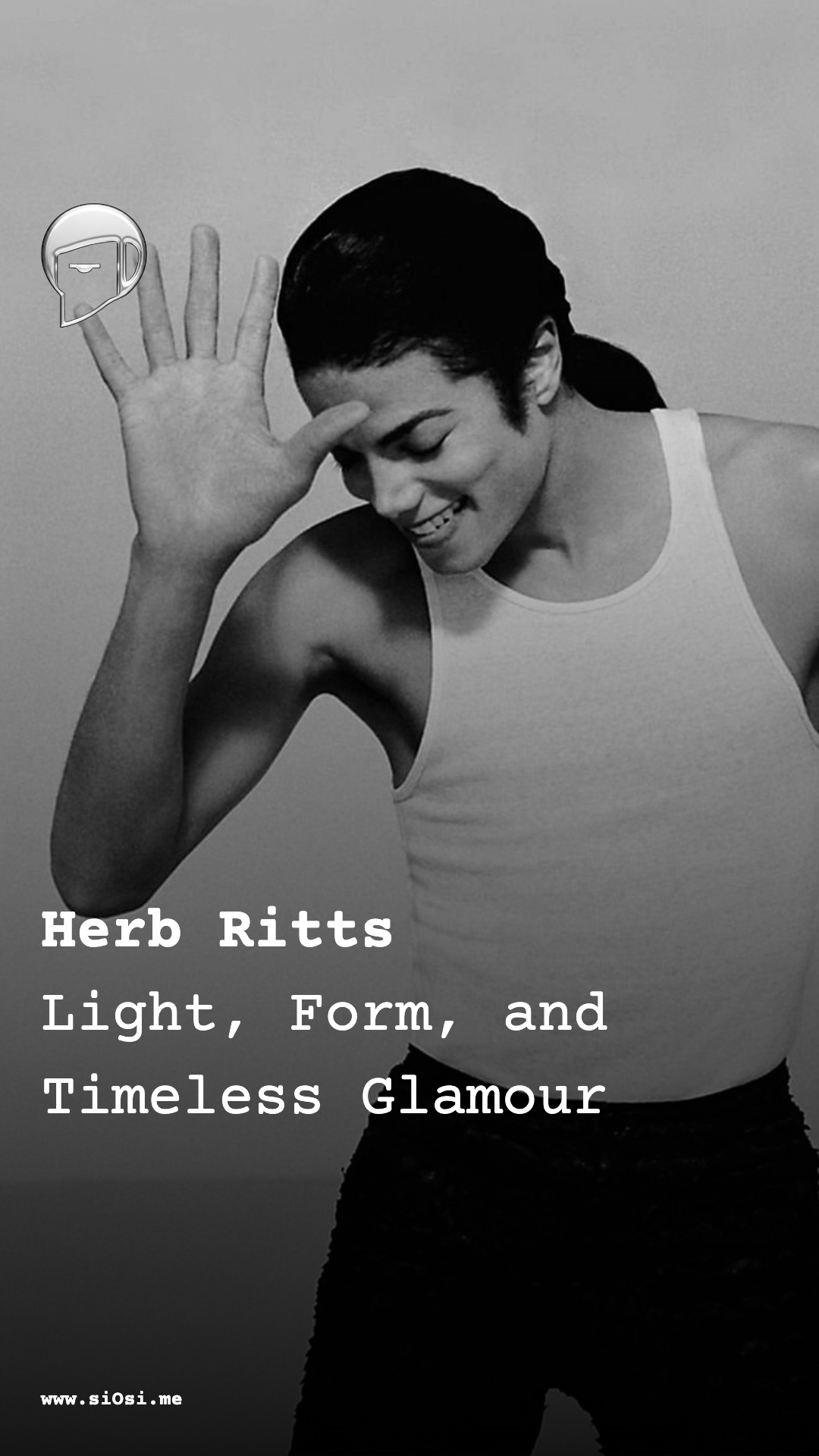
On this day in 1952, Herb Ritts arrived with a vision that reshaped how we see the body in beauty and fashion. His black and white images carved figures from California sun, turning skin into sculpture and fabric into flowing lines against open sky. Ritts favored hard light and crisp contrasts, letting torsos stand like columns and limbs stretch into elegant diagonals. Sand clung to legs, wind whipped hair, and every surface revealed honest texture rather than decoration. At siOsi we celebrate this clarity: poised strength, modern sensuality, and the quiet power of silhouette. His portraits gave celebrities iconic presence while modernizing the nude with athletic grace and classical echoes. Today his work still offers a cleansing pause, a reminder that beauty thrives in structure, light, and elemental space.
Herb Ritts’s birth on 13 August 1952 feels, in retrospect, like the quiet arrival of a visual grammar that would teach late‑twentieth‑century culture how to see the body – sun‑cut, sculptural, pared back to line, muscle, and light. His influence lives in the way we now imagine glamour itself: elemental, wind‑polished, reduced to silhouettes against sky.
1. Signature visual language: light, line, and the body
Ritts built an aesthetic out of black‑and‑white clarity, using bright California sun to carve bodies into graphic forms. The palette is stripped to monochrome, yet it feels sensuous rather than austere: a world of stone‑white highlights and soft charcoal shadows.
-
Light and contrast His preferred light was hard, frontal or sideways, often outdoors, the kind of sun that makes everything crisp and unapologetic. In his prints, the sky is a field of pale tone, the subject a dark cutout, or the opposite: skin glowing like polished marble against a dense black backdrop. Contrast is not merely technical; it is moral and emotional, staging the body as an object of clarity, without ambiguity or blur.
-
Lines and shapes Critics repeatedly note his attraction to clean lines and strong forms. Limbs become diagonals, torsos columns, necks and shoulders gentle arcs that recall classical drapery or statuary. The human figure is arranged like architecture: stacked, balanced, weighted. Movements are often arrested at their most harmonious point, as though frozen mid‑gesture into modern relief sculpture.
-
Silhouette and composition Ritts’s compositions tend toward symmetry or deliberate off‑balance. A single figure may be centered, occupying the frame with near‑iconic authority, or pushed to one side, leaving a slab of negative space that reads as desert, sky, or sea. Silhouette is crucial: bodies are outlined against blank fields, the contour line as important as the facial expression. The result is graphic simplicity that is “read and felt instantaneously.”
The visual language thus condenses to a few elements: sun, skin, sand, sky, and shadow, organized with classical discipline, yet open to contemporary desire.
2. Texture, fabric, and surface
Although Ritts worked so often with nudity and bare skin, he was equally attuned to texture – the tactile dialogue between bodies and environment.
-
Skin as material The nude, according to museum curators, was “modernized” in his work. Skin behaves like stone or metal, its pores and fine hairs suppressed by strong light until it gleams, yet never loses its sense of warmth and weight. Male and female bodies alike are treated as sculptural masses, smoothed, rounded, and presented with a kind of quiet reverence.
-
Natural elements Sand clinging to legs, wind pushing fabric against musculature, water slicking hair and shoulders, all become integral to his images. The desert grain against skin suggests abrasion and resilience, while sea spray and wet hair evoke a more fluid sensuality. These textures deepen the emotional register of the photographs: they place the body in elements, not in interiors.
-
Clothing and fabric In fashion imagery, his fabrics often fall into two categories: sharply cut tailoring with pronounced edges, and soft, draped material that reveals form by clinging. A coat’s lapel becomes an angular counterpoint to a cheekbone; a dress moves like tide over hips. When cloth appears in motion – whipped by wind, stretched taut – it becomes an extension of the body’s energy rather than a barrier.
The overall sensation is that of surface honesty: textures do not decorate the body so much as expose its relation to light, environment, and touch.
3. Movement, posture, and emotional presence
Ritts’s figures rarely lounge. They stand, stride, twist, or brace themselves, inhabiting space with a contained force that feels neither theatrical nor casual.
-
Posture Shoulders are squared or elegantly dropped, spines drawn long, hands purposeful rather than fidgeting. This is a posture culture: bodies are trained, posed, rehearsed for the camera, yet they appear unforced, as though this clarity is their natural state. The result is an atmosphere of poised strength, “elegant” yet grounded.
-
Movement Motion is usually captured at its most sculptural point: the apex of a jump, the turn of a head just before it settles, hair caught mid‑whip. Ritts’s music videos and commercial work carried the same sensibility into moving image, emphasizing choreographed gestures and the rhythmic interplay of bodies with wind, water, and fabric. Movement in his stills feels like a brief interruption of stillness, an almost ceremonial shift of weight.
-
Emotion His portraits are often calm, direct, and unflinching, even when playful. Gaze meets lens without coyness. The emotional tone is steadied: confidence, sometimes vulnerability, but rarely melodrama. He inherits, as one critic notes, a lineage that includes Avedon and Penn, situating his work within an American tradition of psychologically charged yet formally disciplined portraiture.
The emotional presence is thus controlled intensity: bodies fully present, self‑possessed, inhabiting their image with an almost ritual seriousness.
4. Philosophy of beauty and the body
Ritts’s approach to beauty can be read as a blend of classical idealism and late‑twentieth‑century sensuality, shaped through the specific lens of Los Angeles.
-
Classical echoes Spanish‑language sources describe his portraits as akin to “escultura de la Grecia clásica”, emphasizing the human shape. Forms are idealized yet not distant: the classical body is brought into desert light, stripped of museum solemnity and allowed to breathe in contemporary air. This recalls an enduring Western fascination with antiquity, filtered through a sun‑lit American landscape.
-
Los Angeles as aesthetic condition The Getty notes that his aesthetic “incorporated facets of life in and around Los Angeles”, using bright California sunlight and outdoor locations to differentiate his work from New York‑based peers. Los Angeles in his imagery is less a city than a climate: dryness, glare, open horizon. Beauty is formed by weather and latitude, not only by couture.
-
Modern celebrity and desirability Critics argue that he “created modern celebrity,” giving visual form to a new kind of fame centered on aspirational beauty and public intimacy. Attractive bodies and faces are offered in a way that feels both accessible and elevated: the viewer is invited to admire, perhaps to desire, but also to recognize an archetype, a visual standard. Ritts participates in, and helps shape, a culture in which beauty is both commodity and myth, but he frames it with a respect that nudges glamour toward the iconic.
-
Gender and race His photographs are said to “challenge conventional notions of gender or race”, using strong forms and clean lines to destabilize familiar visual hierarchies. Masculine bodies may be shown with a sensuality traditionally reserved for female nudes; female figures may be sculpted as powerful, athletic presences rather than soft decoration. Black‑and‑white rendering, combined with careful lighting, flattens certain markers while sharpening others, shifting the gaze from social stereotype to bodily presence.
His philosophy of beauty, as it emerges across decades, feels like an ethics of clarity: the body presented plainly, without apology, in an environment that honors its form and capacity for strength.
5. Transforming fashion and the nude
Curators and critics repeatedly attribute to Ritts three interlinked achievements: revolutionizing fashion photography, modernizing the nude, and turning celebrities into icons.
-
Fashion imagery In the 1980s and 1990s he was among the most important fashion photographers, redefining the boundaries of what fashion imagery could be. Garments are treated as extensions of anatomy rather than decoration. The cut of a jacket, the weight of denim, the swing of a skirt, all become compositional decisions. Fashion is abstracted, brought closer to sculpture and dance than to mere catalog illustration.
-
The nude, modernized The nude in his work carries no trace of coyness. Instead, it feels disciplined, athletic, deliberate. Museum commentary speaks of a “modern yet classical treatment of the nude”, situating his images within a tradition but insisting on their contemporaneity. Male and female nudes share a similar vocabulary of strength: elongated limbs, contracted muscles, bodies that appear ready to move rather than to recline. This reconfiguration influenced how magazines and campaigns could present the body publicly, making explicit muscular grace part of mainstream beauty.
-
Celebrity as icon Through his portraits and album covers, Ritts provided a visual record that crystallized an era’s self‑image. Celebrities are posed less as individuals and more as archetypes: the powerful gaze, the athletic torso, the wind‑tossed hair, the quiet smile. Lighting and framing confer an almost religious dignity; faces and bodies are treated with the same solemnity as statues. In this transformation, fame becomes a style of being seen.
These shifts had a cumulative effect on cultural perception: beauty becomes elemental and sculptural, fashion becomes a way of drawing the body in space, and celebrity becomes a permanent silhouette in public memory.
6. Emotional and aesthetic resonance today
Today, Ritts’s images still feel remarkably current in their emotional timbre and visual restraint. Museum curators describe his work as providing “a portrait of an era”, with “perfectly sculpted light, elegant strength and an enduring beauty.”
-
Timelessness of form The reliance on basic visual elements – black and white, strong contrasts, simple settings – insulates the work from fashion’s more transient trends. A body against sky, a face in close‑up, a hand resting on stone: these motifs read as timeless, almost outside chronological style shifts.
-
Contemporary feeling For viewers now accustomed to digital saturation and color‑heavy imagery, Ritts’s photographs can feel like a cleansing pause. The calm, controlled compositions still evoke clarity, resolve, and a quiet sensuality. The glow is not of filter or software but of sunlight on skin, silver gelatin on paper, muscle under tension.
-
Emotional atmosphere His work continues to evoke a blend of serenity and hunger: serenity in the poised bodies and balanced frames, hunger in the idealized forms and the promise of glamour. The photographs do not shout; they hold the gaze gently, returning a sense of proportion. Beauty appears as a fact, not an argument.
In the long view of cultural history, Herb Ritts’s birth marks the arrival of a visual sensibility that taught late‑century and early‑millennial viewers to love the body through structure, light, and elemental environments. The emotional presence of his images – strong, clear, sun‑cut – still lingers like the memory of standing in open California light, seeing one’s own silhouette sharpen against the horizon.