

Sun in LeoMoon in CancerWaning Crescent
Way Bandy: Sculpting Faces with Light and Line
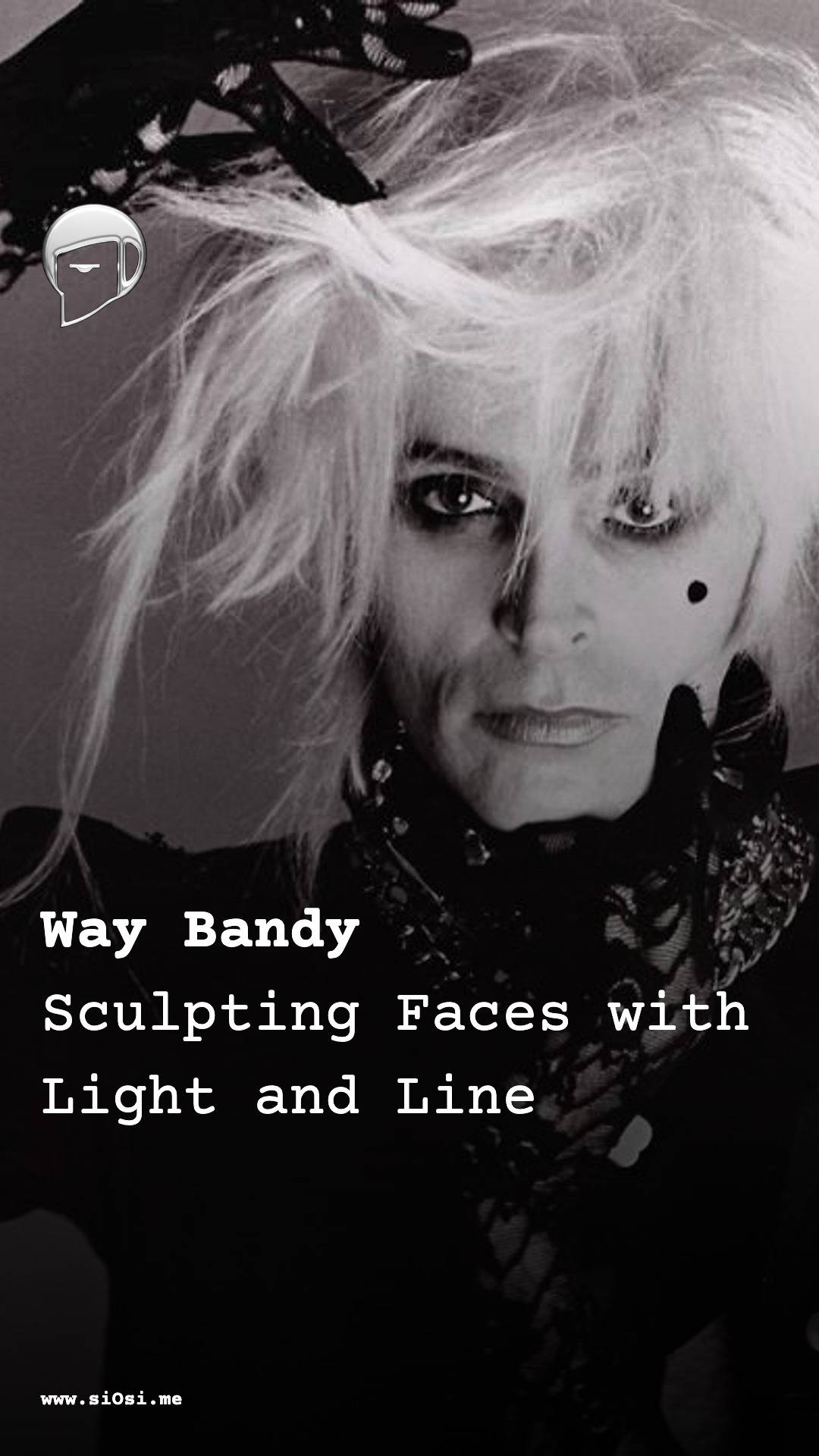
On this day in 1941, Way Bandy arrived, bringing an architect's eye to makeup that would shape the luminous faces of 1970s and early 1980s fashion. Born Ronald Duane Wright in Birmingham, Alabama, he turned cosmetics into tools for structure and emotion, mapping cheekbones with clean lines and orchestrating light and shadow like a sculptor. His books Designing Your Face and Styling Your Face taught us to honor each face's unique planes rather than chase one ideal. At siOsi we celebrate his poised glamour, where satin textures and thoughtful highlights let skin breathe and expression shine through. From Vogue editorials to celebrity portraits, Bandy showed beauty as refined visibility, not a mask. Today his calm intelligence still guides us to design with what already exists.
Way Bandy’s birth on 9 August 1941 marks the arrival of a figure who translated makeup into a language of architecture, light and emotion, helping to define the visual atmosphere of 1970s and early 1980s fashion photography and celebrity portraiture.
Born Ronald Duane Wright in Birmingham, Alabama, Bandy came to cosmetics with the trained eye of a former art and fashion illustration teacher, bringing a draughtsman’s precision and a sculptor’s sense of volume to the human face. His move into freelance work for theatre, film and fashion allowed him to test cosmetics not as mere adornment but as instruments of visual structure, capable of altering silhouette and mood as profoundly as a cut of cloth.
Visual language and signature aesthetic
Bandy’s makeup philosophy is perhaps most clearly articulated through his manuals Designing Your Face (1977) and Styling Your Face (1981), which treat the face as a composition of planes, angles and curves to be understood and then refined. Rather than approaching beauty as a fixed ideal, he encouraged readers to study bone structure, proportion and natural coloration, and then to work with these realities, adjusting emphasis through controlled shifts of shadow and highlight.
In practice, his signature visual language can be read through several elements:
-
Lines and structure His makeup often begins with an almost architectural mapping of the face: cheekbones clarified with clean, ascending lines of contour, jawlines gently firmed, noses refined with vertical ribbons of shadow and light. The result is a feeling of clarity, as if the features have been brought into sharp focus without hardened edges. On camera, this produced faces that seemed both sculpted and supple, their geometry visible yet softened by the grain of film.
-
Light and contrast Bandy worked in an era when fashion editorials in Vogue, Harper’s Bazaar, Cosmopolitan and Rolling Stone increasingly relied on dramatic studio lighting and close-up facial imagery. His makeup responds to this environment with a conscious orchestration of contrast: a luminous forehead against a more shaded temple, a subtly brightened under-eye area that catches the photographer’s key light, lips whose sheen mirrors the glint of a silk blouse or metallic accessory. The face becomes a reflective surface in dialogue with the light, not flattened by it.
-
Color and texture Although associated with 1970s glamour, his color sensibility is measured rather than loud, designed to harmonize with skin tone rather than to sit atop it. Warm, sheer foundations, softly blended blushes and controlled use of strong lip or eye colors create an impression of polish that still allows the grain of skin to breathe. Texture is crucial: satin finishes rather than heavy matte, a refined shine at strategic points, powders feathered thinly so that the complexion appears lit from within rather than masked.
In print, these textures translate into a tactile visual pleasure: one can almost feel the velvety lids, the moist softness of lips, the fine, powdery bloom over the cheek.
- Movement and emotional presence Because much of his work was for dynamic media – film, music and fashion imagery that implied motion even in still frames – his makeup is built to accommodate expression. Eyeliner is placed to lift the gaze without freezing it, brows are shaped to allow for emotional range, blush is diffused so that changes in expression do not produce harsh patches of color. Faces look ready to speak, laugh, or sing, their emotional mobility preserved within the structure of the makeup.
The emotional presence of his work is one of poised intensity: glamour without stiffness, beauty that seems alive to the possibility of performance.
Philosophy of beauty and the body
Bandy’s approach, as inferred from his teaching manuals and professional trajectory, positions beauty as a kind of empathetic design practice. The body – and especially the face – is treated as an individual architecture, not a surface to be forced into uniform ideals. His emphasis on “designing” and “styling” your face signals a respect for difference: each face is a unique composition that can be optimised, not corrected into sameness.
This philosophy aligns with the broader shift of the 1970s toward personalised beauty expertise, in which the makeup artist emerges as a specialist capable of translating fashion’s abstract ideals into specific, wearable forms. Within that context, Bandy becomes one of the first star makeup artists, recognised and highly paid for his ability to navigate between the demands of photography, celebrity image and individual facial reality.
His work accepts the camera’s scrutiny while defending the humanity of the subject. Beauty is not a mask, but a refined state of visibility: the person becomes more clearly themselves, heightened for the lens yet not dissolved by it.
Impact on fashion, beauty and style imagery
By the mid 1970s, Bandy’s makeup appears repeatedly in major fashion and lifestyle magazines, helping to define the look of glossy editorial femininity. The aesthetic impact of this presence can be traced in several ways:
-
Codification of editorial glamour His controlled yet sensual style contributes to the era’s archetype of the “perfectly lit face” – high cheekbones, smooth skin, expressive eyes – that remains a template for beauty photography. Elements of his structural approach can be seen in later practices of contouring and highlighting, though his touch is subtler, more concerned with refinement than transformation.
-
Elevation of the makeup artist’s role Being described as one of the best and highest‑paid makeup artists of his time, and memorialised by photographer Francesco Scavullo as “one of the best makeup artists of our time,” signals a cultural revaluation of the makeup artist from backstage worker to co‑author of the image. This shift changes how beauty is conceptualised: cosmetics are no longer merely products but part of an authored visual narrative, a collaboration between photographer, model and artist.
-
Intersections with music and film Working with performers from film and popular music, Bandy’s aesthetic enters the broader field of visual culture, influencing how female celebrity is pictured in posters, album covers and promotional stills. His faces often occupy the frame like icons: luminous, carefully structured, intended to be remembered. The emotional effect is a mixture of closeness and distance, intimacy heightened by polish.
How his work feels today
Viewed from the present, Way Bandy’s work carries a particular glow, a combination of nostalgia and continuing relevance. The faces he designed feel unmistakably of their time in the softness of their contour, the quiet warmth of their foundation, the poised glamour of their lips and eyes. Yet the underlying philosophy – a commitment to studying the individual face, to working with light and structure rather than against them – remains strikingly contemporary.
There is a tenderness in his approach to beauty. The viewer senses a careful hand, one that understands the vulnerability of being looked at and responds by offering structure as protection, luminosity as affirmation. His makeup does not shout; it clarifies.
In surviving photographs and in the way his techniques echo through later makeup education, his presence is felt as a kind of calm architectural intelligence applied to the living face. The emotional atmosphere of his work is one of quiet confidence: a belief that beauty resides in the thoughtful shaping of what already exists, not in its erasure.
Way Bandy’s birth in 1941, then, is not simply an entry in cosmetic history but the beginning of a visual language that joined the precision of drawing to the intimacy of touch, altering how fashion and celebrity images would describe the human face in light, color and line.