
Sun in LeoMoon in SagittariusFirst Quarter
Patrick Demarchelier's Quiet Radiance at siOsi
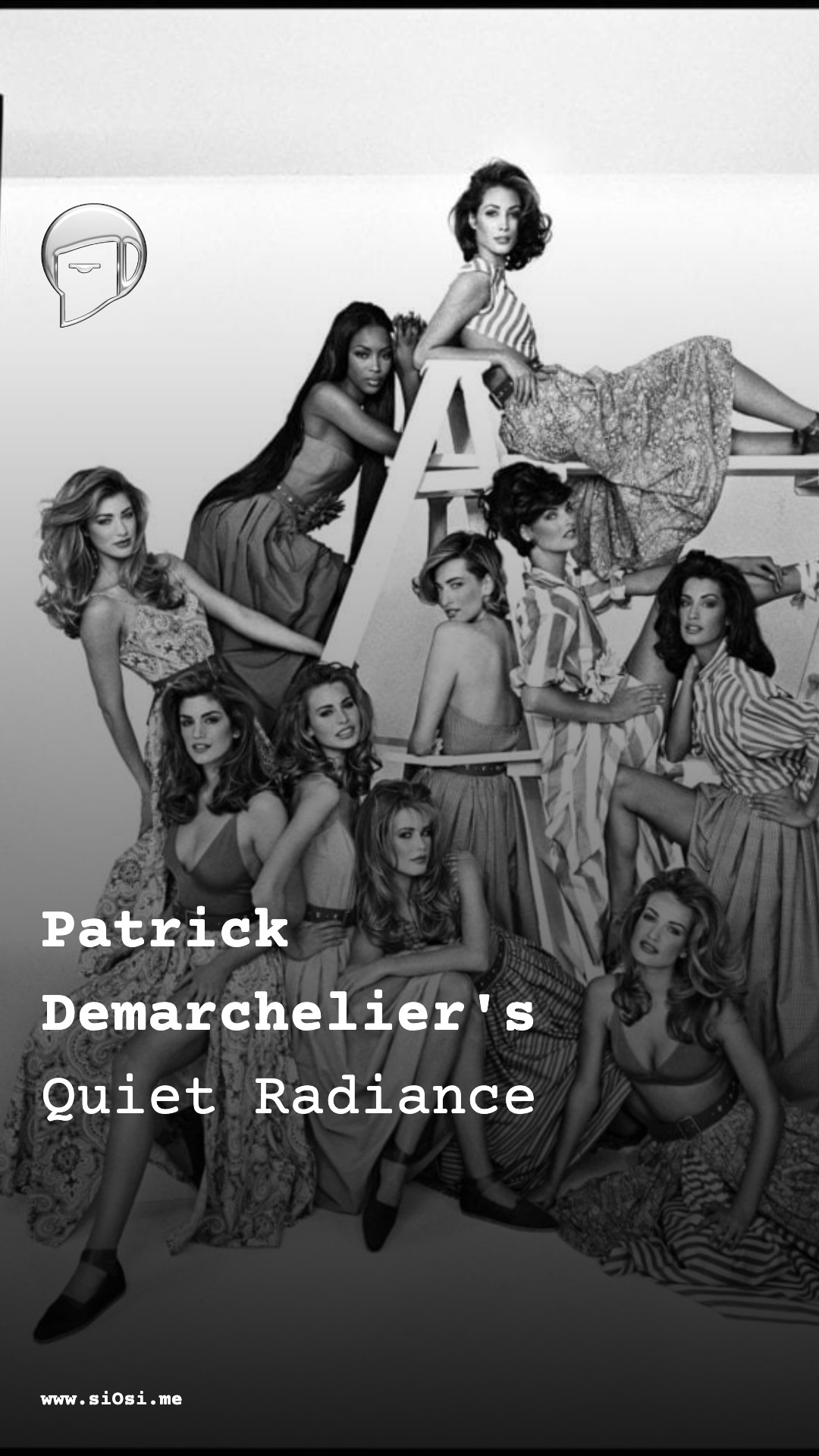
On this day in 1943, Patrick Demarchelier was born, leaving behind a visual legacy of ease made exact. His photographs captured fashion that looks unforced, with bodies breathing inside the frame and glamour rendered with a light hand. siOsi draws from his clean lines, open space, and natural movement, where fabric falls softly and faces keep their individuality. This approach shifts beauty toward spontaneous, editorial naturalism: satin glances of light, matte skin, hair in motion, and silhouettes that preserve living rhythm. At siOsi we celebrate this luminous, calm elegance that feels intimate and timeless, a restrained radiance arising from stillness rather than performance. His work reminds us that style is how a body occupies air, fabric, and light.
Patrick Demarchelier’s visual legacy is the image of ease made exact: fashion that looks unforced, bodies that seem to breathe inside the frame, and glamour rendered with a light hand rather than a heavy one. His photographs helped define a late-20th-century elegance that feels simultaneously polished and lived-in, replacing stiffness with motion, softness, and a more intimate sense of presence.
Demarchelier’s signature language was built from clean lines, open space, and natural movement. He favored compositions in which fabric falls rather than locks, shoulders turn rather than square off, and a face is allowed to keep its individuality instead of becoming mask-like. The result is a style of beauty that feels airy and controlled at once: satin glances of light, matte skin, hair that moves rather than freezes, and silhouettes that preserve the body’s living rhythm. Across his fashion and portrait work, the emotional register is rarely severe; it is luminous, calm, and alert, with an understated confidence that comes from restraint.
He is widely associated with helping shift fashion photography away from the overcomposed and toward a more spontaneous, editorial naturalism. That change altered not only how clothes were seen but how femininity and elegance were felt: less as display, more as inhabitation. In his images, beauty often appears as a state of composure under light—skin softly illuminated, posture relaxed but exact, expression open yet private. This gives his work a distinctive emotional temperature: it does not dazzle aggressively; it glows.
His attitude toward beauty can be read as an insistence that glamour need not harden the body. Rather than imposing theatrical distance, he often let the subject retain a trace of motion, warmth, and human vulnerability. That balance made his photographs feel modern even when they were classically elegant, because they suggest that style is not only what is worn, but how a body occupies air, fabric, and light.
Today, Demarchelier’s images still evoke a feeling of quiet luxury before the phrase became overused: serene, tactile, and almost weightless. They carry the emotional afterimage of polished mornings, silk in motion, pale flashes of skin and shadow, and a confidence that seems to arise from stillness rather than performance. The glow that remains is not loud glamour but a restrained radiance—one that feels intimate, timeless, and softly self-possessed.