
Sun in VirgoMoon in AriesWaning Gibbous
Bruce Onobrakpeya: Texture as Cultural Reclamation
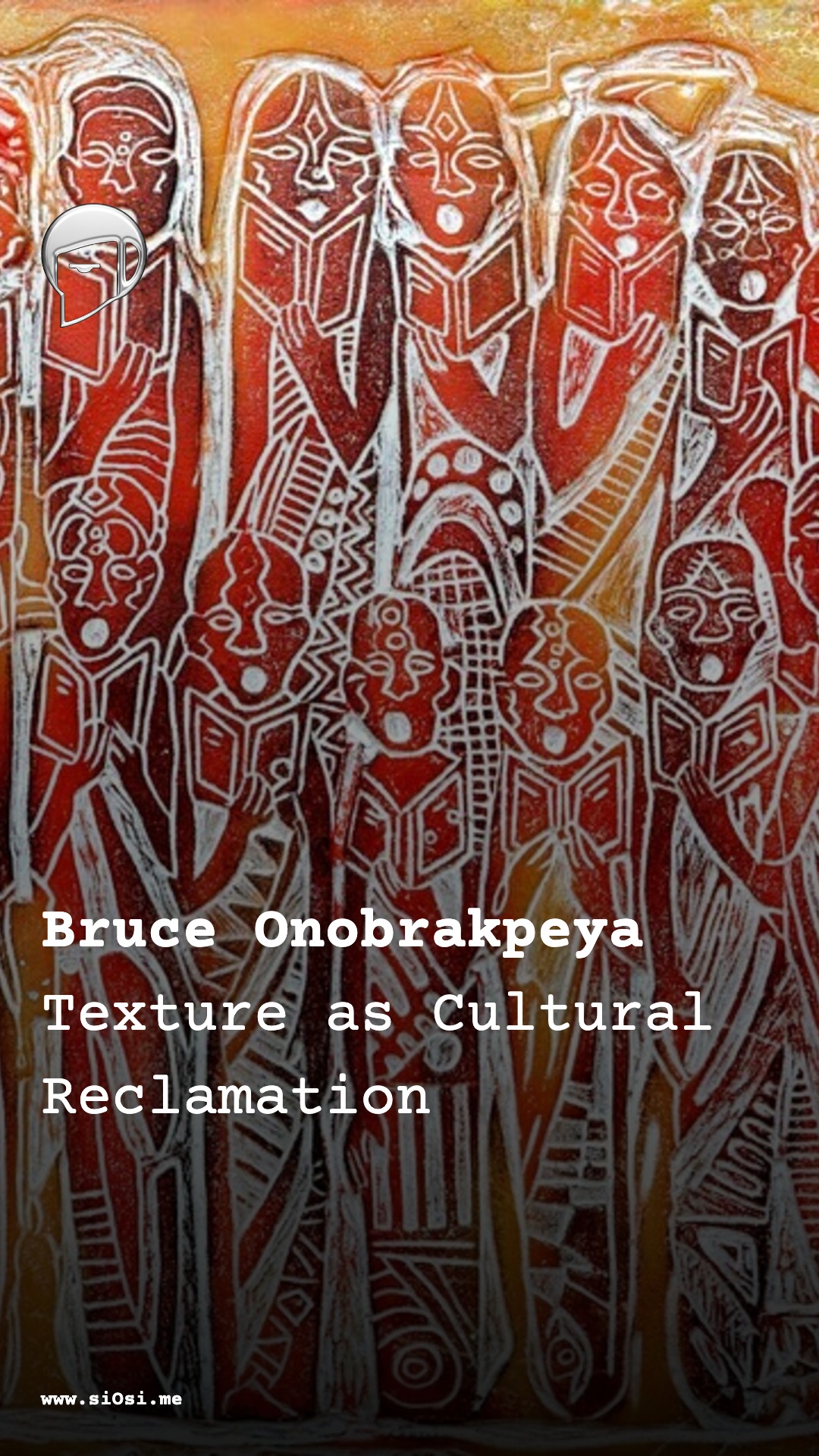
At siOsi we celebrate artists who turn surface into story. Bruce Onobrakpeya, born in 1932, wove indigenous Nigerian motifs into modern printmaking and gave postcolonial identity its own visual weight. His dense, mask-like patterns and solemn contrasts replace European authority with African symbols, turning every engraved line into a declaration of dignity and continuity. Ornament here is never decoration alone; it carries ancestral resonance, ritual depth, and quiet brilliance. Through his work the body appears culturally charged and spiritually sovereign, a reminder that beauty can be both ancient and insurgent. siOsi honors this glow of persistence that still feels pressed from living history.
Bruce Onobrakpeya’s aesthetic impact is one of reclamation through texture. Born in 1932, he helped shape postcolonial Nigerian modernism by fusing indigenous visual languages with modern printmaking, so that surface itself became a site of cultural renewal rather than decoration alone.
His work is not defined by a fashion silhouette in the conventional sense, yet it has a powerful effect on how the body and spirit are imagined. In his prints, paintings, and sculptural surfaces, figures often appear gathered into dense, symbolic fields where line, relief, and pattern create a tactile, almost fabric-like richness. This gives the eye the feeling of moving across woven cloth, carved wood, stamped metal, and ritual surface all at once, a layered visual grammar that feels both ancient and modern.
The emotional presence of his art is often solemn, radiant, and insurgent. His reinterpretation of Christian subjects, especially the crucifixion and the Stations of the Cross, replaces familiar European visual authority with Nigerian symbols, forms, and sensibilities. The result is not only religious imagery but a broader cultural posture, one that insists African identity can carry spiritual gravity, dignity, and intellectual force on its own terms.
His signature visual language is rooted in mask-like forms, rhythmic patterning, and strong contrasts of light and dark. Sources describe his work as drawing on Pan-African folklore, motifs, and iconography, with a synthesis of traditional Nigerian forms and European techniques that emerged from the Zaria Art Society. That synthesis is crucial to his beauty language. It does not erase inheritance, but layers it, allowing line and surface to hold both modern discipline and ancestral resonance.
Seen through a beauty and style lens, Onobrakpeya’s art values ornament as meaning. Texture is never merely texture. Pattern is never merely pattern. The dense visual surfaces suggest the prestige of handwork, the intimacy of repetition, and the discipline of craft. His work elevates the tactile, making engraved line, embossed relief, and patterned field feel morally and aesthetically serious.
His philosophy toward the body is similarly grounded in dignity and specificity. By embedding Nigerian forms into universal religious narratives, he resists abstraction that would flatten African presence. He makes the body culturally situated, spiritually charged, and visually sovereign. That stance aligns with accounts that describe his art as challenging colonial assumptions and restoring African cultural identity through visual language.
What remains striking today is the glow of persistence in his work. It still feels alive with the warmth of carved pigment, the hush of devotional space, and the pressure of historical memory. The emotion it evokes is not flamboyant display, but deep continuity, a quiet brilliance that comes from forms carried forward rather than invented in isolation. His images still feel as if they have been pressed from history, yet they retain a contemporary clarity, their surfaces seeming to breathe with endurance, ceremony, and inward light.