
Sun in VirgoMoon in AquariusFull Moon · Sturgeon Moon
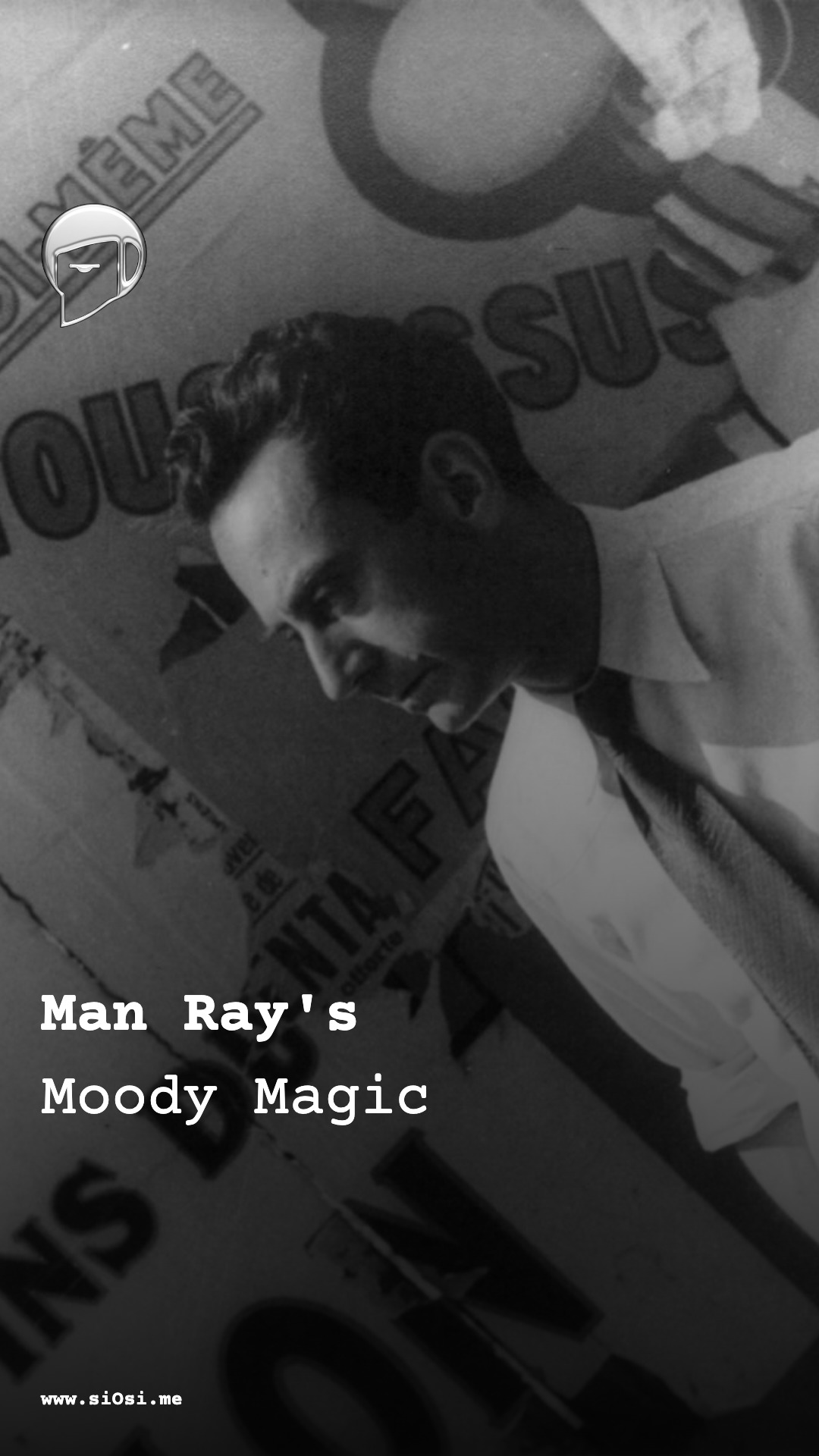
Man Ray's Moody Magic: siOsi on Surreal Beauty
Born in 1890, Man Ray turned beauty disobedient and luminous through rayographs that let light itself sculpt the image. siOsi celebrates his world of pale skin against deep shadow, satin blacks against hard white light, and ordinary forms remade as surreal emblems. His moody black-and-white portraits gave fashion a sculptural intensity, where fabric, skin, and shadow became one abstract composition. Rooted in Dada and Surrealism, he treated beauty as surprise distilled, never polished perfection. Today his cool charge still feels modern: intimate yet distant, tactile yet elusive. siOsi invites you to embrace that enigmatic poise, where elegance carries voltage and mystery lives in the grain of silvered light.
Man Ray’s cultural and fashion impact lies in the way he made beauty feel disobedient, luminous, and slightly uncanny. Across photography, film, and object-making, he turned the body into a site of modern invention, and his darkroom experiments gave fashion imagery a moody, dreamlike authority that still shapes how elegance can look when it is charged with mystery.
His visual language was built from contrast: pale skin against deep shadow, satin-like blacks against hard white light, smooth surfaces interrupted by abrupt contours, and ordinary objects remade as surreal emblems through rayographs and solarization. Man Ray’s photograms, which he called rayographs, used objects placed directly on photosensitive paper, so the image could appear as if it were emerging from light itself rather than being merely recorded by a camera. That method produced a visual grammar of absence and trace, where edges glow, silhouettes hover, and forms seem to float between presence and disappearance.
In style terms, Man Ray helped define an image of modernity that is sleek, severe, and erotic without sentimentality. His portraits and fashion work are remembered for their moody, seductive black-and-white atmosphere, a look that gave clothes and faces a sculptural intensity rather than decorative softness. The body in his images often feels elongated by shadow and simplified by line, as if posture itself has been edited into a cleaner, more abstract shape. This gave fashion photography a new emotional register, one in which fabric, skin, and light could feel like parts of the same composition.
His philosophy toward beauty was inseparable from Surrealism and Dada, movements that rejected stable meaning and prized transformation, wit, and the strange life of objects. He approached the image not as a fixed mirror of reality but as a field of mutation, where the ordinary could become erotic, poetic, or unsettling through a slight shift in light or context. In this sense, beauty was not polished perfection for Man Ray, but surprise distilled into form. Even his naming of the rayograph after himself suggests a playful self-mythology, a belief that art could invent its own vocabulary and its own glamour.
The emotional presence of his work is one of cool charge, a hush with voltage in it. His images often feel suspended between intimacy and distance, as if the sitter has been caught in a private atmosphere just before it dissolves. That emotional tone is part of his enduring fashion influence: not exuberant brightness, but a glancing, modern poise, where desire is implied through light, angle, and restraint.
Today, Man Ray’s work still feels crisp, enigmatic, and unexpectedly current. It evokes a particular kind of elegance, one that is tactile yet elusive, intimate yet abstract, with the sensual grain of silvered shadow and the glamour of something seen half in dream. His legacy endures because he made beauty look experimental, and made experimentation feel beautiful.