

Sun in LeoMoon in SagittariusFirst Quarter
Christian Bérard and the Soft Glow of siOsi
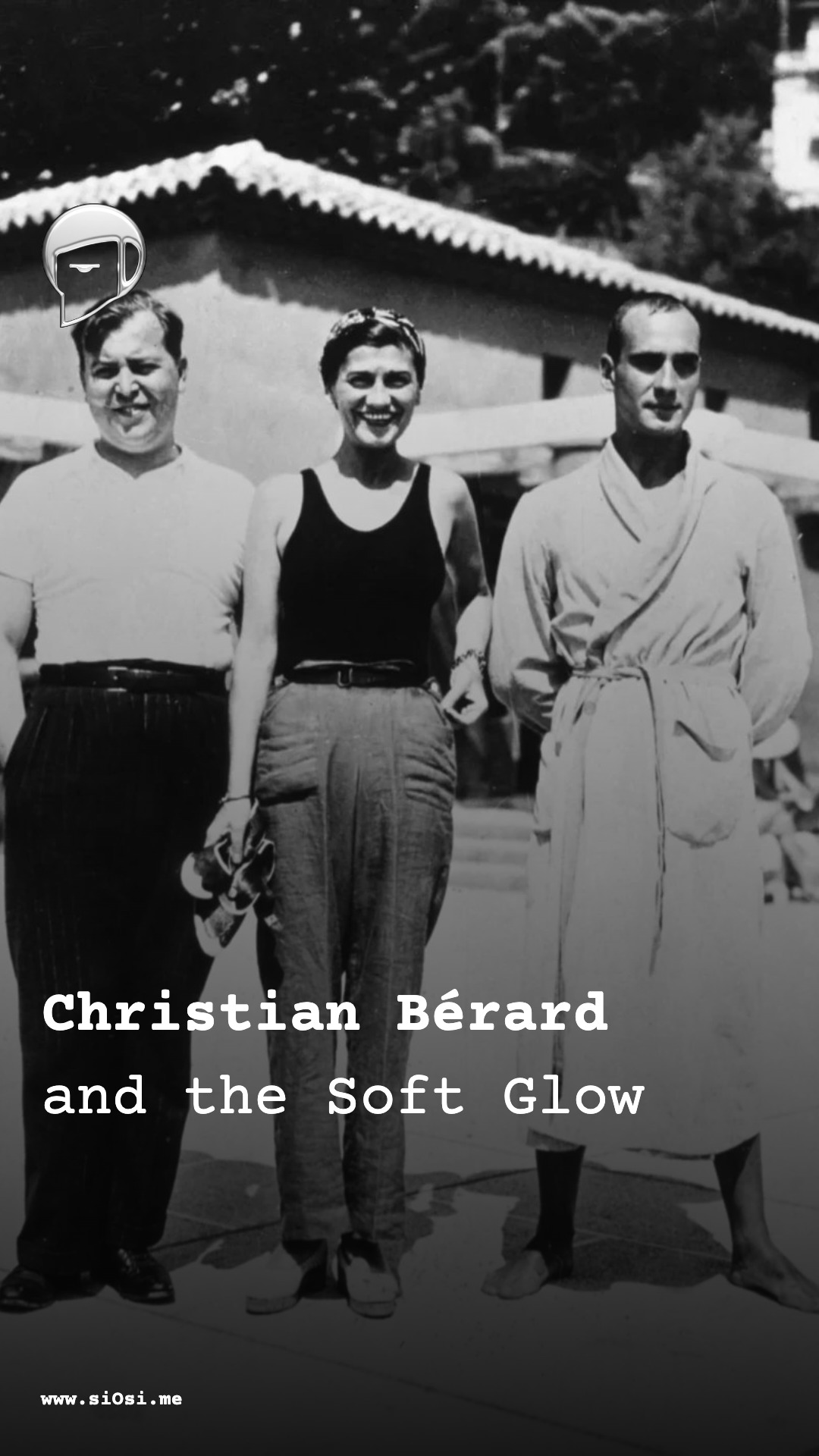
Born in Paris in 1902, Christian Bérard redefined beauty as fluid, theatrical and intimate. His elliptical lines turned couture into suggestion and stagecraft into mood, influencing Dior, Chanel, Schiaparelli and Nina Ricci with a soft structure that carried memory rather than rigidity. Bérard revived postwar Paris through the Théâtre de la Mode and sets like the delicate garden for L'école des femmes, proving that a few luminous elements, placed with emotional precision, create lasting enchantment. At siOsi we celebrate this companionable elegance, where frailty meets sumptuous taste and candlelight lingers on satin.
Christian Bérard, born in Paris in 1902, shaped beauty as something fluid, theatrical, and intimate rather than polished or severe. His visual world softened the hard edges of couture and stagecraft, turning line into flutter, silhouette into suggestion, and decoration into mood.
Bérard’s signature language was an elliptical, free line that gave form without rigid contour, especially in his fashion illustration, where figures appear delicate, mobile, and lightly held together by gesture rather than anatomy. His drawings were admired for their sensitivity and fluidity, and were described as instantly recognizable for indicating elegant shape and form without severe delineation. In that sense, his work preferred atmosphere to finish, and movement to monumentality.
In fashion, this meant a kind of beauty that feels lived-in and emotionally charged. Bérard’s taste influenced couturiers such as Dior, Schiaparelli, Chanel, and Nina Ricci, and he advised Dior on the toile de Jouy decor that became part of the house’s visual identity. The effect is not merely decorative. It suggests an aesthetic of soft structure, where print, line, and proportion carry memory and intimacy, rather than the rigid severity of overt modernism. His work helped revive the aura of Paris haute couture after the war, including through the Théâtre de la Mode, whose traveling display of dolls promoted French fashion through miniature spectacle and exquisite staging.
His theatrical work extended this sensibility into space. Bérard’s sets and costumes often reduced scenery to essential, poetic fragments. One noted example, his set for L’école des femmes in 1936, consisted of only a small garden, two flowerbeds, and five chandeliers. That restraint is central to his aesthetic philosophy: beauty arises not from accumulation, but from a few luminous elements placed with exact emotional control. In this way, his stage design feels like a drawing brought into air, where light, outline, and void are as important as object and ornament.
Bérard’s attitude toward the body was equally unorthodox. Rather than idealizing sleek perfection, contemporary descriptions emphasize his own obese silhouette, untidy beard, and emotional temperament, qualities that made him memorable in the Parisian social world. His presence complicated fashionable elegance by making room for frailty, eccentricity, and vulnerability. That tension, between sumptuous taste and unguarded physicality, gave his aesthetic a human warmth that remained unusual in the polished circles he inhabited. Even his illustrations carry that emotional openness, presenting beauty as something tenderly negotiated rather than flawlessly mastered.
What survives today is a feeling of soft glow. Bérard’s work still evokes candlelight on satin, powdery color, gauzy movement, and a slightly dreamlike theatrical hush. It has the emotional charge of prewar Paris filtered through fantasy, yet it never becomes brittle or cold. Instead, it feels companionable, melancholy, and sensuous, as if beauty were being remembered rather than displayed.