
Sun in LeoMoon in LibraWaxing Crescent
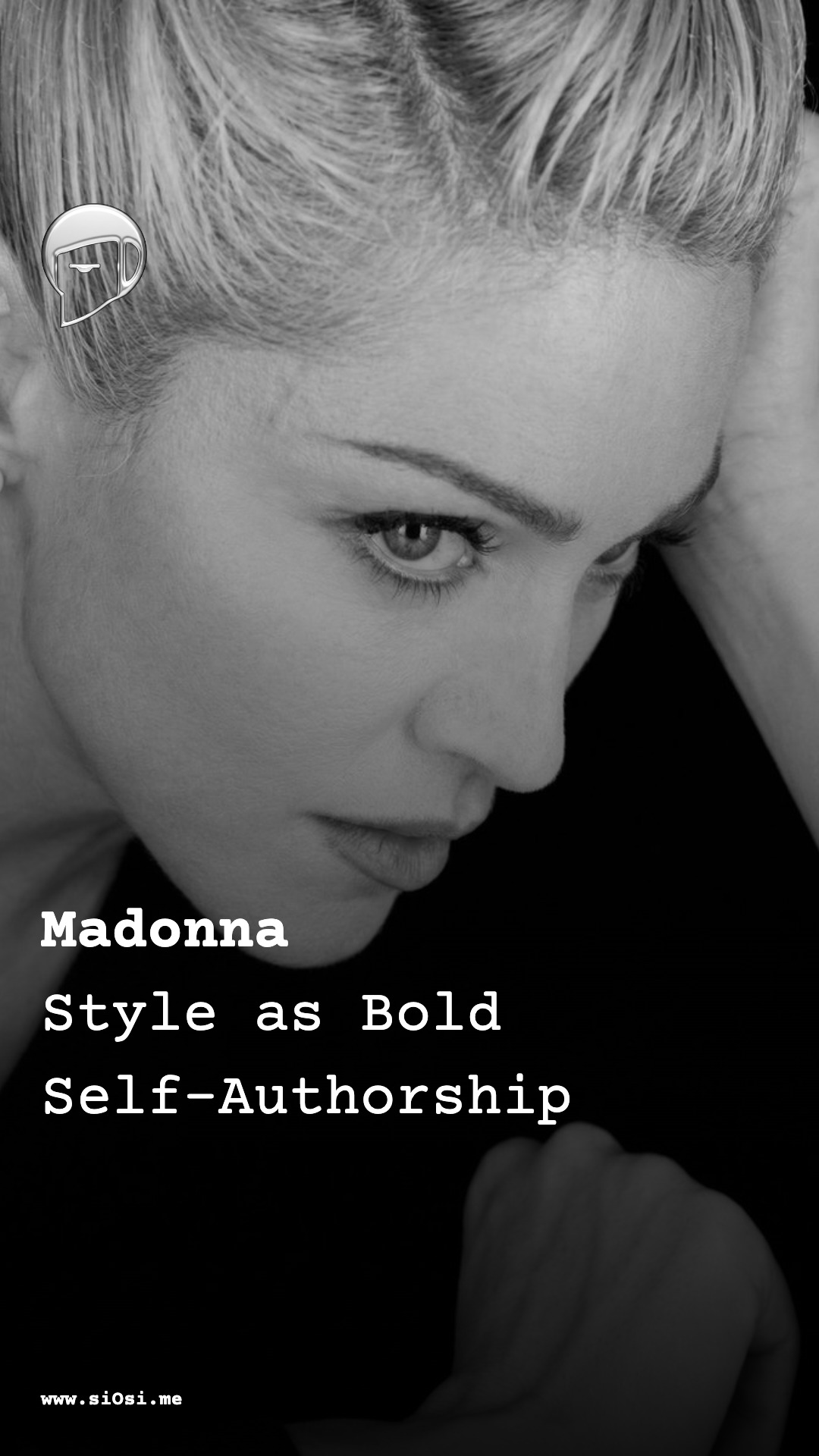
Madonna at 68: Style as Bold Self-Authorship
On this day in 1958, Madonna arrived and began rewriting the rules of beauty and performance. siOsi celebrates the artist who turned fashion into a language of control, contrast, and constant reinvention. From the MTV era onward she fused sacred with secular, polish with raw edge, and made every silhouette an argument for self-possession. Her looks were never passive; they were declarative, edited, and alive with tension. That electric spirit still pulses through culture today, reminding us that true style is chosen, performed, and never fixed. Happy birthday to the icon who made appearance into power.
Madonna’s cultural force lies in the way she made style feel like authorship: mutable, self-possessed, and alert to the body as a site of performance rather than decoration. Born in 1958, she became known for continual reinvention, for breaking gender barriers, and for using fashion and visual presentation as part of her public language.
Her aesthetic impact is inseparable from her rise in the MTV era, when music videos became a primary stage for image-making. Britannica notes that she was the first female artist to fully exploit the potential of music videos, working with designers, photographers, and directors to build distinctive sexual and satirical images. That matters visually: her presence was rarely static. It was constructed through tight silhouettes, theatrical contrast, and a sharpened awareness of how clothes move against the body under camera light. The result was not softness but tension, a look that often fused discipline and provocation.
The emotional center of Madonna’s visual language is control. She is repeatedly described as someone who defined her own image and altered what audiences expected from women in pop, with scholars noting that she was the first woman in the industry to fully control both music and image. That control created a new kind of beauty ideal, one that was not passive or ornamental. It was declarative. Her body language, styling, and public persona presented femininity as something chosen, edited, and strategically performed.
Visually, her style has often worked through contrast: sacred and secular, innocence and defiance, glamour and rawness, polish and abrasion. This made her image feel charged rather than merely decorative. The emotional effect was a mixture of confidence, friction, and invitation, as if beauty itself had become argumentative. That quality helped shape the way later performers were seen and scrutinized, and it helped redirect the visual vocabulary of female pop performance.
Her enduring influence also comes from reinvention as an aesthetic principle. Sources describe her as having continually changed her fashion style and public persona, and as a major cultural figure whose impact extended across music, fashion, and popular culture. The visual result is a body of work that feels alive in memory because it never settles into one fixed silhouette. It moves through eras of image like a sequence of masks, each one crisp enough to be iconic, yet unstable enough to suggest the next transformation.
Today, Madonna’s work still feels electric, slightly severe, and emotionally unsentimental. Its glow is not warm in a conventional sense, but bright with self-definition. It evokes the thrill of a figure who made appearance into argument, and who treated beauty not as repose but as friction, wit, and power.