
Sun in VirgoMoon in CapricornWaxing Gibbous
siOsi Marks André Kim's 1935 Birth: Couture as Ceremonial Radiance
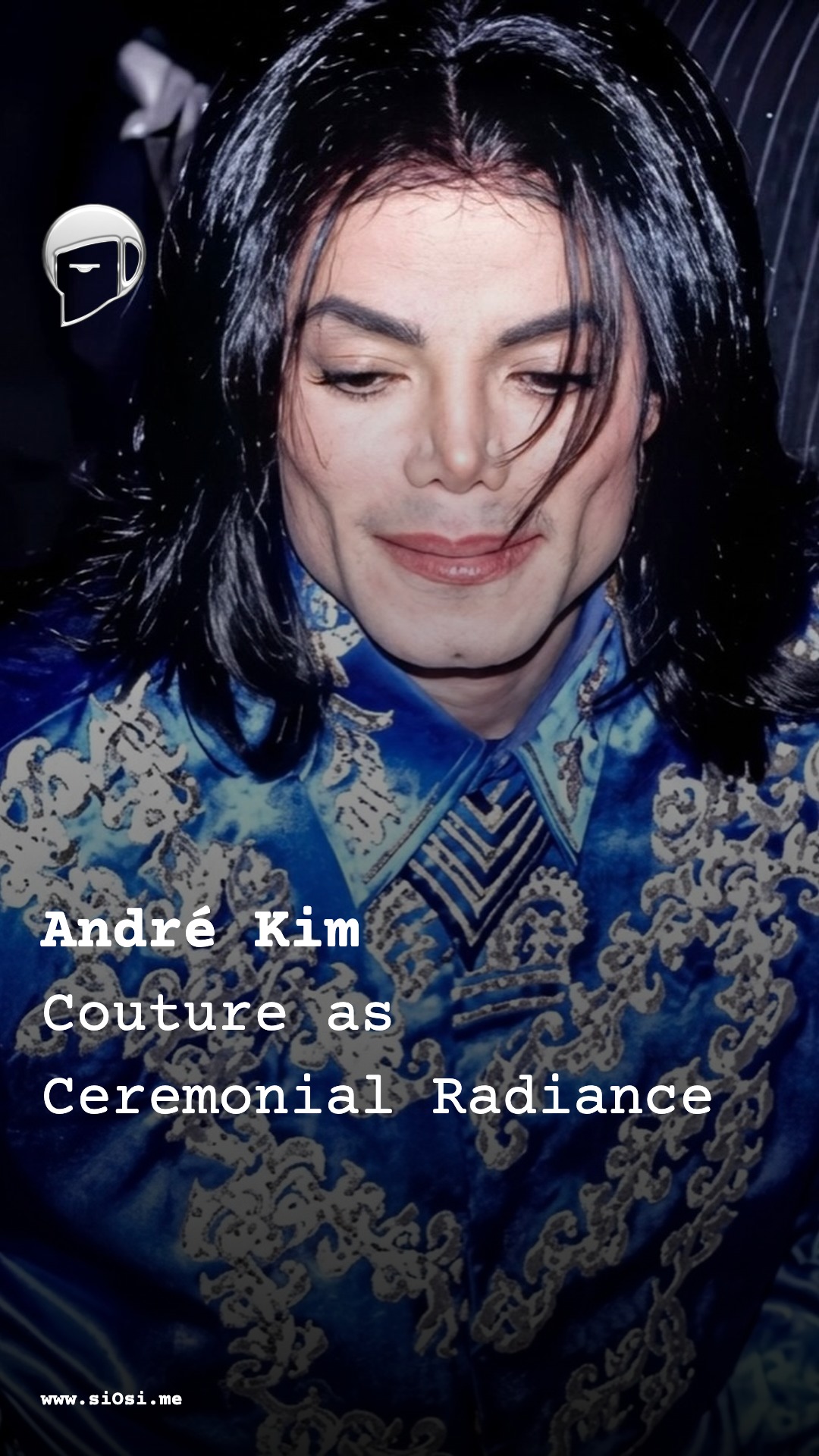
Born in 1935, André Kim transformed Korean couture into pure spectacle, blending traditional motifs with Western drama through bold silhouettes, intricate details, and his signature luminous white. As South Korea's pioneering male designer, he staged unforgettable shows from Paris runways to the Pyramids of Giza, turning garments into statements of heritage and arrival. siOsi celebrates his futuristic classicism, where avant-garde forms met cultural memory to elevate the body into something emblematic and glowing. His flamboyant persona, always in crisp white, embodied clarity and poise that made every entrance unforgettable. Today his work radiates national pride and polished emotion, reminding us that fashion can be art, performance, and living history all at once.
André Kim’s impact was profoundly visual: he turned Korean couture into a theatrical language of white, brightness, and ceremonial grandeur, then carried that language onto international stages. As South Korea’s first male fashion designer, he fused traditional Korean motifs with Western couture methods, and his work was recognized for dramatic silhouettes, intricate embellishment, and a signature use of white that linked Eastern aesthetics to global fashion grammar.
His clothes were often remembered as spectacle with poise. Sources describe evening and wedding gowns, bold colors, Asiatic patterns, and avant-garde silhouettes, along with fashion shows staged in globally charged locations, from Paris to the Pyramids of Giza, or at civic and Olympic events. That gives his work a distinct emotional register: less everyday utility than ceremonial radiance, as if garments were built to glow under lights, to move like pageantry, and to announce arrival before the wearer spoke.
The core of his aesthetic was a kind of futuristic classicism, a term used by a university exhibit to describe his blend of avant-garde forms and traditional motifs. In practice, that meant a tension between modern sharpness and inherited ornament, between streamlined couture discipline and the softness of cultural memory. The result was not minimalism but elevation, garments that seemed to lift the body into a more formal, almost emblematic version of itself.
Kim’s signature visual language also extended beyond the garment to persona. Accounts describe his public image as eccentric and flamboyant, with signature white outfits and distinctive mannerisms that made him instantly recognizable. White, in this context, reads as more than a color choice. It suggests clarity, ceremonial stillness, and a controlled luminosity, giving his presence a clean, emphatic aura that contrasted with the exuberance of the clothes themselves.
His philosophy toward beauty and the body was rooted in fashion as art and cultural expression, not merely adornment. Korean sources say he sought to elevate his designs into “fantastic” and “elegant” Korean art, while international accounts note his role in modernizing couture production through research into Korean clothing history. That gives his work a body philosophy that feels respectful rather than restrictive: the body becomes a site for narrative, heritage, and display, shaped by beauty rather than subordinated to trend.
What lingers today is a feeling of ceremonial warmth mixed with distance, like a memory of a bright hall, silk catching light, and a model or wearer moving through applause. His work still evokes national pride, performance, and a polished kind of emotion, one that is glamorous but not cold, ornamental but not empty. Even in retrospective descriptions, his fashion retains a luminous afterimage, as though it were designed not just to be seen, but to remain visible in memory.