
Sun in LeoMoon in LibraWaxing Crescent
Lotte Jacobi and the Radiance of Unsentimental Beauty at siOsi
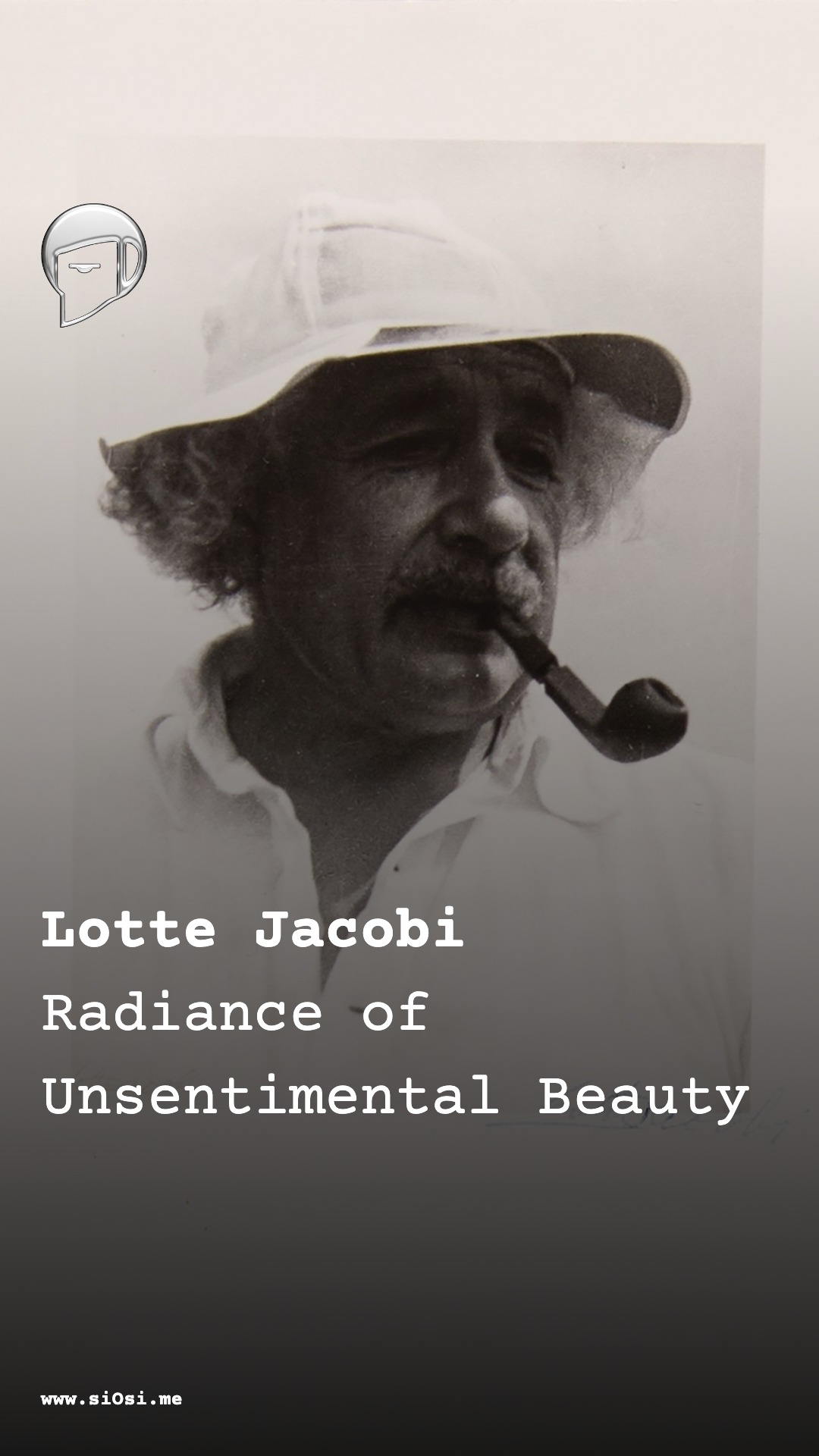
Step into the world of Lotte Jacobi, born in 1896, whose portraits captured intimacy, contrast, and human presence with striking clarity. Working across Weimar modernism and humanist photography, she let the sitter's character rule the frame through natural poses, high-contrast black-and-white tones, and light that reveals rather than adorns. In works like Head of a Dancer, sharp brows, dark lipstick, and luminous eyes create a poised, severe beauty rooted in alertness and lived expression. siOsi celebrates this cool, ember-like glow where texture, shadow, and personality shine through visual economy and emotional openness, reminding us that true style emerges from presence, not polish.
Lotte Jacobi shaped a visual language of intimacy, contrast, and human presence. Her portraits and photojournalism are marked by high-contrast black-and-white tonality, natural, unpretentious staging, and an insistence that the sitter’s own character “rule the frame,” giving her work a feeling of direct encounter rather than performance.
Born in 1896, Jacobi worked across the aesthetic worlds of Weimar-era modernism, humanist portraiture, and documentary photography, and her images remain associated with a frank, psychologically alert style that deepens the traits of her subjects rather than smoothing them into convention. In her best-known portrait work, she favored informal poses and environments, allowing posture, gaze, and slight asymmetries to carry feeling, so that beauty appears less as polish than as lived expression.
Her most distinctive contribution to fashion and beauty lies in the way she treated the face as a field of line and light. In Head of a Dancer, the bowed eyebrow lines, dark lipstick, eyeliner, and pencil-thin brows read against a pale ground with sharp clarity, while the white of the eyes catches the brightest highlight, producing an almost etched luminosity. The result is not softness but radiance under pressure, a late-1920s stage-inflected beauty that feels both stylized and severe.
This gives her work a particular emotional temperature: poised, unsentimental, and quietly intense. Jacobi’s photographs often feel as if they are holding a breath, with shadows that sculpt cheeks, mouths, and collars into crisp silhouettes, and with light that seems to reveal personality by subtraction rather than adornment. The effect is a beauty rooted in alertness, not ornament, where the body is neither idealized nor dramatized beyond recognition.
Her style also carried the modernist preference for clean structure and visual economy. The high contrast, spare backgrounds, and direct framing create images with taut contours and a restrained palette, so texture becomes especially important, whether in a matte cheek, a dark jacket, or the sheen of stage makeup. Even in documentary contexts, her pictures often preserve a sense of compositional clarity that makes faces, hands, and garments feel almost sculptural.
Jacobi’s broader attitude toward the body was humanist rather than decorative. She sought to photograph people in their own environments and to speak with them while working, a method that helped her capture presence as something relational and embodied rather than posed into stiffness. That approach gives her portraits an emotional openness that still feels modern, because the subject is allowed to appear as a thinking, breathing person, not merely as an image of style.
Today, her work retains a cool, ember-like glow. It evokes the feeling of old studio light, of fabric and skin separated by a thin edge of shadow, of individuality sharpened by black and white contrast into something lasting and quietly luminous.