
Sun in VirgoMoon in CapricornWaxing Gibbous
Silence Made Visible: Jaume Plensa's Luminous Calm
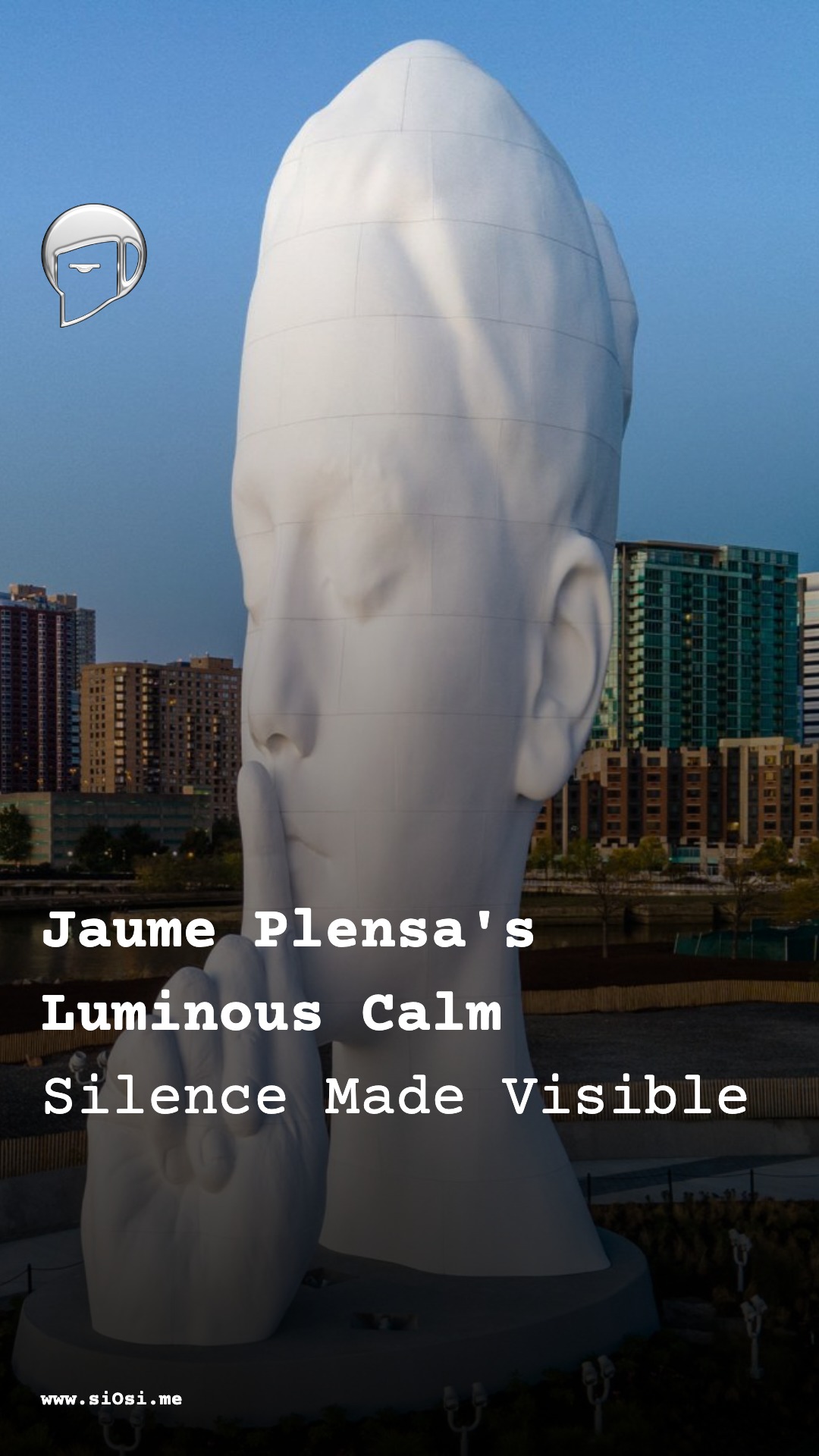
On this day in 1955, Jaume Plensa was born in Barcelona, crafting sculptures that turn silence into something you can almost touch. siOsi celebrates his vision of lightness and openness, where bodies become chambers of light and skin feels like a threshold. His figures invite contemplation over spectacle, with porous forms that soften space and evoke a quiet, interior radiance. In works like Invisibles at the Palacio de Cristal, absence becomes presence and volume turns into breathing room. This is beauty as poetry, restraint as power, and the human figure as a vessel for reflection. siOsi draws from Plensa's world to remind you that true style listens before it speaks, creating moments of calm in a noisy world.
Jaume Plensa’s aesthetic impact is one of silence made visible. Born in Barcelona in 1955, he has built a sculptural language that favors the contemplative over the declarative, the porous over the monumental, and the spiritual over the theatrical.
Plensa’s visual world is marked by lightness, openness, and translucence. In works such as Invisibles, the Reina Sofía describes his intervention as filling the void of the Palacio de Cristal with transparent, hollow sculptures, deliberately stripping away mass to make absence itself legible. That choice is central to his beauty language: bodies become chambers of light, skin becomes threshold, and volume becomes breathing space. The effect is not decorative in a conventional sense. It is atmospheric, as though the figure were composed of air, shadow, and suspended thought.
His signature forms often feel human but unsealed. Plensa works across sculpture, drawing, prints, set design, installations, and architectural collaborations, yet the recurring visual mood remains the same, a patient dialogue between body and emptiness. Faces and figures in his work tend to carry a quiet inwardness rather than expressive display. The posture is rarely aggressive. Instead, it suggests stillness, gravity, and a kind of ethical poise, as if the body were listening rather than performing.
The emotional charge of his work is tied to his belief in poetry, silence, and community. Barcelona’s cultural profile of Plensa notes that he speaks of poetry as a revolutionary force and of silence in a world “too noisy,” where it is difficult to find oneself. This helps explain why his sculptures do not read like spectacles of identity or fashion in the usual sense. Their beauty is austere, reflective, and tender. They create a mood rather than an image to be consumed. Their style is one of restraint, where the visual field is organized around intervals, gaps, and the fragile dignity of the human figure.
In spatial terms, his work often behaves like a body without armor. A sculpture by Plensa can seem skeletal, veiled, or threaded with line, as if contour mattered more than surface finish. The result is a tactile contradiction: the works may be massive, yet they feel delicate. They may occupy public space, yet they evoke intimacy. This tension gives them a distinctly modern emotional presence, one that softens architecture rather than dominating it.
What his work still evokes today is a cool, luminous calm. It can feel mournful without becoming heavy, and meditative without becoming remote. The glow is not glossy but interior, a kind of radiance that seems to come from within the form rather than from external polish. That is why his sculptures continue to feel contemporary: they offer beauty as contemplation, the body as vessel, and presence as something quiet, porous, and enduring.