

Sun in LeoMoon in ScorpioFirst Quarter
Coco Chanel's Birth Sparked a Revolution in Ease and Elegance
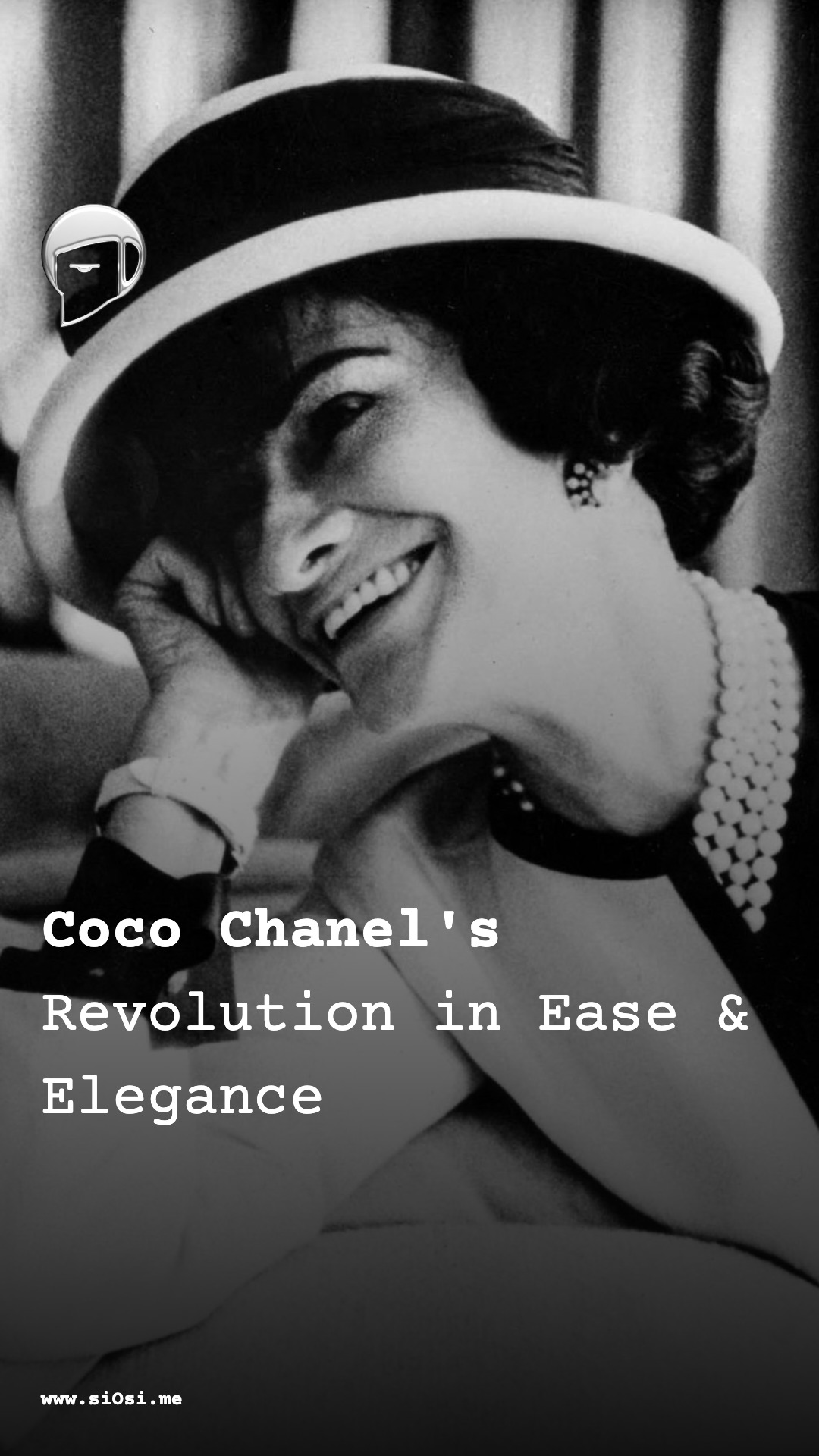
On this day in 1883, Coco Chanel entered the world and began reshaping women's fashion forever. She traded stiff corsets and ornate layers for fluid jersey fabrics, straight lines, and a boyish silhouette that moved with the body. Her little black dress, Chanel suit, and quilted bag became icons of confidence without strain. At siOsi we honor this cool, lucid spirit that frames elegance as freedom. Chanel elevated simple palettes and costume jewelry, turning practicality into quiet polish and the body into something self-possessed and modern. Her vision still feels lightly radical today.
Coco Chanel’s birth in 1883 belongs to the origin point of a visual revolution. Her work replaced stiffness with breath, turning women’s dress toward ease, motion, and pared-down elegance. The result was not only a new silhouette, but a new emotional posture, one that looked unforced, self-possessed, and modern.
Her aesthetic language was built from straight lines, softened tailoring, and fluid fabrics. Chanel made jersey, then an inexpensive material associated with men’s underwear, into something supple and chic, and she used it to create clothes that moved with the body rather than imprisoning it. Against the ornate weight of corsets, petticoats, and decorative excess, her designs favored comfort and simplicity, with a sober clarity that made the body appear freer and more alive. The Chanel suit, the little black dress, and the quilted bag with chain strap became signatures of this visual grammar, each one combining practicality with a quiet, exacting polish.
The emotional effect of Chanel’s style was profound. Her clothes projected confidence without strain, elegance without display, and luxury without heaviness. The look she helped define was associated with a slender, boyish line, cropped hair, tanned skin, and an active, independent bearing, all of which became part of her own lived iconography at the Metropolitan Museum of Art. In place of ornamental femininity, she proposed a body that could move, work, and inhabit space with poise.
Her palette and textures also carried meaning. Chanel’s favored colors, often described as plain and restrained, allowed cut and texture to speak more loudly than embellishment. She elevated costume jewelry and imitation stones into deliberate style statements, making the decorative feel intelligent rather than ostentatious. Even her enduring emblems, from camellias to bows, stars, and lion heads, suggest a visual world where symbolism is refined into emblem rather than overwhelm.
What remains striking today is the feeling of her work: cool, lucid, and lightly radical. Chanel still evokes an atmosphere of brisk air, polished surfaces, and movement unimpeded, as if elegance were a form of freedom rather than restraint. That emotional glow endures because her style does not merely ornament the body, it frames the body as capable, modern, and self-governing.