
Sun in VirgoMoon in GeminiThird Quarter
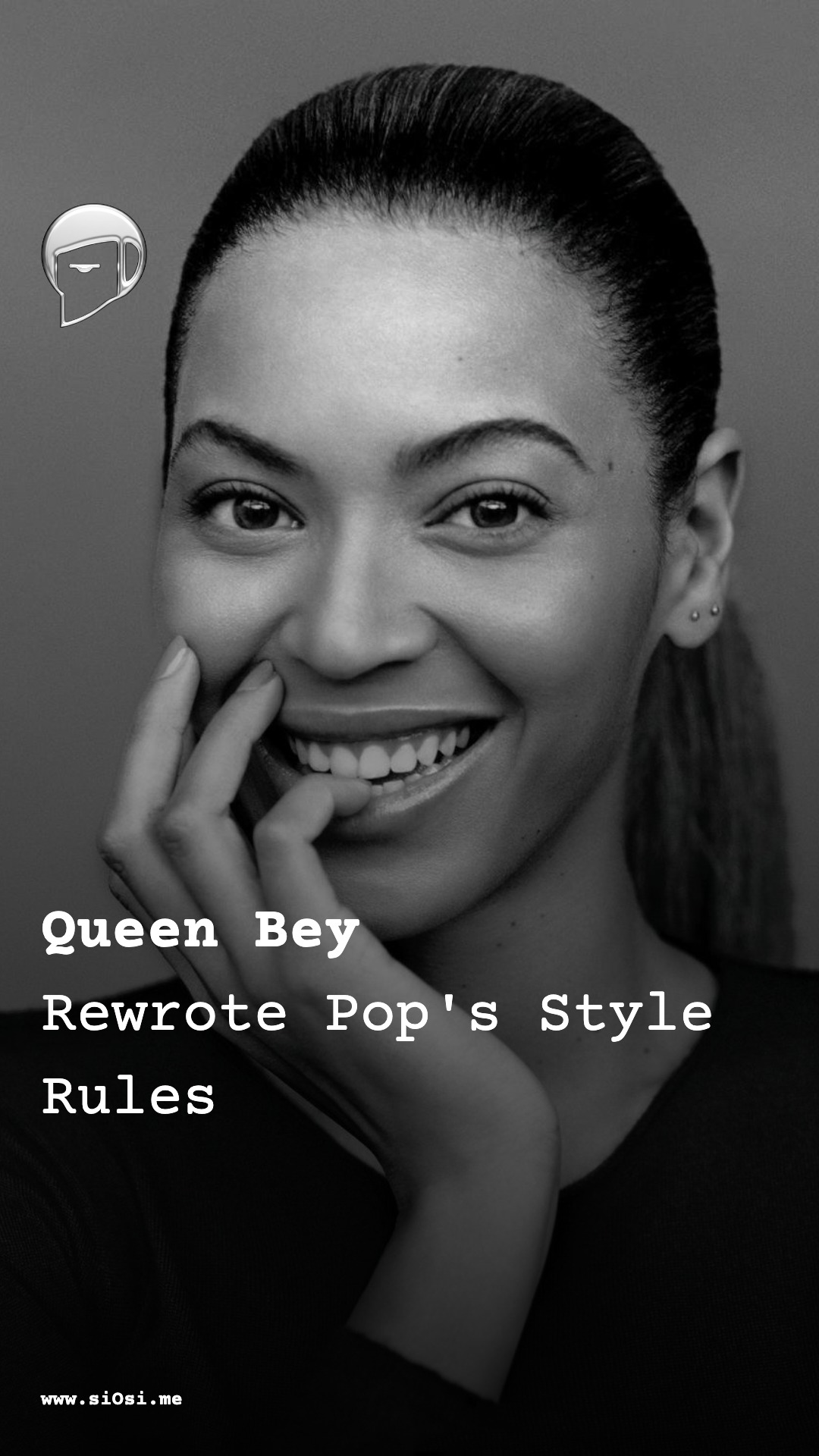
Beyoncé's 1981 Arrival Rewrote Pop's Style Rules
Born in 1981, Beyoncé stepped in and turned every stage into a living sculpture of power and shine. From Destiny's Child matching satin sets to those razor-sharp bodysuits that made Single Ladies a global blueprint, her looks always mixed family craft with stadium command. One vivid detail: that yellow Roberto Cavalli dress in Lemonade, chiffon whipping as she swung a bat down the street. It showed how fabric, sweat, and Southern heat could tell a whole story of rage and radiance. Her braids and crystals keep proving beauty is effort, lineage, and pure motion all at once.
Beyoncé’s birth in 1981 marks the arrival of an artist whose influence on fashion, beauty, and visual culture would unfold as a long, intensifying arc – from coordinated satin and rhinestones to an almost mythic armour of crystals, latex, braids, and light. Her impact is not only a succession of outfits, but a sustained exploration of how a Black female body can occupy the stage as monument, athlete, goddess, worker, ancestor, and contemporary woman, often all at once.
At the core of her visual language is a shifting silhouette that has gradually rewritten the grammar of female performance dress. In the Destiny’s Child years, the group’s matching looks – often designed and sewn by Beyoncé’s mother, Tina Knowles – brought a distinctly Black Southern vernacular of pageant, church finery, and Houston street glamour into mainstream pop. Midriff-baring tops, low-slung trousers, and lace‑up leather in closely coordinated colour stories created a collective silhouette: four bodies moving as one highly patterned unit, shimmering under stage lights in satin, lamé, and rhinestones. The clothes felt home‑made yet aspirational, a visible stitching together of familial craft and pop ambition.
From 2008, the “Sasha Fierce” period sharpened this into a harder, more geometric line. The silhouette narrowed into the now‑canonical bodysuit: high‑cut legs, cinched waist, strong shoulders, and long, bare legs that read like exclamation points of muscle and shine. Designers such as Thierry Mugler, Dsquared2, Emilio Pucci, and The Blonds built elaborate leotard‑based costumes for the I Am… Sasha Fierce and Mrs. Carter Show tours, layering metal corsets, spikes, and crystal grids over stretch fabrics. Mugler spoke of exploring “the duality between being a woman and a warrior,” a description that captures the tension between softness and armour in her stage image. The bodysuit, once a tool of ballet, gymnastics, or aerobics, becomes here a uniform of command: the torso encased and sparkling, the limbs exposed as instruments of labour and choreography.
The “Single Ladies” video distilled this into an almost diagrammatic vision of contemporary performance femininity. Three women in a plain white space, clad in black leotards, pumps, and one gloved hand, are defined almost entirely by line: the sharp angle of hips, the diagonal of an arm slicing across the frame, the pendulum swing of hair. The choreography, partly inspired by Bob Fosse, foregrounded staccato hand movements, hip pops, and weight shifts, turning the body into a graphic metronome. Under hard, even lighting, the black fabric reads as ink, the skin as moving paper, the entire image a study in high contrast. This minimalism magnified the emotional register: joy edged with defiance, eroticism edged with autonomy. The look was deliberately accessible – Beyoncé later recalled that her mother made the one‑shouldered bodysuits the night before filming, wanting something any fan could wear – yet it became one of the defining images of 21st‑century pop style.
The bodysuit as Beyoncé’s signature has both celebratory and critical readings. Writers in Christian and feminist media have noted the persistence of this near‑nude silhouette, asking whether it reduces her to a leggy spectacle or whether, in its repetition, it becomes a statement of self‑possession and vocational athleticism. Her costumes require and reveal physical strength: platform heels, corseted leotards, and densely beaded fabrics that must survive hours of choreography under hot lights. The result is a visual language of disciplined glamour, where beauty is explicitly tied to effort, rehearsal, and resilience rather than an effortless ideal.
Hair and makeup have been equally central to her aesthetic impact. Across her career, Beyoncé’s hair has moved through glossy, honey‑toned waves, precise bobs, tightly controlled high ponytails, and, increasingly, braids and natural textures that reference African and African‑diasporic styles. These shifts are not merely cosmetic. In visual projects like Lemonade and Black Is King, intricate braiding, sculptural cornrows, and gravity‑defying ponytails function as visual allegories of lineage, complexity, and continuity. Under saturated lighting – deep blues, hot yellows, bruised purples – the hair becomes a moving architecture framing the face, catching highlights, and marking out the arc of her movement.
Her makeup style has evolved from early‑2000s frosted lips and metallic shadows to a more controlled, almost painterly emphasis on skin. Contemporary looks often feature a luminous, even base with precise contouring, a neutral or wine‑stained mouth, and an eye defined by long lashes and deep liner that can register from the farthest seat in a stadium. The skin is presented as glowing yet worked, highlighting cheekbones and brow bone in a way that acknowledges both artifice and embodied presence. In critical discussions of her feminism and body politics, scholars have noted that this highly curated image can simultaneously affirm Black beauty and risk reinforcing stringent ideals of thinness, symmetry, and grooming. Yet her consistent celebration of curves and athletic muscularity has also provided many viewers with an alternative to waifish or waif‑androgynous beauty norms.
A defining thread across Beyoncé’s fashion is her relationship to Black Southern and Black diasporic style, especially in how she brings vernacular aesthetics into high production value visuals. The 2018 Coachella performance, later titled Homecoming, drew heavily on the culture of Historically Black Colleges and Universities. Marching‑band jackets, majorette‑style bodysuits, and fraternity‑inspired hoodies appeared in saturated yellow and pink, riffing on HBCU step shows and halftime pageantry. The dancers’ uniforms – embellished leotards, sequined shorts, and high boots – echoed the visual codes of majorette teams, where precision, sensuality, and discipline combine in a vivid street‑meets‑stadium glamour. Scholars have argued that Beyoncé’s persistent use of decorated leotards and bodysuits across performances reflects this majorette influence, weaving it into the global pop vocabulary.
Her visual albums, especially Lemonade (2016) and Black Is King (2020), extend this into a full world‑building practice where fashion becomes not accessory but narrative engine. Lemonade, created with a team of directors and styled largely by Marni Senofonte, weaves together Southern Gothic, Afro‑Surrealist, and haute couture references. The now iconic yellow Roberto Cavalli dress in the “Hold Up” segment, with its flowing ruffles and corseted bodice, frames Beyoncé as both wrathful and radiant. The dress’s chiffon flutters, shredding and whipping through the air as she strides down a city street smashing car windows, the canary colour vibrating against grey concrete and asphalt. The gown’s soft movement contrasts with the violence of the bat in her hand – a juxtaposition that visually articulates the album’s preoccupation with rage, betrayal, and tenderness.
Throughout Lemonade, fabrics do emotional labour. White eyelet cotton dresses and headwraps evoke Southern spiritual gatherings and ancestral rites; heavy Victorian lace and high collars recall histories of respectability and constraint; denim and camouflage nod to contemporary resistance and street protest. The textures – broderie anglaise, kente cloth, velvet, leather – carry historical weight. Against this, her body is continually reframed: as grieving wife, ancestral priestess, matriarch, soldier, and lover. The camera lingers on small sensory details: winds catching the hem of a dress, beads clinking in braids, condensation on a glass of lemonade, sunlight through gauze curtains. The overall visual field feels humid, mossy, sometimes near‑swampy, grounding her star image in the specific heat and lushness of the American South.
Black Is King, directed by Beyoncé and styled by Zerina Akers, amplifies this practice into a near‑baroque pageant of African and diasporic fashion. Across more than sixty looks, she moves through hand‑embroidered feathered gowns, crystal‑encrusted bodysuits, cowrie‑shell corsets, beaded headpieces, and sharply tailored suits. The fashion critics who catalogued the film’s credits noted the extraordinary range of designers, from global haute couture houses to independent African labels such as Tongoro Studio and Adama Paris. The costumes use colour as emotional architecture: cobalt blue gowns against desert landscapes, emerald tulle against lush greenery, dense gold sequins under warm, almost ecclesiastical light.
In this visual universe, the body is alternately deified and multiplied. Beyoncé appears as queen, mother, ancestral figure, but the camera often pulls back to reveal ensembles of dancers and community, all richly dressed. Hair sculptures rise like crowns; face jewelry and body chains transform skin into decorated surface; patterned suits on male dancers destabilize traditional gendered expectations of who gets to sparkle. Fashion writers have described Black Is King as a “celebration of Black beauty” crafted through clothing and styling that foregrounds Black skin as the primary canvas on which colour and light perform. Sweat, dust, water, and fabric are all given equal importance in the frame. The effect is one of visual abundance that refuses scarcity, rendering Black bodies as inexhaustible sources of elegance, imagination, and futurity.
Underlying these visual choices is a discernible philosophy of beauty and the body. Across interviews and lyrics, Beyoncé has engaged the tension between “pretty” as pain and “pretty” as choice, asking in songs like “Pretty Hurts” whether the pursuit of beauty damages the self, even as she continues to perform in painstakingly crafted high‑glamour looks. Critics of her feminism have pointed to this contradiction: messages of self‑love are delivered via a body that adheres closely to contemporary beauty ideals, including narrow waist, toned limbs, and carefully managed hair and makeup. Yet other commentators regard her as a figure who insists that glamour, artifice, and sexual self‑presentation can coexist with political consciousness and artistic seriousness.
Her performance presence often literalizes this duality. On stage, she moves between hyper‑controlled, almost robotic sequences and moments of apparent abandon – hair whipping, sweat visible, breath audible between phrases. Costumes are structured so that they can register these states: stiff, almost armour‑like bodices that crack open at the hips or décolletage; long capes that can be shrugged off to reveal a simpler base layer; sequined surfaces that gleam more intensely as she exerts herself. The body presented is not purely decorative, but working, strained, and rewarded with applause.
Today, Beyoncé’s visual legacy feels at once settled and still expanding. The leotard‑for‑the‑pop‑star has become standard issue in mainstream performance, a shift that fashion journalists explicitly trace back to the Single Ladies era and the Mugler‑designed Sasha Fierce tours. The staging of large‑scale pop shows increasingly treats fashion as narrative, echoing the integrated approach of Lemonade, Homecoming, and Black Is King. Within fashion discourse, she has helped normalize the idea that a Black woman can move fluidly between streetwear, haute couture, and African designers, carrying all three with equal authority.
Emotionally, her imagery continues to emit a particular kind of glow: a blend of warm theatrical light on brown skin, the sparkle of crystals and sweat, the solidity of thighs and hips in motion, the persuasive power of a face framed by hair that refuses to stay still. To watch her work is to see beauty presented not as static ideal but as a sequence of frames in which effort, lineage, and spectacle meet. The afterimage is one of intensity and fullness – a sense that fabric, body, and sound have been used up, in the best sense, in the act of performance.