
Sun in VirgoMoon in AquariusWaxing Gibbous
Lithuanian visionary who painted music into color
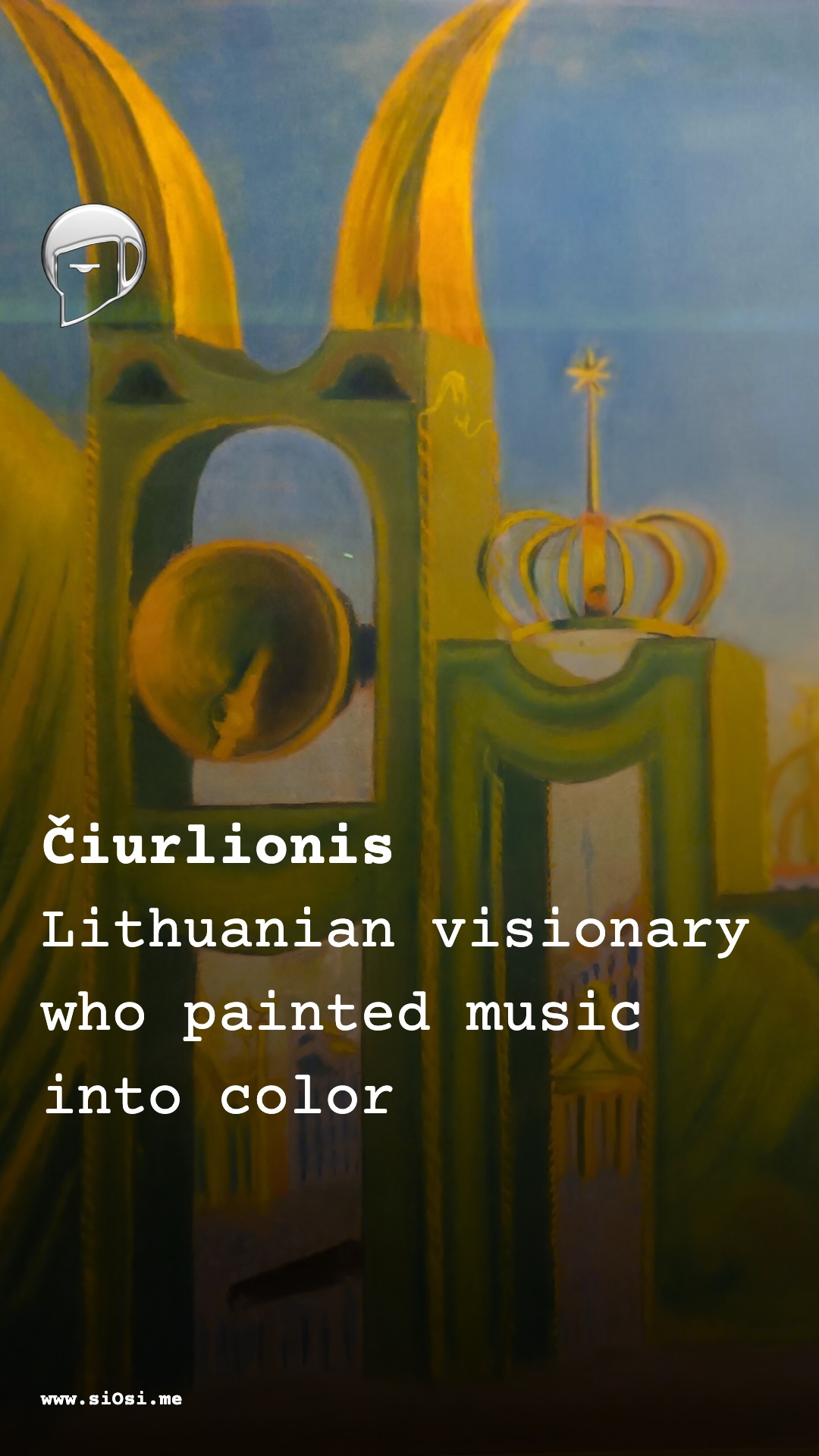
Born in 1875, Čiurlionis turned sound into luminous color and drifting line. His sonata cycles unfold like quiet symphonies on canvas, with twilight glows and floating forms that feel almost alive. One vivid detail: he treated musical tempo as the rhythm of brushstrokes, making every arc and circle breathe. The result is a hushed, cosmic stillness that still feels fresh today. Step into that threshold between myth and infinity.
Mikalojus Konstantinas Čiurlionis, born in 1875, left a visual language that feels suspended between a hymn and a dream. His art helped shape Baltic Symbolism into something distinctly Lithuanian, where line, color, and rhythm become carriers of inward life rather than mere description.
Čiurlionis’s aesthetic impact begins with music translated into image. His paintings were built on a system of correspondences between sound and sight, where musical volume could be felt as intensity of color and contour, and musical tempo as the rhythm of line and structure. This gave his work a rare, almost synesthetic atmosphere, as if the eye were being asked to listen. In that sense, his visual art did not simply depict the world, it organized feeling into cadence, pause, and crescendo.
His signature visual language is marked by luminous color harmonies, fluid linear movement, and a symbolic spatial order that often feels elevated, aerial, and cosmological. Later work developed into the so-called sonata form, in which imagery unfolds in cycles rather than single scenes, echoing musical composition while moving toward abstraction. Forms are frequently simplified into verticals, arcs, circles, and architectural silhouettes, but these shapes are rarely rigid. They seem to breathe, drift, or reverberate, as if they are made of air and memory rather than stone. Even when he used architectural motifs, they tended to function symbolically rather than as literal record.
The emotional register of Čiurlionis’s work is quiet but expansive. His paintings often gather the hush of twilight, the shimmer of dawn, or the deep interior glow of a vision seen just before waking. The palette described in scholarship as subtle and harmonious suggests a restrained radiance rather than brilliance for its own sake, with color serving atmosphere, metaphysical suggestion, and meditative depth. This gives his work a delicacy that feels tactile, yet immaterial, as though velvet, mist, water, and starlight had been translated into pigment.
In terms of beauty and the body, Čiurlionis did not promote fashion in the conventional sense, but his art carries a philosophy of spiritualized form. The human figure, when present, is often absorbed into larger cosmic or natural systems, reflecting a worldview in which person and universe are continuous rather than separate. That attitude shapes the emotional presence of his work today: not glamour, but stillness; not ornament, but inner luminosity. His images still evoke a mood of contemplation, a sense of the body standing at the threshold of nature, myth, and infinity.
What remains most contemporary in Čiurlionis is his feeling for atmosphere. His art can seem to hover between Symbolism and early abstraction, yet it remains warm with human intuition, not coldly formal. The glow it leaves is faintly nocturnal, faintly sacred, and profoundly serene, a visual world in which color becomes thought and shape becomes music.