
Sun in VirgoMoon in LibraWaxing Crescent
Witkin Turns the Grotesque Into Pure Radiance
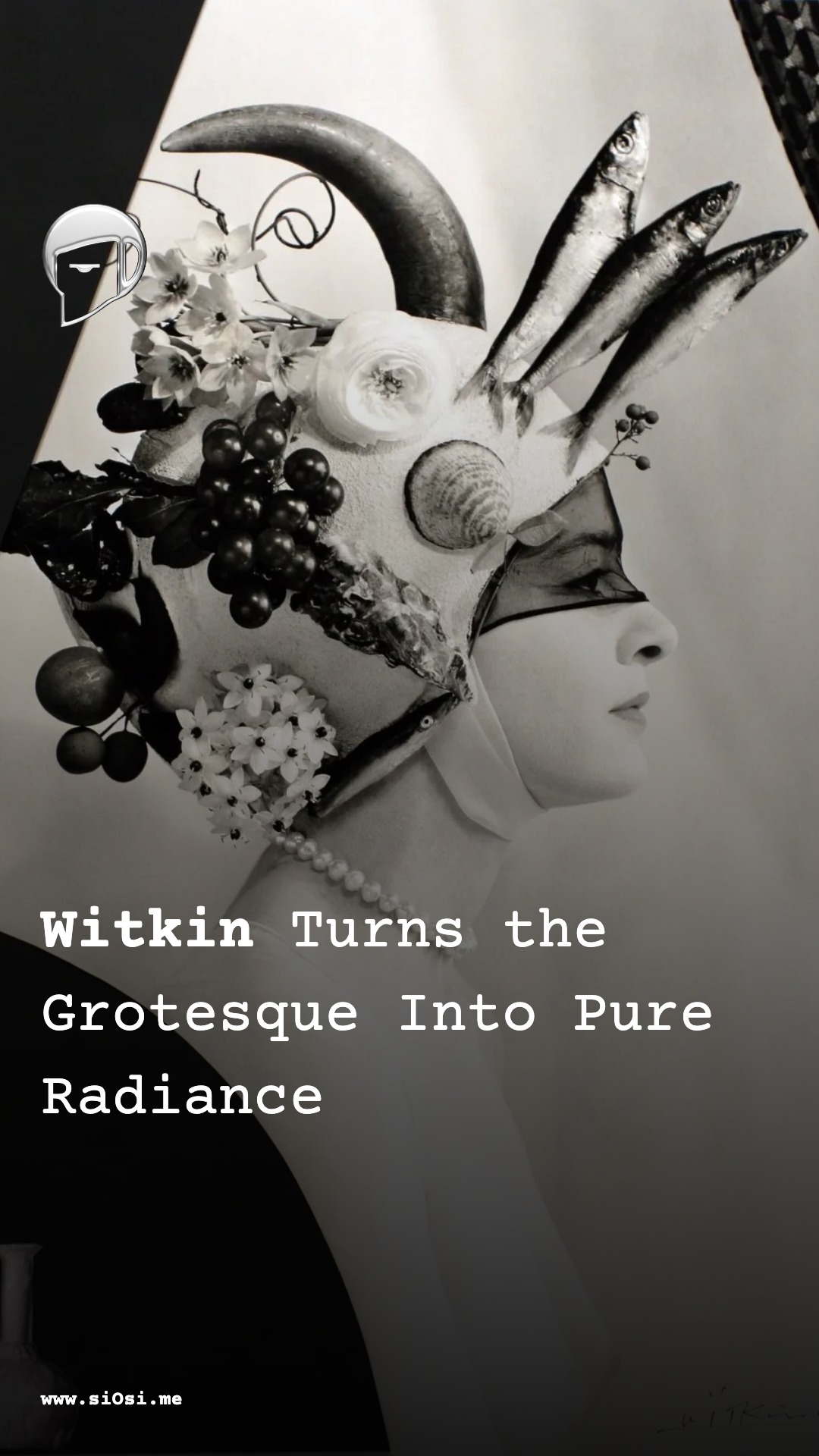
Witkin makes broken bodies look holy. He stages amputees, sex workers and sideshow stars like Renaissance saints, proving difference itself can glow. One vivid detail: that final glass box in McQueen's Voss show, a masked nude breathing through a tube while moths swirl. The photos feel like damaged relics you want to touch. His mix of clinical chill and quiet ceremony still shapes how fashion shoots treat scars, prosthetics and solemn faces today.
Joel-Peter Witkin’s work occupies a singular place in the late twentieth‑century imagination: a theater of bodies and relics in which beauty is found not in symmetry or youth, but in damage, abstinence, excess, and sanctified flesh. His photographs cast a long, oblique shadow across fashion, beauty, and style, reshaping how the body can be staged, adorned, and venerated.
1. Aesthetic impact: beauty in the grotesque
Witkin’s visual universe is built around the human body, especially those bodies conventionally excluded from ideals of fashion and beauty: amputees, dwarfs, people with physical differences, sex workers, fetishists, and sideshow performers. Central to his practice is the conviction that every body contains a unique and irreducible beauty, and that difference itself is a kind of radiance. His photographs insist that glamour can coexist with disfigurement, that eroticism can inhabit decay, and that tenderness can bloom in the vicinity of death.
According to exhibition texts and interviews, Witkin actively “pushes the boundaries of our perception of sexuality and physical beauty,” using the camera not to document but to consecrate. The images operate as altarpieces for marginal bodies: carefully lit, elaborately posed, solemn, and ceremonially arranged. What might have been spectacle is instead ritual. The effect on contemporary style has been profound: designers, photographers, and image‑makers have borrowed his grammar of reverence and discomfort, staging fashion within environments of clinical coldness, religious allusion, and psychological unease.
His early and sustained influence on fashion culture is visible in the translation of his photograph Sanitarium into the final tableau of Alexander McQueen’s Spring/Summer 2001 “Voss” show – a nude, masked figure in a glass box, breathing through a tube, surrounded by fluttering moths, revealed at the end of a claustrophobic runway presentation. Here Witkin’s sensibility is rendered as fashion: an institutional setting, a body as specimen, a mixture of fragility and menace, and a final image that feels like a medical miracle and a religious vision at once.
2. Signature visual language: line, light, texture
Witkin’s images are neither spontaneous nor incidental; they are meticulously staged dramas, closer to painted altarpieces and salon tableaux than to documentary photographs. He prepares compositions through detailed pencil or charcoal drawings, devising the architecture of each frame – the placement of limbs, the direction of necks, the flow of drapery, the relationship between objects and bodies. This premeditated structure yields photographs with an unmistakable visual language.
Lines and shapes. Bodies in Witkin’s work are often arranged in classical poses: contrapposto torsos, reclining nudes, pyramidal groupings that recall Renaissance and Baroque compositions. Limbs form strong diagonals that cut across the frame, while circular forms – eggs, skulls, bowls – punctuate the mise‑en‑scène as visual anchors. The line is disciplined but restless: amputated arms, twisted spines, and prosthetic devices interrupt the expected flow of the body, producing an aesthetic of broken classicism.
Silhouette and posture. Silhouettes tend to be heavy, rooting the figures in space like monuments or reliquaries. Models are frequently posed with a formal stillness that evokes devotional painting: eyes closed, heads tilted in minor ecstasy or resignation, hands folded or extended in gestures of offering. Even when the body is nude, the posture is ceremonious rather than casual; the nudity is presented as something consecrated, an object of veneration rather than display. This solemnity has influenced fashion presentations that treat the model less as a walking mannequin and more as a living statue or specimen.
Light and contrast. The light in Witkin’s work often falls like a narrow blessing: concentrated beams that illuminate face, torso, or wound, leaving the surrounding architecture in shadow. Contrast is strong but not glossy – highlights have a powdery quality, shadows a sepulchral depth. The images are frequently processed to achieve brownish, sepia, or silvery tonalities; Witkin has used coffee, tea, selenium, wax, and other pigments to distress and alter his prints. The surfaces are scratched, torn, stained, or polished, resulting in photographs that look like damaged reliquaries or salvaged archival objects.
This treatment of photographic materiality has seeped into visual culture more broadly: fashion campaigns and editorials that appear “aged,” “found,” or ritualistically damaged echo Witkin’s practice of making the print itself an object – not just an image, but a tactile relic.
Texture and surface. Texturally, Witkin’s images are dense. Hair appears tangled or matted; skin is shown with scars, lesions, wrinkles, calluses; fabrics are worn, frayed, or thick with symbolic weight. The props – bones, religious statues, classical busts, animal parts – contribute hard, cold surfaces that contrast with human flesh. Chemical treatments lend the photographs a crusted, smoky texture, as if the images had passed through fire or burial. There is a deliberate friction between the softness of bodies and the hardness of environment.
3. Color, fabric, and adornment
Although many of Witkin’s photographs are monochrome, their treatment of tone carries a strong sensorial presence. The brownish and silvery tints, created through alternative chemical processes, recall the patina of old icons and cabinet cards. Blacks feel like soot or velvet; midtones resemble aged paper, polished bone, or dull metal. Color, where present, tends to be muted: blood browns, ash whites, sickly greens, ecclesiastical reds.
Fabrics and costume. Clothing in Witkin’s images is seldom fashionable in a contemporary sense; instead, it suggests the wardrobes of religious ritual, circus performance, or decaying bourgeois interiors. We see heavy drapery, veils, corsetry, medical bandages, theatrical costumes, and fragments of uniforms. Textiles often carry strong symbolic resonance: veils for concealment and revelation, bandages for both injury and erotic binding, lace and satin for fallen elegance. These garments have influenced fashion designers who stage models in institutional or ritual garments, using hospital gowns, straightjackets, and veils in ways that echo Witkin’s blend of vulnerability and ceremony.
Adornments are similarly charged. Crowns, masks, rosaries, crosses, and prosthetics function as both costume and icon. Witkin frequently combines religious symbols with erotic or abject elements, creating a visual language in which beauty is inseparable from blasphemy, desire from penitence. This fusion has shaped a broader fashion sensibility that delights in the collision of sacred and profane – lace paired with leather restraints, cruciform jewelry in fetish contexts, couture gowns styled within asylum or mortuary settings.
4. Movement and emotional presence
Despite the stillness of their staging, Witkin’s photographs are full of implied movement, not in the sense of kinetic action but in emotional and spiritual motion. The compositions often resemble frozen rituals, interrupted dreams, or tableaux at the threshold between life and death.
Movement. Bodies may be poised as if mid‑gesture – an arm lifting, a head turning, a hand reaching – yet the camera arrests them at a point of tension. This suspended movement generates a mood of unease: the viewer senses that something has just happened or is about to happen, but never witnesses the event. In fashion contexts, this sensibility appears in runway shows and photo shoots that use glass enclosures, padded rooms, and clinical spaces as stages for models who seem to inhabit psychological narratives rather than simply display garments.
Emotional presence. Witkin’s work oscillates between outrage, wonder, pity, erotic fascination, and a strange serenity. Viewers sometimes report visceral discomfort, yet the images also carry a devotional calm. Blind Magazine notes that his photographs evoke “a range of reactions from outrage to wonder,” with beauty emerging inside the macabre rather than apart from it. This emotional ambiguity is central to his influence on style: he offers a vocabulary for beauty that is neither reassuring nor aspirational, but contemplative and unresolved.
Faces in his work may appear mask‑like, eyes closed in interior reverie or open with startling directness. Many models seem unconcerned with being watched; their presence is not performative but inward. This interiority has seeped into beauty photography that favors anti‑expressive, solemn faces, treating makeup and hair as extensions of psychological states rather than mere surface decoration.
5. Philosophy of beauty and the body
Witkin’s stated philosophy is explicit: he searches for beauty within the grotesque, confronting and dismantling conventional notions of physical perfection and sexual normalcy. He has described the female body, alongside the egg of a chicken, as “the most beautiful form ever created,” placing organic forms and reproductive symbolism at the center of his aesthetic. The body, for him, is both temple and specimen, capable of sanctity even in extremity.
His influences include Christian iconography, Renaissance and Baroque painting, Greek mythology, and the tradition of the grotesque, all braided into a single, dense visual theology. Traditional depictions of martyrdom, suffering, and resurrection are reinterpreted through bodily disfigurement, erotic tension, and theatrical staging. The effect is not simply transgression for its own sake, but a meditation on mortality and grace. Corpses, amputated limbs, and medicalized bodies are posed with a painterly dignity that insists on their spiritual value.
In interviews, Witkin has emphasized that he finds beauty “in every life,” including those marginalized by society. His use of models whose bodies challenge physical norms is motivated by identification; he has said he feels connected to these individuals, considering himself one of them. Beauty, in this framework, is a recognition of singularity rather than adherence to a standard. This view has permeated contemporary fashion and beauty discourses that celebrate “outsider” models, yet Witkin’s stance is more austere: he does not merely include difference, he liturgically centers it.
6. Influence on fashion, beauty, and style
Although Witkin is not a fashion stylist “in the formal sense,” his imagery has become a reservoir of references for production designers, music video directors, genre authors, and fashion designers. Writers have traced his aesthetic in films like Jacob’s Ladder, in music videos such as Nine Inch Nails’ “Closer,” and explicitly in Alexander McQueen’s Spring 2001 runway presentation. These appropriations adapt his atmosphere of distressed sanctity, institutional unease, and corporeal spectacle.
In fashion, his impact is visible in several recurring motifs:
-
Institutional environments: Runway sets and editorials that reproduce psychiatric wards, hospital corridors, glass observation rooms, and padded cells echo Witkin’s use of clinical and mortuary spaces as backdrops for ritualized bodies.
-
Tableau vivant and final reveal: The use of static, enclosed figures revealed at climactic moments – as in the “Voss” show’s glass box – mirrors Witkin’s penchant for staged tableaux in which a central figure is framed as a revelation.
-
Marginal bodies as central icons: The casting of non‑normative bodies in high fashion contexts, treated not as spectacle but as icons of a particular aesthetic truth, reflects Witkin’s insistence on the holiness of difference.
-
Distressed and archival visual styles: The widespread preference for aged, scratched, sepia‑toned, or chemically distressed photographic surfaces in fashion imagery owes much to Witkin’s material experiments, which make the print itself resemble a relic unearthed from some private archive.
In beauty culture, Witkin’s influence is subtler but present in the embrace of unsettling looks: pale, almost corpse‑like skin finishes; dark, hollowed eye makeup; hair that appears wet, tangled, or shorn; prosthetics and bandages used as aesthetic elements rather than purely narrative devices. The notion that glamour can inhabit a body marked by medical intervention, disability, or trauma is a cultural shift to which Witkin has contributed.
7. How the work feels today
Encountered now, Witkin’s photographs retain an eerie, solemn glow. They feel less like images of transgression than like relics from an imagined order in which beauty has been redefined as the courage to look at what is ordinarily refused. The emotional tone is quiet, almost liturgical: the viewer is invited not to thrill at shock, but to sit with discomfort until it turns into a form of recognition.
The surfaces of the prints, with their scratches, stains, and sepia hues, read as archival artifacts, giving the sense of a recovered devotional photography from a lost cult of the body. The figures, though often presented in disturbing configurations, radiate a curious tenderness. Their imperfections, wounds, and peculiarities are framed not as failures, but as evidence of singular existence. Witkin’s insistence that beauty lies in every life, and that the grotesque can be a vehicle for spiritual insight, remains a challenging counterpoint to the smoothing and airbrushing that dominate much contemporary visual culture.
Today his influence within fashion and style persists as an undercurrent: whenever a runway show feels like a ritual enacted in a clinical chamber, whenever a beauty editorial treats scars or prosthetics as sites of radiance, whenever a photograph bears the patina of age and the quiet of a reliquary, one can sense Witkin’s aesthetic – a dark, contemplative luminosity that continues to shape how we see the body, and what we are willing to call beautiful.