
Sun in VirgoMoon in TaurusWaning Gibbous
Allen Jones and His Glossy 1969 Fetish Furniture
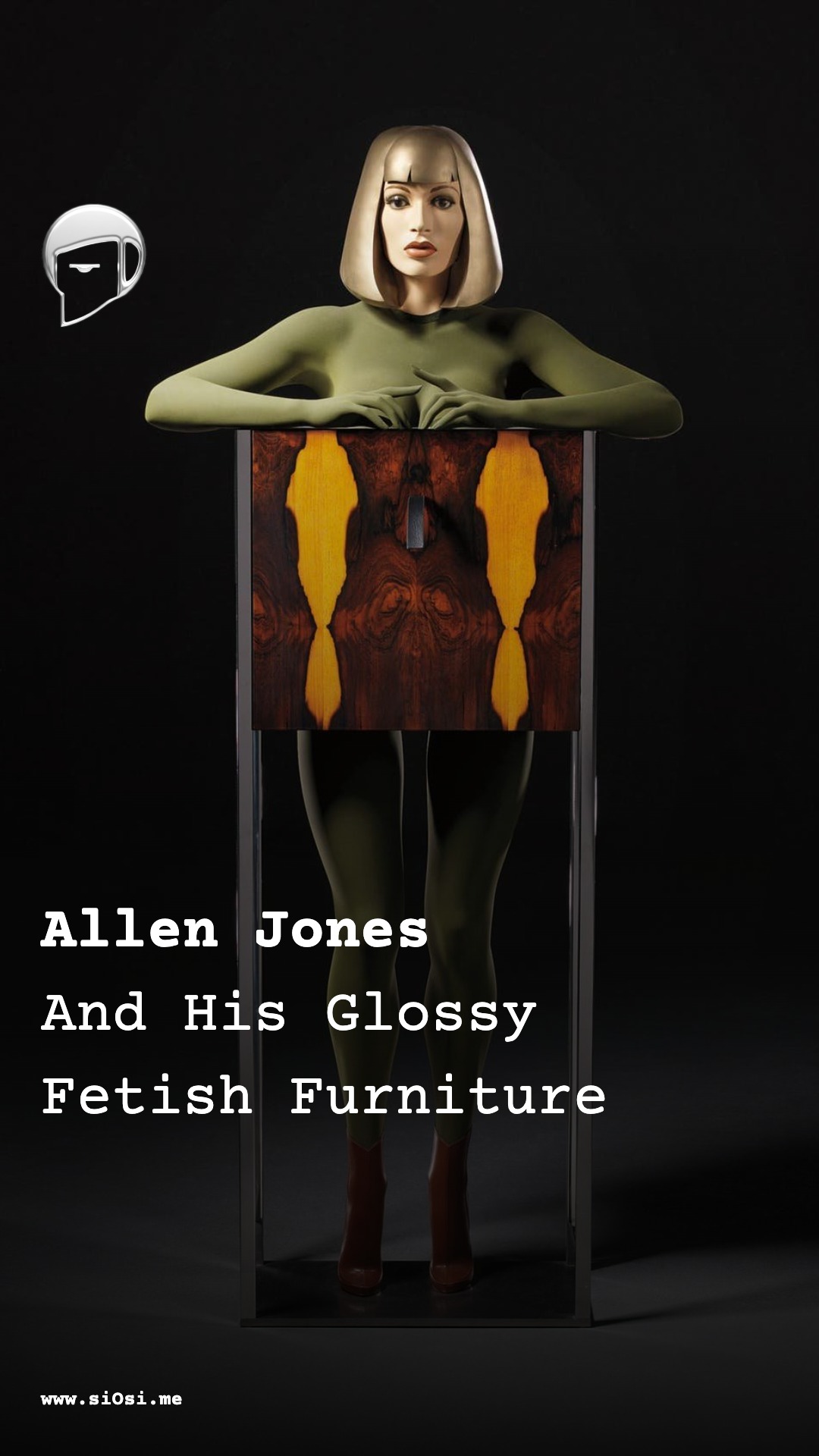
Allen Jones turned high-gloss fetish figures into literal furniture in 1969. His fibreglass sculptures freeze runway poses with opera-length gloves, corsetry and reflective boots. Saturated colors and sharp contours still spark debates on glamour and power. The lacquered surfaces catch light like a never-ending shop-window display. That charged stillness feels both retro and totally now.
Allen Jones, born on 1 September 1937, enters cultural memory as a figure who made the body itself into furniture, spectacle and surface, pressing the language of fashion, fetish and display into sculptural form and chromatic painting, and leaving an image world that still feels disquietingly polished, erotically lit and emotionally ambivalent. His work does not simply depict style, it stages style as a kind of choreography of power – glossy boots, cinched waists, lacquered surfaces and theatrical poses arranging desire and domination into a tableau that hovers between glamour and threat.
Visual language, silhouette and the staging of the body
Allen Jones first gained prominence in the 1960s as part of British Pop Art, developing brilliantly coloured, semi‑abstract paintings in which male and female figures are entangled in fluid, interlocking forms. In these early works, the figure is often reduced to curving planes and hard‑edged contours, bodies compressed into bands of colour that read as limbs, torsos, profiles only after the eye has traced the outlines. The silhouette becomes an abstract sign rather than an anatomical description, so that masculinity and femininity appear as graphic rhythms – arcs, diagonals, and cut‑out shapes – more than as individual portraits.
The turn that secures his cultural notoriety, however, comes at the end of the 1960s with the creation of the fibreglass sculptures Hatstand, Table and Chair (1969). These life‑size female figures, rendered as items of furniture, crystallise his visual language:
- Silhouette: Each figure is poised in a hyper‑stylised stance, shaped to support an object – a hat, a glass, a seated body. The curve of a back becomes the contour of a chair; outstretched arms form hooks; a bent torso offers a tabletop. The silhouette is engineered as utility, the eroticised body translated into a functional outline.
- Line and contour: The figures have sharp, almost cartoon‑clean edges, their anatomy simplified into smooth, continuous curves that emphasise breasts, buttocks and legs. This compression of detail intensifies certain zones of the body, turning them into focal points in a manner akin to fashion illustration, where the line lingers over waist, hip and heel.
- Color and surface: The sculptures are finished in saturated hues and high‑gloss surfaces, echoing commercial display mannequins and the graphic brightness of Pop Art. Skin becomes an enamelled plane, with colour functioning less as flesh tone than as icon, flattening the human into a polished, consumable object.
The overall effect is paradoxical: movement is implied by the dynamic pose, but arrested by the fact of being furniture. The body is frozen at the height of gesture, immobilised in a perpetual offering. This stillness, combined with high chroma and gloss, produces a sense of erotic tension – as if a fashion photograph has been solidified, its moment of display extended indefinitely.
Clothing, fetish and the aesthetics of erotic display
The figures in Chair, Table and Hatstand do not wear everyday garments; they are dressed in fetish wear – rubber or latex, opera‑length gloves, corsetry and stiletto boots. Their outfits echo both the stylised imagery of fetish magazines and the glossy styling of late‑1960s fashion photography, yet in Jones’s sculptures the clothing is not simply adornment but a structural device that articulates the body’s segmentation.
Several specific aesthetic registers intersect here:
- Fetish fashion: Latex and rubber garments, high‑heeled boots and tight gloves emphasise containment and restriction. These materials cling to the body, creating sharp transitions between covered and exposed skin, and lend a reflective sheen that catches the light in hard highlights along thighs, breasts and arms. The texture is imagined as smooth, slightly resistant to touch, suggestive of both desire and control.
- Bondage imagery: Jones’s figures are described as “women in bondage gear”, their anatomy exaggerated around breasts and buttocks to heighten erotic visibility. The bondage motif is not only thematic but visual: straps, seams and lacing function as graphic lines carving the body into zones. The image of restraint is rendered with the clarity of an advertisement – clean, legible, designed to be instantly readable at a distance.
- Fashion‑show posture: The women stand in attitudes strongly reminiscent of runway or showroom poses – weight shifted onto one leg, back arched, chest projected, head turned just away from the viewer. This model‑like bearing reinforces the connection to the fashion world, where posture itself is a medium of style, communicating availability, aloofness or theatrical bravado.
Jones has spoken of wanting to reject the minimalist aesthetic of sixties modernism by embracing “the spirit of the sexual revolution”. In visual terms, this means replacing austerity, sparse geometric form and neutral palettes with sensual excess: saturated colours, glittering surfaces, voluptuous contours. His sculptures translate the erotic and the fashionable into a kind of total design, where the figure becomes a styled object that fuses clothing, gesture and furniture into a single, seamless entity.
Light, contrast and the theatre of display
The imagery of Jones’s work is grounded in the aesthetics of the shop window, the magazine spread and the stage. Hatstand, Table and Chair have often been described as embodying “the spirit of the 1960s” and causing an “international sensation”, a response deeply connected to their theatrical quality.
The sculptures rely on several intertwined effects of light and contrast:
- Gloss and reflectivity: The fibreglass and lacquered surfaces catch directional light, producing sharp highlights along curves and creating an almost cinematic glow. This luminous polish suggests the lighting of a nightclub or a fashion shoot – concentrated beams grazing skin and fabric to dramatise texture.
- Chromatic contrast: Strong colour contrasts – dark boots against lighter “skin”, vivid garments against neutral surroundings – push the figure forward in space, intensifying the sense of display. In painting, Jones similarly uses bold, juxtaposed hues to make limbs and torsos vibrate against flat grounds, echoing the language of poster design and advertising.
- Spatial staging: The arrangement of the three figures in an installation allows them to form a kind of erotic interior – a room furnished by bodies. When seen together, they function as a scenography, each sculpture a prop around which an imagined narrative of use unfolds. The gallery thus becomes a stage for an unspoken performance of sitting, drinking, hanging garments, with the female body as supporting architecture.
This theatrical staging carries into his later work, including paintings such as Life Class (1968) and sculptural pieces like The Tango (1984), where intertwined dancers or models are rendered in vivid colours and sweeping contours. Even when the female figure is no longer literal furniture, she remains part of a choreographed drama of display, bodies interacting like stylised characters in a tableau that foregrounds costume, gesture and rhythm.
Philosophy of the body: objectification, glamour and Pop
Jones’s work has been repeatedly read through the lens of objectification. Feminist critics and members of the Women’s Liberation Movement denounced Hatstand, Table and Chair in 1970 as “supremely exploitative of women’s already exploited image”, asserting that the sculptures reduce women to “nothing more than a piece of furniture”. Later analysis in aesthetics has treated the installation as emblematic of a familiar historical narrative in which women are rendered passive, servile objects in art.
At the same time, other commentators have argued that Chair in particular broke new ground as an “anti‑canonical representation of the female figure”, resonant with Pop Art’s engagement with mass production, consumer capitalism and sexual subculture. Jones himself has insisted that his intention was not to subordinate women but to confront the viewer with the ubiquity of eroticised bodies in contemporary visual culture, to treat the language of sex and fashion as ready‑made material in the same way Pop artists approached brands or advertisements.
From a stylistic standpoint, his philosophy of the body can be distilled into several key attitudes:
- The body as commodity image: By stylising the female figure to the point of near cartoon, dressing her in fetish gear and finishing her in shop‑window gloss, Jones reveals the convergence of sexuality and commodity display. Beauty is not presented as inner truth but as surface – colour, contour, sheen – manufactured and arranged according to the logics of consumption.
- The body as architecture: Transforming women into furniture literalises the metaphor of “support” often embedded in fashion imagery, where bodies support garments, accessories and poses. Jones turns hips, backs and thighs into structural elements, compelling the viewer to confront the taken‑for‑granted ways in which female bodies are imagined as infrastructure for other people’s comfort.
- The body as Pop sign: In his paintings and prints, figures are reduced to legible graphic signs, fields of flat colour edged with sharp lines. The body becomes a visual logo for desire, femininity or masculinity, echoing Pop Art’s interest in how images circulate and acquire meaning in mass culture.
This philosophy is aesthetically seductive and morally troubling, and much of Jones’s cultural impact resides in this tension. The polished surfaces and elegant silhouettes invite a “fashion eye”, trained to admire cut, line and texture; the conceptual frame insists on the viewer’s complicity in the objectification that such admiration can entail.
Emotional presence and contemporary resonance
More than fifty years after their first exhibition, Hatstand, Table and Chair continue to provoke intense reaction, their debates reignited in almost every decade since 1969. Within contemporary visual culture, saturated with images of styled bodies, their emotional presence has shifted yet remains unsettled.
Viewed today, the works often evoke:
- Uneasy glamour: The gleaming boots, cinched waists and manicured poses carry a glamour that feels both alluring and faintly archaic – linked to the fantasy imagery of mid‑century fetish magazines and fashion photography. The gloss has a retro quality, yet the emotional pull of the styling persists, creating a friction between historicised taste and ongoing desire.
- Ironic clarity: In an age where the commodification of bodies is widely discussed, the literalness of turning women into furniture can feel starkly allegorical, as if the sculptures have become visual theses about objectification. Their clarity can read as chilling: there is no metaphor, only a direct, material translation of cultural habit into three dimensions.
- Ambivalent sensuality: The figures retain a sensual charge – the curve of a thigh, the arch of a back, the gleam of tight fabric – yet the knowledge of their history of controversy and critique inflects that charge with ambivalence. The viewer experiences both aesthetic pleasure in line and colour, and discomfort at the power dynamics that structure that pleasure.
In the broader landscape of fashion and beauty imagery, Jones’s work anticipates and reflects certain recurring motifs: the fusion of furniture and body in editorial photography, the fetishisation of high‑heeled boots and latex garments, the choreographing of female posture around the needs of objects – bags, glasses, hats – and spaces. His sculptures and paintings can feel like three‑dimensional crystallisations of the poses and attitudes that saturate magazines and advertising, making visible the internal architecture of those images.
Today, the emotion that his work carries is a kind of charged stillness. It glows with the lacquered light of late‑1960s Pop, with the saturated colours and confident lines of an era fascinated by both liberation and display. At the same time, it casts a long, cool shadow over contemporary conversations about the body, reminding viewers that beauty and style within modern visual culture have often been premised on turning living figures into objects, surfaces and supports. The result is a body of work that feels luxuriously finished yet morally unresolved – a polished mirror in which fashion’s allure and its violences are reflected together.