
Sun in VirgoMoon in SagittariusFirst Quarter
Baz Luhrmann Born to Turn Beauty Into Pure Spectacle
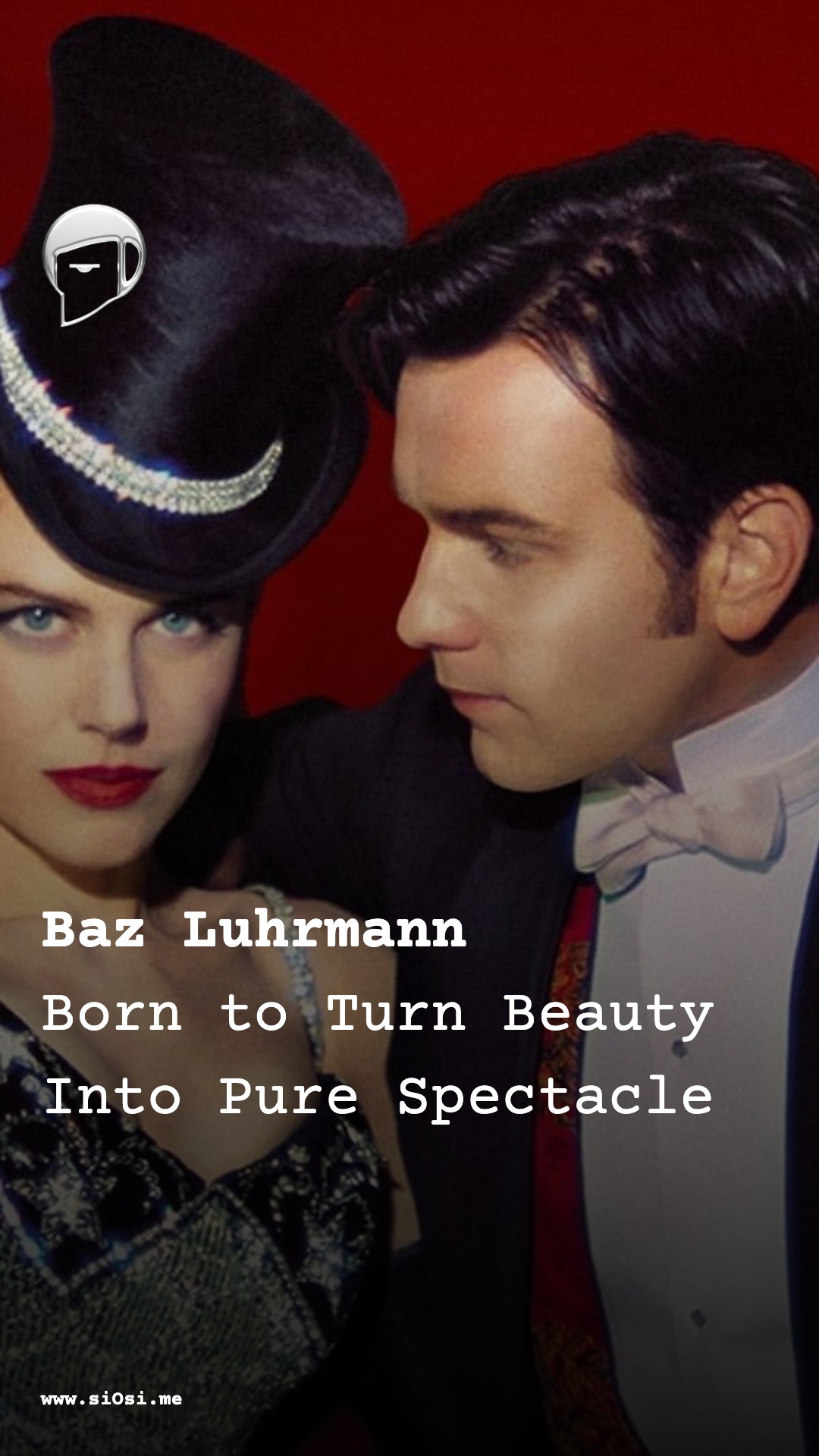
Baz Luhrmann hit the world in 1962 and made every frame feel like a fever-bright stage. Color crashes in reds and golds while sequins and feathers whip through kinetic cuts. His characters dress like they are already performing their own heartbreak or triumph. That same maximalist energy still pushes stylists to layer texture and light until the look vibrates. One vivid detail: he asked for a created Paris built on real artificiality so the glamour would read right now.
Baz Luhrmann, born in 1962, brought to late‑20th‑century cinema an aesthetic that feels less like filmed reality and more like a fever‑bright theatrical world, where costume, light, music and movement are composed as a single, overwhelming sensory experience. His films do not simply tell stories, they stage beauty itself – as spectacle, as performance, as emotional excess – and this has had a lasting influence on fashion, styling and the visual language of contemporary culture.
Heightened worlds: spectacle as a philosophy of beauty
Critics and scholars consistently describe Luhrmann’s style as a form of heightened reality, a “created world” that deliberately foregrounds artifice. His signature “Red Curtain” approach is defined by three guiding principles: the story is set in an amplified universe rather than naturalistic everyday life, it uses simple, familiar narratives, and it employs techniques that keep the audience aware they are watching a crafted spectacle, inviting emotional participation rather than passive viewing.
Visually, this means that beauty is never incidental. Color, cut, makeup and gesture are turned up to a near‑baroque intensity, the frame packed with detail that vibrates against fast editing and kinetic camera movement. Scholars of his work note that he comes out of a theatrical background and adapts stage techniques to cinema, prioritizing form over narrative – what matters is not what is told, but how it is told – so appearance and aesthetic surface carry the weight of feeling.
The resulting philosophy of beauty treats the body as a performative object within a designed field. Characters are always “in costume,” and the films consciously explore when even the characters themselves are playing roles through dress, gesture and pose. Beauty in Luhrmann’s universe is thus inseparable from performance: the face is lit to dramatize an emotion, the silhouette is cut to articulate a character’s desire, the choreography of movement in space becomes a visible map of longing, ambition or self‑destruction.
Signature visual language: color, texture, movement
Luhrmann’s visual language is frequently described as maximalist, “flamboyant,” “flashy,” and “overloaded with detail,” a kind of avant‑garde pop theatre rendered in cinematic form. Several key elements define this style:
-
Color: Critics speak of “rich multi‑colored palettes exploding from the screen” and “dramatic use of colour design” that complements both rapid editing and overtly mobile camera work. Reds, golds, electric blues and jewel tones are laid against deep blacks and velvety shadows, creating high contrast that feels almost tactile. The effect is not merely decorative: color becomes an emotional temperature, cycling between warm saturation for romance or ecstatic performance and colder, desaturated tones for disillusion or loss.
-
Texture and fabric: In works such as Moulin Rouge! and The Great Gatsby, sets and costumes are described as “extravagant,” “baroque,” and “overloaded with detail.” Satin, sequins, feathers, beaded chiffon, lacquered surfaces and polished glass accumulate to produce a shimmering skin over the world, so that every movement fractures light. Costume notes from Moulin Rouge! emphasize that Luhrmann asked for a “created Paris” defined by “real artificiality,” manipulating the elements of period fashion so they would “read now” to a contemporary audience. The goal is a surface that feels both historically inflected and resolutely present.
-
Line, silhouette and posture: The collaboration with costume designer Catherine Martin has produced wardrobes that play deliberately with period silhouettes – from fin‑de‑siècle can‑can skirts and corseted waists to the dropped, diaphanous lines of Jazz Age evening wear – yet always with anachronistic twists. Characters often stand or move as if on stage: chests lifted, chins angled to catch light, bodies arranging themselves into tableaux that echo theatrical traditions. Scholars of his “Red Curtain Cinema” note the influence of the performing arts in his framing and blocking, which frequently resembles stage compositions that invite the viewer to read emotional states through posture and spatial relationships.
-
Movement and editing: Luhrmann’s films use dancing, music and rapid editing to create a sense of constantly heightened sensation. The camera races, swivels and plunges, cutting swiftly between wide spectacles and intimate close‑ups, so that fabric whips across the lens, sequins flash, faces flare in and out of focus. This restless motion is integral to his aesthetic: beauty is not static; it is something that hurtles, spins, collides. Viewers are meant to feel almost physically carried along by the visuals.
-
Light, reflection, and contrast: Analyses of his work highlight the use of reflections in mirrors and photographs, the influence of advertising imagery, and a conscious play with the male gaze. Glittering chandeliers, neon signage, candlelight and spotlights sculpt the body into alternating zones of visibility and shadow, staging desire as a game of reveal and conceal. Luhrmann’s “created worlds” are often bathed in theatrical lighting that frames faces with halos, or cuts them with dramatic streaks, emphasizing emotional extremity.
Costume as narrative: fashion, anachronism, and the body
Luhrmann’s films have had a notable impact on fashion discourse precisely because they treat costume as narrative vocabulary and because he works with fashion archives and designers in a self‑conscious way.
The 2013 adaptation of The Great Gatsby became a widely cited case study in how cinema can reanimate historical fashion for contemporary sensibilities. Catherine Martin collaborated with Brooks Brothers and Tiffany & Co., mining their archives for menswear and jewelry inspirations. For womenswear, Miuccia Prada contributed more than forty cocktail and evening dresses drawn from Prada and Miu Miu collections, then “backdated” to sit convincingly in the 1920s world. Historically accurate silhouettes – beaded shift dresses, dropped waists, delicate straps, cloche‑like headpieces – were infused with modern runway textures and cutting techniques, producing garments that both evoked Jazz Age glamour and mirrored current high‑fashion aesthetics.
Fashion journalists noted that these images fed back into the runway, with collections from houses such as Gucci and Ralph Lauren drawing inspiration from Gatsby‑style suiting and evening wear. Luhrmann’s interpretation of the 1920s did not simply reproduce archival looks; it codified a particular emotional reading of the era: the sleek, elongated line of the tuxedo as a symbol of brittle aspiration; the fine shimmer of beads on chiffon as a visual metaphor for fragile dreams dissolving under the weight of excess.
In Moulin Rouge!, production notes emphasize that the aim was not historical reconstruction but the creation of a “heightened world” of theatrical Paris that would feel “natural” for characters to break into song. Costume silhouettes deliberately reference the glamour of divas from the 1940s and 1950s rather than restricting themselves to the 1890s setting, creating a collage of eras. Corsets, fishnets, extravagant headpieces and lush velvet coats signal not only sensuality but the self‑conscious performance of sensuality. Dress here becomes a declaration of agency within a marketplace of desire: bodies are adorned, framed and exaggerated to advertise their emotional vulnerability and their capacity for spectacle.
Critical essays argue that Luhrmann’s films often place visual flair at the center of attention, at times in tension with narrative intricacy. This prioritization has had cultural consequences: audiences, designers and stylists come to his work expecting a specific saturation of visual pleasure. His cinema trains viewers to read costume, makeup and choreography as primary carriers of meaning – a habit that reverberates across music videos, fashion editorials and contemporary styling, even when those images are not explicitly referencing his films.
Emotional presence: beauty as overload and catharsis
Commentators frequently describe Luhrmann’s style as “sensory overload,” yet this excess is calibrated and purposeful. The experience is akin to entering a theatre interior where gilt, velvet and mirrored glass combine to heighten every emotion.
In analyses of Moulin Rouge! and The Great Gatsby, scholars note that Luhrmann uses spectacle to draw attention to the “dazzling displays” of visual and aural artistry, making the look of the film itself its own object of emotional investment. Scenes of romantic declaration or tragic collapse are staged in environments that seem almost too beautiful: showers of confetti, cascades of light, swirls of fabric. The beauty of the mise‑en‑scène intensifies the sense of loss when the narrative turns, suggesting that dreams are at their most radiant just as they begin to shatter.
His use of anachronistic music – contemporary pop layered over period costumes and sets – reinforces this emotional simultaneity. The viewer does not inhabit historical time so much as a collage of past and present feelings. This hybrid approach to aesthetics allows Luhrmann to treat beauty as timeless: a beaded flapper dress moves to modern bass lines; a turn‑of‑the‑century can‑can skirt spins in editing rhythms borrowed from music videos. Body and garment become instruments that translate old narratives into present affect.
The emotional presence of his work today is marked by a distinctive glow: a mixture of nostalgia and heightened romanticism that feels recognizably of the late 1990s and early 2000s yet remains strikingly current. Critics label his sensibility “avant garde pop theatre,” “postmodern,” “baroque,” underscoring that his cinema embraces excess as a statement in itself. Beauty is not pared back or minimal; it is abundant, layered, sometimes chaotic. In an era where understated aesthetics often dominate, Luhrmann’s images continue to offer an alternative vocabulary of glamour that is unapologetically ornate.
Beauty, the body, and conscious artificiality
The notion of “real artificiality” articulated by Luhrmann and his collaborators crystallizes his philosophy of the body on screen. Beauty in his films is transparently constructed. The viewer is invited to see the seams: the stage lights, the theatrical makeup, the consciously “costumed” hair. This explicit artificiality does not diminish emotional impact; instead it encourages an awareness that feelings themselves can be heightened through ritual, dress and performance.
Scholarly discussions of his auteurism emphasize how he harnesses the techniques of theatre – framing, choreographed ensemble movement, stylized gesture – to exalt the visual dimension over narrative naturalism. Bodies are often arranged in symmetrical or circular formations, with the camera orbiting or diving, emphasizing their role as components of a larger design. Within this structure, individual faces and figures break forward, lit and costumed to carry arcs of romantic intensity or moral failure.
Beauty here is inseparable from vulnerability. The most elaborately dressed characters are often those closest to emotional ruin. Fine textiles cling to bodies in moments of desperation; pearls and sequins catch tears; tuxedos sit awkwardly on shoulders when the promise they symbolized has collapsed. Such contrasts craft a visual ethics of style: the more the surface gleams, the more it threatens to crack.
Contemporary resonance
Today, Luhrmann’s aesthetic continues to resonate as a touchstone for maximalist, emotionally saturated image‑making. Critics identify his work as emblematic of a broader postmodern tendency that foregrounds style as content, mixing historical references with pop culture in a collage that is both self‑aware and deeply felt. His films have become part of the visual memory of contemporary fashion – especially in their treatment of Jazz Age glamour and fin‑de‑siècle theatricality – yet their true legacy lies in how they elevated beauty and costume from supporting elements to central emotional agents.
The glow of his work persists as an invitation to inhabit beauty as experience: rooms that pulse with color, garments that move like music, faces carved by light into emblems of desire and loss. Luhrmann’s cinema suggests that style is not merely what a body wears, but the entire environment through which that body feels.