
Sun in LibraMoon in AriesWaning Gibbous
Dita Von Teese Revives the Hourglass Silhouette
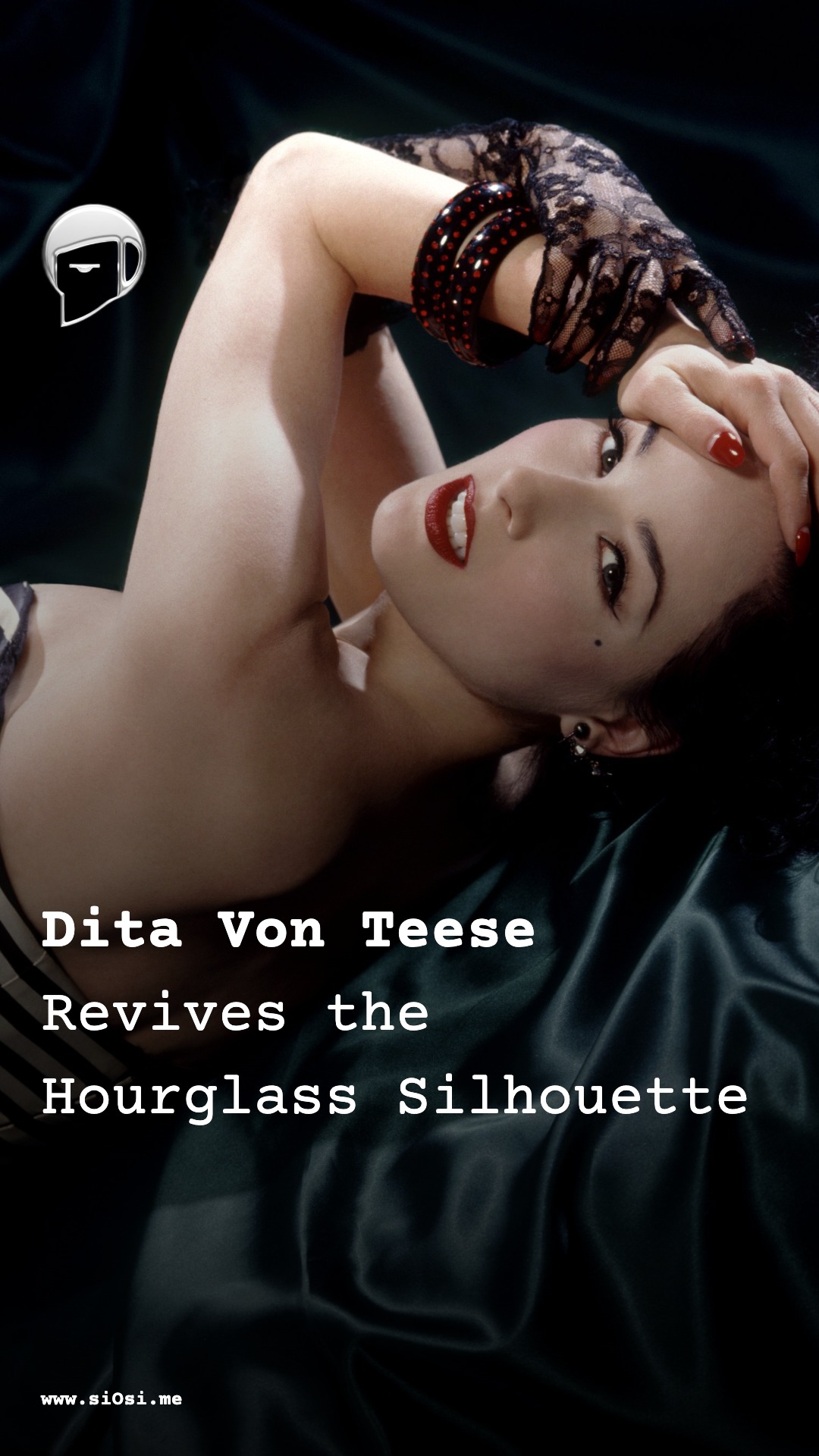
Dita Von Teese turns every entrance into a 1940s tableau. She sculpts that cinched Dior waist with corsets and seamed stockings, letting pale skin pop against velvet and Swarovski sparkle. Her cat-eye liner and matte red pout stay locked in place while she glides through slow glove peels and martini-glass spins. No rush, just deliberate poise and old-school tease. The whole look feels like a living archive of glamour that still reads fresh today.
Dita Von Teese, born 28 September 1972, occupies a singular place in contemporary visual culture as an architect of revived glamour, a careful custodian of historic silhouettes and cosmetics, and a living tableau of burlesque’s sensual restraint. Her impact lies less in novelty than in a meticulous, almost archival reanimation of twentieth‑century beauty codes, translated into the language of late modern fashion and image‑making.
Aesthetic Revival: The Shape of Glamour
From the beginning of her career, Dita Von Teese oriented herself around a very specific historical body: the sculpted, hourglass silhouette of the 1930s, 1940s and 1950s, with its narrow, disciplined waist and rounded hips, displayed under precise tailoring and controlled drapery. Her performances and public appearances rely on corsetry, structured bodysuits, garter belts, and seamed stockings to create an engineered curvature, a deliberate counterpoint to the relaxed athletic lines that dominated mainstream fashion in the 1990s and 2000s.
One sees in her visual language a commitment to the Dior New Look archetype – the cinched waist and full skirt that dramatize the contrast between torso and hem – as well as to the satin‑slicked bombshell body of mid‑century pin‑up photography. The waist is always articulated, never casual; the bust and hips are framed rather than exposed. Even when she appears in lingerie, there is the implication of architecture: boning, hooks, reinforced seams, and layers that disclose their engineering as much as the skin beneath.
This approach effectively reintroduced corsetry to mainstream fashion consciousness, not as fetish costume alone but as a legitimate instrument of silhouette and discipline. Interviews and profiles credit her with reviving interest in vintage lingerie, pin‑up images and burlesque stars, as she describes tracing her own aesthetic from early twentieth‑century lingerie catalogues and pin‑up magazines from the 1930s through the 1960s. The result is an image of the body that is sculpted yet stylized, more tableau than documentary, and deeply aware of its own lineage.
Color, Texture, and Light
Von Teese’s palette is orchestrated with similar historical precision. Accounts of her style emphasize porcelain skin, an impeccable crimson pout, and dark, lacquered hair, creating a strong triad of pale, red, and black that recalls Technicolor film stock and studio stills from Hollywood’s golden age. The skin functions almost as a luminous canvas: matte or satin rather than glossy, designed to contrast sharply with velvet gowns, inky eyeliner, and the shine of patent leather or sequined corsets.
Texture is central to her aesthetic vocabulary. She favors:
- Velvet and satin, which drink and reflect light in alternating ways, constructing a chiaroscuro around the body.
- Swarovski‑encrusted corsets, which transform the torso into a jeweled vessel, catching stage light in small, controlled explosions.
- Opera gloves, seamed stockings, and peep‑toe pumps, whose surfaces – silk, nylon, polished leather – situate the body within the refined sensuality of the boudoir rather than the overtly athletic or streetwear registers dominant elsewhere.
The effect under theatrical lighting is of a carefully staged contrast: pale skin and bright lip emerging from pools of black, navy, or jewel tones, with metallic glints at the waist, hip, or neckline. Burlesque stages and photographic sets use this contrast as compositional structure, recalling fashion photography of the mid‑century period and the work of classic image‑makers, whom she cites among her influences.
Makeup, Hair, and the Face as Icon
Her beauty aesthetic is rigorously codified. She is widely described as synonymous with retro glamour, a reputation she reinforces through a codified routine of:
- Highly defined brows that frame the face with a clear, graphic line.
- Cat‑eye liner, extending the lash line into a wing that evokes 1940s and 1950s screen sirens.
- Matte red lipstick, carefully applied and sharply edged, making the mouth a central focal point.
This is not an improvisational or trend‑driven style. She draws heavily from classic films and iconic fashion photography, notably citing images by Erwin Blumenfeld and vintage Vogue covers as touchstones for her own aesthetic. The face is treated as a reproducible icon rather than a variable canvas. The repetition of this look over decades has given it a kind of stability: a face that feels outside time, anchored more in cinematic memory than in the shifting styles of any particular year.
Hair, equally, is a historical instrument. Glossy, dark waves arranged in controlled, sculptural patterns, often echoing 1940s victory rolls or 1950s bombshell styles, frame the face and neckline with a rhythm that balances the linear sharpness of eyeliner and brows. The hair is rarely undone or unstructured; it speaks of deliberation, of time spent in preparation, and of an ethic of beauty as ritual.
Movement, Posture, and the Tease
Von Teese defines her burlesque practice as “putting the tease back into striptease”, a formulation that reveals how central movement and pacing are to her visual language. Her performances rely on long, elaborate dance sequences with props and costumes inspired by 1930s and 1940s musicals and films, lending them a narrative and choreographic elegance. Instead of rapid, improvisational motion, she emphasizes controlled gesture: the slow removal of a glove, the careful descent into a martini glass, the measured rotation of a corseted torso.
Her posture is part of the spectacle. Observers note a carriage that is upright, balanced, and almost balletic – shoulders drawn back, neck extended, spine poised – creating an impression of poise even in moments of overt sensuality. This bodily discipline articulates her philosophy: sensual display as artwork, not abandon. The tease is not only in the gradual revelation of skin but in the anticipation generated by economy of motion.
In interviews, writers remark on the playfulness of her work, its “sensual and sexual openness that never succumbs to the crass”, suggesting that even in its most extravagant moments it retains a kind of integrity and compositional restraint. She resists the chaotic or obscene; there is always an awareness of line, pacing, and framing.
Philosophy of Beauty and the Body
Von Teese’s philosophy of beauty is historical and self‑constructed. She speaks of early obsessions with the history of lingerie, pin‑up girls, and burlesque stars, using archival images and catalogues as a curriculum for her own aesthetic education. Beauty, for her, is not primarily about naturalness or spontaneity; it is about artifice, craft, and the deliberate performance of identity.
Her writings and interviews emphasize a belief in the transformative power of cosmetics and clothing, positioning beauty rituals as acts of authorship rather than conformity. She experiments with retro glamour’s “little details” – stitching, lace placement, strap angles – and then translates them into modern shapes that retain functional wearability. The body is a site of design, subject to enhancement and stylization, but always via techniques that reference a specific lineage.
This attitude manifests in her insistence on artistic and financial control over her images, designing and copyrighting them herself, which an interviewer notes as a defining element of her modelling and burlesque work. The body, in her practice, is not merely looked at; it is curated, authored, and owned. That ownership underscores her influence on contemporary discourses around retro aesthetics and self‑styled femininity.
Cultural and Fashion Impact
Dita Von Teese is frequently credited with re‑popularizing burlesque, earning her the moniker “Queen of Burlesque” and establishing her as a central figure in the neo‑burlesque movement. From the early 1990s, she performed in strip clubs with little fame or glory, guided by personal obsession rather than external demand, a history she recounts in profiles that emphasize her commitment to the art form before its revival. Over time, her success brought burlesque into renewed public visibility, influencing an entire generation of performers and audiences.
Fashion coverage describes her as a muse to some of the greatest couturiers, regularly appearing on best‑dressed lists and sitting front‑row at shows by Christian Dior, Vivienne Westwood, Jean Paul Gaultier, and Marc Jacobs. Designers and journalists alike reference her as a self‑made style icon, a “glamour goddess” who reintroduced pure American burlesque into modern entertainment and schooled contemporary culture in an older vision of class and beauty. Her collaboration with lingerie brands and her own fashion lines further disseminated her aesthetic into accessible garments, embedding retro detailing – seamed stockings, structured bodices, vintage‑inspired cuts – into mainstream offerings.
Crucially, she did not merely recreate vintage looks; she hybridized them. As one detailed analysis notes, she pairs old‑school elements such as Dior‑style suits, garter belts, and boudoir underpinnings with modern accents: electric hues, crystal‑encrusted corsets, tattoos glimpsed beneath straps. This juxtaposition of historical discipline and contemporary edge helped define a visual lexicon of retro‑modern glamour that remains influential in current styling, editorial photography, and performance.
Her co‑authored book Burlesque and the Art of the Teese / Fetish and the Art of the Teese is described as a textbook authority on burlesque, reinforcing her role as both practitioner and historian of the form. Beyond performance, her second book Your Beauty Mark elaborates her philosophy of cosmetics and self‑presentation, further cementing her authority in discussions of aesthetic self‑fashioning.
Emotional Presence Today
To contemporary eyes, Dita Von Teese’s work radiates a particular emotional atmosphere: a composed, cinematic allure that feels at once nostalgic and sharply controlled. Commentators describe her as “perhaps a piece of vintage treasure sent from the past”, suggesting that her presence evokes a ghost of earlier glamour reinserted into present time. There is an aura of ritual, of preparation, of a woman who has built her own mythology from fragments of film stills, catalogues, and archives.
The emotion her imagery carries is not exuberant spontaneity, but anticipation, composure, and a kind of knowing delight. Her revival of burlesque introduced a space where sensuality is both theatrical and self‑aware, a realm in which garments, props, and lighting collaborate to construct a mood of measured seduction rather than blunt exposure. For many observers, she reactivated the pleasure of looking at constructed beauty – the satisfaction of seams aligned, lips precisely painted, corsets laced to the millimeter.
In the current landscape of rapidly shifting trends, her steadfast devotion to a single aesthetic system reads as almost archival. It offers a reminder that style can be a lifelong discipline, an evolving yet coherent language. The glow of her work today is thus not merely visual; it is conceptual – the quiet assurance of a body and face intentionally designed, the soft but steadfast presence of glamour treated as an art form, studied and sustained across decades.