
Sun in VirgoMoon in CapricornFirst Quarter
Sophia Loren's Sculptural Glamour Still Hits Different
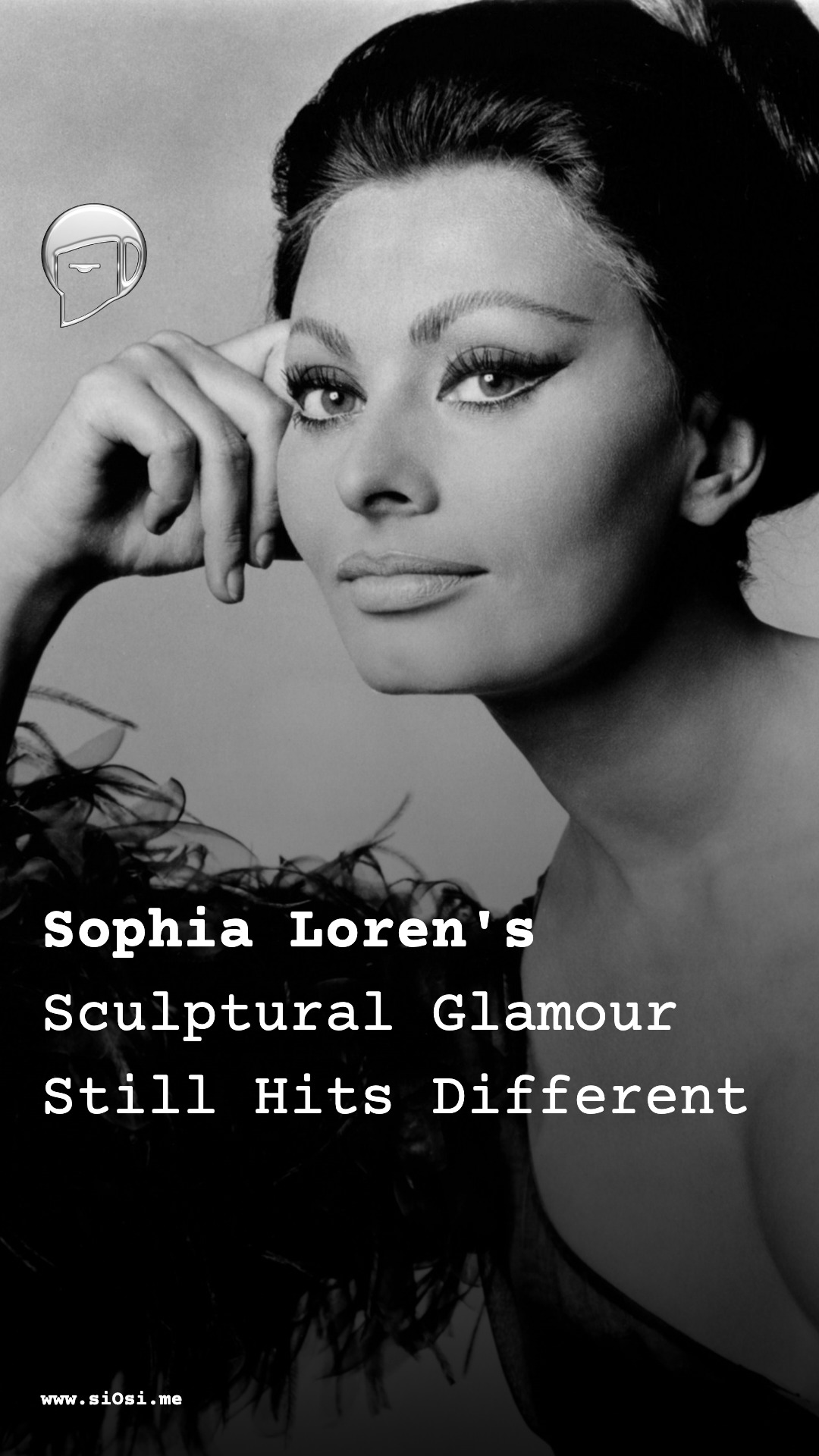
Sophia Loren made curves look like architecture you could live in. Her cat-eye liner and full silhouette flipped the script on what counted as glamour back in the day. That mix of bold brows, glossy hair, and direct gaze turned every look into a quiet power move. She proved beauty could feel warm and sharp at the same time, never brittle or far away. One vivid detail: those saturated red lips against luminous skin still read like confidence in motion.
Sophia Loren’s aesthetic impact rests in the way she made femininity feel architectural and alive at once, as if warmth, volume, and control could occupy the same frame. Born in 1934, she emerged from Italian postwar culture as a visual counterproposal to narrow Anglo-American ideals, bringing Mediterranean features, dark hair, luminous skin, and a full, curved silhouette into the center of international glamour.
Her beauty language was distinctively sculptural. The eyes, widened with cat-eye liner and heavy lashes, became a frame within the face, sharp and theatrical without losing softness; the brows were strong, the lips often a saturated red or rose, and the hair was glossy, brushed into polished volume. This combination gave her an image that seemed both deliberate and abundant, a face of contrast, dark against light, hard line against plush surface. In fashion imagery, that contrast extended into clothing: fitted dresses, pencil skirts, open necklines, and waist emphasis that followed rather than concealed the body’s curve. She did not neutralize shape. She clarified it.
What Loren changed, culturally, was the emotional register of beauty. Her presence suggested that glamour need not be brittle, and that sensuality could coexist with intelligence, wit, and gravity. Sources describing her own view of beauty repeatedly return to an interior quality, something that is felt before it is seen. In her words, beauty was not mere physical perfection, but something inward that appears in the eyes. That philosophy aligns with the image she projected throughout her career, a beauty that was never airless or distant, but grounded in appetite, poise, and self-possession.
The texture of her style mattered as much as its outline. The look was often saturated rather than pale, glossy rather than matte, opulent rather than sparse. Earrings, polished hair, and carefully defined makeup amplified the body’s presence, while the clothing’s structure heightened the sense of a woman fully occupied by her own form. Even when her styling was simple, it felt ceremonial, because she carried herself with a kind of vertical calm, shoulders open, chin lifted, gaze direct. That posture gave her glamour a moral weight, as though elegance were not decoration but a way of standing in the world.
Her influence on fashion and beauty remains visible because it never depended on novelty. Contemporary descriptions continue to identify her with the classic elements of her image, the feline flick, lush lashes, bold lips, and full, shaped brows. Those features still read as current because they encode confidence rather than trend. Her work, and the image around it, feels today like warm light on polished stone, sensual but disciplined, nostalgic but not fragile. It evokes a particular emotional glow, one of abundance held in balance, where body, fabric, and expression seem to agree with one another.
Sources
- pinterest.com
- youtube.com
- vogue.com
- standard.co.uk
- youtube.com
- devdata2.supportflex.nl
- vogue.co.uk
- youtube.com
- designbeauty.it
- beauticate.com
- amalfisandal.com
- youtube.com
- apps-drones.com
- italialiving.com
- living.alot.com
- catwalkyourself.com
- mhoshthemuse.blogspot.com
- cbsnews.com
- goodhousekeeping.com
- en.wikipedia.org
- architecturaldigest.com
- biography.com
- blue17.co.uk
- wmagazine.com
- hautelivingsf.com
- thefamouspeople.com
- theguardian.com
- imdb.com
- foxhistoriccostume.wordpress.com