
Sun in LibraMoon in PiscesFull Moon · Harvest Moon
Paolo Roversi: Fashion in Soft Shadow
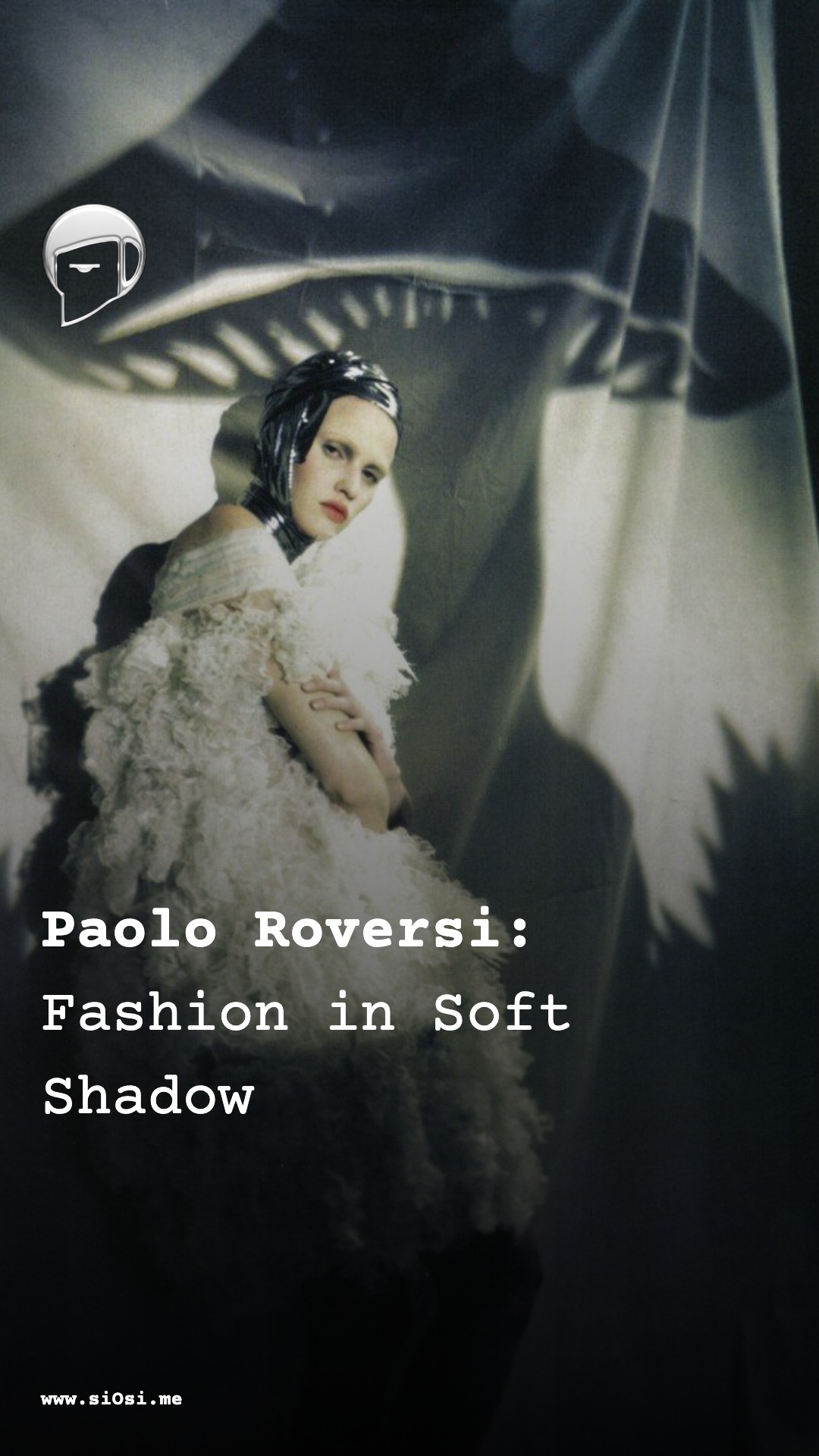
Paolo Roversi makes fashion feel like a secret whispered in half-light. Born in Ravenna in 1947, his long exposures turn fabric and skin into the same glowing surface. A single image gathers slowly, like silk darkening at the edges under weak winter light. He subtracts everything loud until only the quiet essence stays. The result is beauty that feels intimate, never posed.
Paolo Roversi’s visual legacy is one of softness sharpened by restraint: fashion rendered not as spectacle, but as atmosphere. Born in Ravenna in 1947, he became known for a photographic language shaped by shadow, long exposure, and the tactile imperfections of Polaroid, producing images that feel hushed, luminous, and inwardly alive.
His aesthetic altered the emotional temperature of fashion imagery. Rather than the glossy certainty of hard flash and crisp commercial finish, Roversi favored a painterly, often monochrome register, with sepia tones, bare studio backdrops, and a careful modulation of light and darkness. A photograph by Roversi rarely announces itself loudly. It gathers, slowly, like dusk on pale fabric. The face may emerge from shadow, the body may seem suspended between presence and disappearance, and the whole image carries a faint tremor of intimacy. His work is frequently described as minimal, but that minimalism is not empty, it is atmospheric, built from subtraction until only essence remains.
In silhouette, Roversi’s fashion vision tends toward delicacy rather than structure. Garments are allowed to drift, fold, and soften in the frame, so that texture becomes a central event. Fine gauze, sheer layers, matte surfaces, and loose tailoring take on a poetic weight under his light, while skin, fabric, and shadow seem to belong to the same tonal family. The result is not the polished rigidity of a constructed look, but a more vulnerable elegance, one that lets the body appear porous to air and light. His use of large-format cameras and long exposures deepened this effect, making movement feel slightly elongated, as though the sitter were passing through memory rather than posing for a moment.
Beauty, in Roversi’s work, is less a fixed ideal than an emotional condition. He has described style as inseparable from the soul, insisting that it emerges through honesty, sincerity, and repeated work rather than technical display. In another interview, he said his method is one of subtraction, a search for the essence of the subject. That philosophy helps explain why his portraits and fashion images often feel contemplative rather than declarative. Make-up, when present, tends to be absorbed into the tonal field rather than dominate it, and hair is usually styled to preserve a sense of natural movement or fragile poise rather than lacquered control. The body in Roversi’s photographs is not triumphant or aggressively perfected. It is reflective, almost devotional, often carrying a quiet inwardness that makes beauty feel intimate rather than performative.
His visual imagination also draws from place. Sources note that Roversi’s distinctive style is influenced by the Byzantine architecture and cultural history of Ravenna, as well as by the ethereal quality he associated with his childhood surroundings. That inheritance can be felt in the glow of his images, in their reverence for surface, depth, and the sacred half-light of interiors. There is often something altar-like in the way he frames a figure, not because the images are ornate, but because they seem to hold the sitter in a field of quiet attention.
What remains striking today is how contemporary his restraint still feels. In an era often saturated with clarity and excess, Roversi’s work continues to offer a slower visual pulse, tender but unsentimental, dreamlike without losing discipline. His photographs still evoke the feeling of skin touched by weak winter light, silk darkening at the edges, a face turning slightly away before it can be fully known. The emotional glow is not brilliance, but radiance under veil, a subdued, persistent shimmer that lingers after the image has been looked away from.