

Sun in LibraMoon in AquariusWaxing Gibbous
Louise Nevelson and the Quiet Power of Stacked Shadows
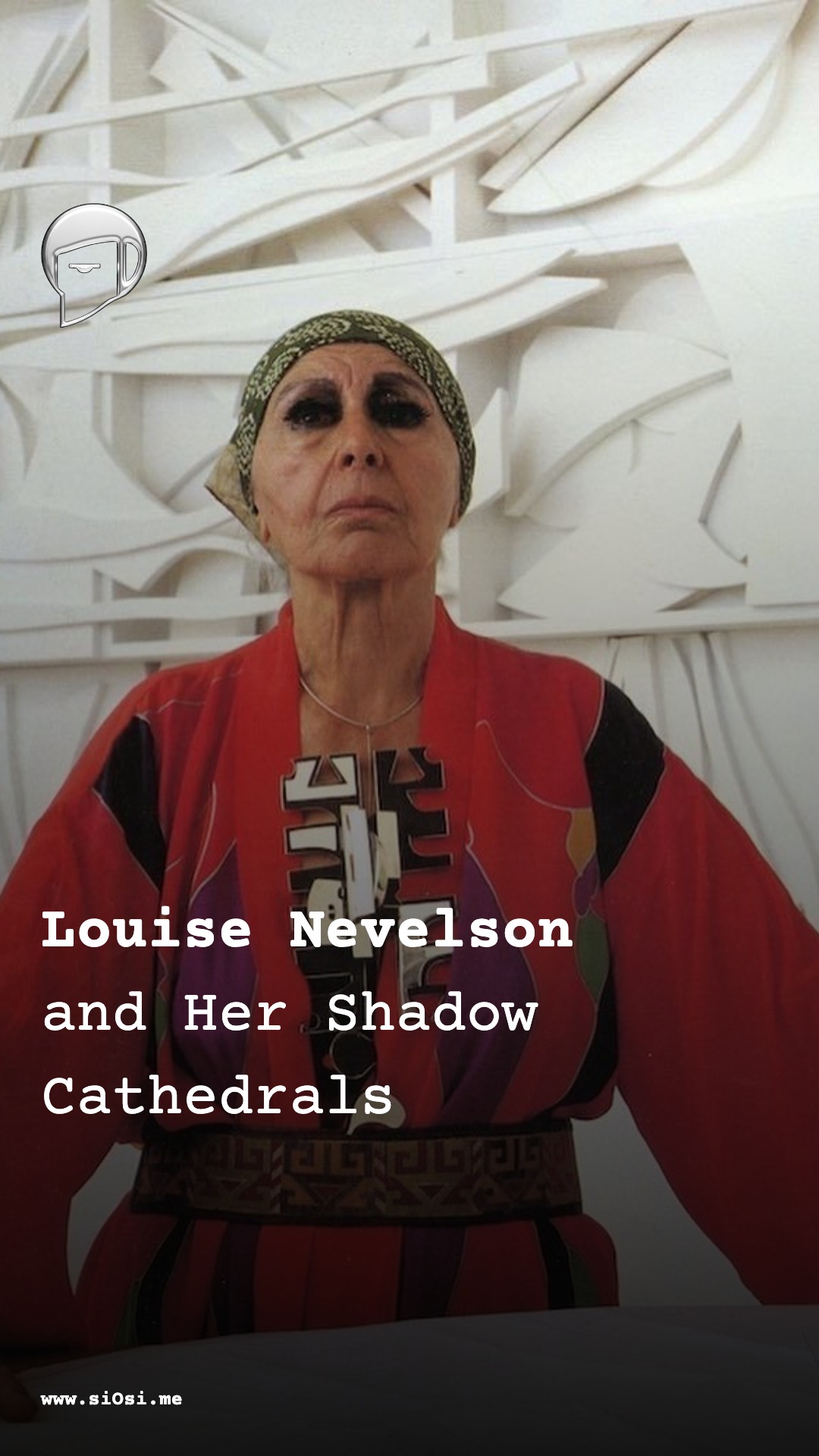
Picture forgotten wood scraps turning into walls that breathe in the dark. Louise Nevelson stacked chair legs and balusters into dense reliefs, then drowned them in matte black so every edge sharpened into silhouette. In white the same forms opened like morning light, edges crisp and full of promise. She called black the most aristocratic color because it held everything inside it, giving cast-off pieces a new spiritual weight. The result feels hushed yet intimate, like memory made solid.
Louise Nevelson’s aesthetic legacy is one of monumental stillness and compressed radiance. She transformed cast-off wood into dense, architectural assemblages, then unified them in matte black, white, or gold so that everyday fragments lost their former identities and acquired a solemn, almost ceremonial presence.
Her visual language is unmistakable. Chair legs, balusters, moldings, crates, and other found wooden pieces were stacked into wall-like reliefs and room-sized environments, producing a sculptural field of recesses, edges, and protrusions that catches light in fine, decisive slivers. In black, the works absorb reflection and sharpen shadow, so the eye reads silhouette before object, mass before detail. In white, the same forms feel airier, more luminous, with edges clarified and the whole field opening into a feeling Nevelson associated with “morning” and “emotional promise”. Gold, used later, introduced a warmer, more baroque glow.
Her philosophy of beauty was radical in its refusal of ornament as mere decoration. Nevelson said black was “the most aristocratic color” and argued that it contained all colors, treating monochrome not as deprivation but as plenitude. She also said that her aim was to give salvaged materials “a spiritual life that surpasses the life they were created for,” a statement that captures the emotional force of her work: it is not about ruin, but transfiguration. The body is implied rather than depicted, yet her sculptures have an architectural scale and an almost bodily gravity, as if they were made to stand beside, and sometimes against, human presence.
The emotional atmosphere of Nevelson’s work remains distinct today: austere, hushed, and strangely intimate. The surfaces feel velvety and nocturnal in black, frostlike and ceremonial in white, while the layered shadows create a sense of enclosure, memory, and inward weather. Her work still evokes a heightened calm, a feeling of gathered fragments made sovereign, and of beauty discovered not in polish, but in depth, patience, and transformation.