
Sun in VirgoMoon in VirgoNew Moon
From Ancient Kohl to Bold Liner: Faces as Canvases
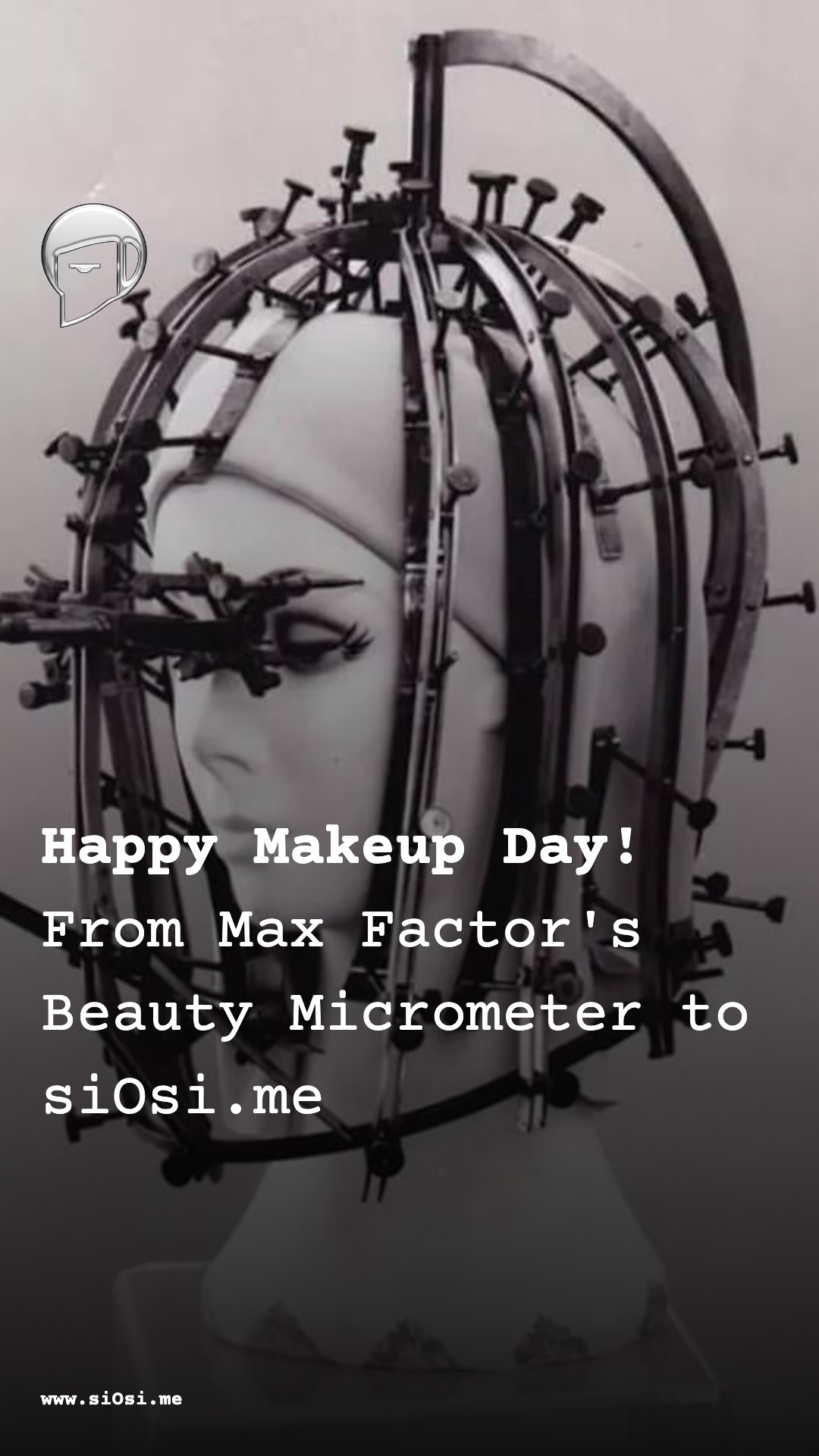
Faces have been canvases for centuries, from ritual lines to playful glows. Ancient kohl strokes once cut through desert light with protective power, turning eyes into dramatic statements. Today the same spirit shows up in sharp wings, velvet textures and liquid highlights that catch every turn of the head. Makeup becomes mood, identity and quiet ritual all at once. Experiment, layer, reveal.
International Makeup Day, observed each year on 10 September, is a relatively recent, unofficial celebration that crystallizes a long, ancient conversation about the painted face, the adorned skin, and the styled body, reframing makeup as an art of emotion, identity, and visual narrative rather than mere correction of flaws. It sits quietly beside more institutional beauty observances, yet its atmosphere is distinctly intimate: a day devoted to pigment on skin, to the choreography of brush and finger, and to the emotional charge of seeing oneself transformed.
Origins and contemporary framing
Sources describe International Makeup Day as a modern, non‑institutional date, lacking formal recognition by organizations such as the United Nations and instead propagated by beauty communities, media calendars, and social networks. The day is consistently noted as occurring annually on 10 September.
Several publications trace its contemporary popularization to the mid‑2010s, in particular to the activity of online beauty figures who used the date to celebrate makeup artistry and encourage experiments with self‑presentation. Some neutral sources point out that, while a specific founding act is difficult to document decisively, the rise of the holiday is clearly linked to the expansion of social media platforms such as Instagram, YouTube and Facebook and the proliferation of tutorials, product reviews, and photographic “looks” shared globally. The emphasis is on makeup as an accessible artistic practice, shared peer‑to‑peer, rather than on institutional prestige.
Other sources distinguish between International Makeup Day and similarly named observances such as International Make‑Up Day dedicated to reconciliation between people, noting that the cosmetic‑centered meaning has effectively developed as a parallel, visually oriented interpretation of the phrase, anchored in September 10 but focused on beauty and style.
Aesthetic and visual impact
Although the holiday itself is only a date on the calendar, its cultural impact lies in the way it foregrounds the face as canvas and the body as surface for visual composition. Anthropological accounts cited in discussions of the day recall that the earliest face and body painting likely served ritual, disguising or symbolic purposes long before “cosmetics” in the modern sense existed. References to ancient Egypt evoke heavily lined eyes using kohl or antimony, deep black strokes encasing the gaze, and malachite or other minerals adding greenish, shimmering halos around the eyelids. These early materials fused function and spirituality: the stark contrast of black around the eyes cut through desert light, while the application itself had protective, sometimes sacred connotations.
In writing about International Makeup Day, contemporary outlets often juxtapose such historical images with modern practices, drawing a visual timeline from ritual pigments to social‑media‑ready highlighter. The silhouette of the face changes across this arc:
- In ancient and classical references, facial structure is asserted through strong lines at the eyes and brows, pale or subtly tinted skin, and occasionally reddened lips or cheeks, resulting in a graphic, mask‑like presence.
- In later centuries, including European court cultures, the powdered face, rouged cheeks, and stylized beauty marks create a soft, powdered oval, more cloud than mask, with hair arranged as architectural volume above.
- Today, the visual vocabulary celebrated on International Makeup Day is more fragmented and plural, ranging from hyper‑natural “no‑makeup” makeup, where texture and light are gently manipulated to simulate an untouched complexion, to saturated, editorial looks with sharp contour lines, multi‑colored eyeshadow gradients, and reflective, almost liquid highlights.
The day therefore serves to underscore this multiplicity. Publications describe it as honoring not only cosmetics but also the creativity of makeup artists and enthusiasts, the art of “creating a look” and highlighting individuality. The visual language is expansive: eyeliner becomes calligraphy; blush becomes mood; lip color becomes declaration.
Signature visual language: lines, colors, textures, movement
Accounts of the day repeatedly invoke the idea of makeup as a form of visual art, which allows us to read its aesthetic in formal terms.
Lines and shapes
- Eyeliner remains central, a decisive line controlling the expression of the eye. Histories referenced in holiday articles recall the continuous thread from ancient kohl to contemporary winged or graphic liner. A thin, close line along the lashes gives a subtle intensification of the gaze; a sweeping, upward wing changes the perceived tilt of the eyes, adding a sense of flirtation or defiance. A thick block of liner up to the crease creates a frame, turning the eye into a luminous negative space within a dark boundary.
- Brows are treated as sculptural strokes: brushed up and softened to suggest openness and youth, or sharply edged to specify authority and drama. Their thickness and curvature redraw the upper contour of the face.
Color
- Articles about International Makeup Day emphasize the wide spectrum of contemporary color use, from earth tones that echo clays and ochres of antiquity to highly synthetic neons and metallics. Warm browns and terracottas evoke the tactile, dusty palette of early pigments, while blue shadows or lipsticks invoke modernity and fashion editorial traditions.
- Red remains particularly charged: historically linked to blood, vitality, and eroticism, the red lip or cheek continues to be a visual shorthand for presence, energy, and intention. A full matte crimson lip anchors the entire face, a saturated rectangle of color that resists ephemerality; a sheer rose wash suggests translucence and vulnerability.
Texture
- Texture is a crucial, though often understated, language. Historical references to chalky powders, white lead, and matte pigments remind readers that for centuries the desired finish was velvety, opaque, and slightly unreal.
- Modern International Makeup Day coverage focuses on the coexistence of matte and luminous surfaces: velvety foundation and eyeshadow contrasted with liquid highlighters, balmy glosses, and luminous creams. The play of textures creates movement in stillness: the light travels across cheekbones and lids, making the face seem to shift under different angles.
Movement
- While makeup itself is static, its placement anticipates motion. Highlighter placed on the top of the cheekbone and the bridge of the nose catches light when the head turns; mascara and lash extensions exaggerate the flutter of blinking, turning a minor bodily movement into a stylized gesture.
- Several sources note the role of makeup artists in film and theater, reminding readers that makeup is designed not only for close inspection but also for performance under changing light and at a distance. This cinematic perspective infiltrates everyday looks: contouring mimics stage lighting, and setting sprays are discussed in terms of longevity through hours of movement.
Hair, posture, and the body
Though the day’s title highlights makeup, articles describing it often situate cosmetics within a broader ensemble that includes hair, posture and clothing. The face is rarely imagined in isolation.
Hair frames the aesthetic:
- Straightened, sleek hair next to precise, graphic eyeliner produces a clean, linear composition, an emphasis on clarity and contemporaneity.
- Voluminous curls or textured coils paired with soft, blurred lipstick and diffused eye color generate a more atmospheric impression, where movement and softness dominate.
Posture and facial expression complete the visual message. The habit of photographing makeup looks, particularly for social platforms, encourages head tilts, chin lifts, and deliberate gazes: eyes lowered to showcase eyelid work, eyes wide open to display iris and lash contrast, chin slightly forward to accentuate contouring and jawline. The body learns to participate in the aesthetic, becoming an extension of the visual design laid down by brush and pigment.
Philosophy and attitude toward beauty and the body
The discourse around International Makeup Day is heavily suffused with notions of self‑expression, individuality, and empowerment through visual modification. Sources explicitly state that the holiday celebrates makeup not only as a tool to “hide imperfections” but as a medium to highlight uniqueness and encourage experimentation.
Several recurring philosophical themes emerge:
- Makeup as art: Articles frame makeup as an art form, likening it to painting or drawing, with the skin as canvas and cosmetics as pigments. This metaphor emphasizes intentionality and technique. It also situates beauty within the history of visual culture: from ritual markings to modern editorial makeup, the painted face is a cultural artifact.
- Makeup as self‑expression: Authors stress that the practice allows individuals to express personal style, mood, and identity. A person might choose sculpted cheekbones and nude lips for a restrained, minimal elegance, or opt for glittering lids and bold lip color to externalize joy or rebellion.
- Makeup as confidence and comfort: References to the role of makeup artists in boosting clients’ confidence suggest a more intimate philosophy: beauty as felt stability, as a way of inhabiting one’s body with greater ease. The act of application is frequently depicted as ritual – slow strokes, careful blending, and a quiet moment alone before facing others.
This attitude diverges from purely corrective or prescriptive views of beauty. Rather than dictating norms, International Makeup Day celebrates the possibility of divergence and multiplicity, echoing social media environments in which unconventional looks and non‑normative aesthetics circulate alongside more conventional glamour.
Emotional atmosphere and contemporary resonance
How does International Makeup Day feel in cultural terms today? Sources describe a modern, community‑driven observance, deeply intertwined with digital culture yet anchored in the embodied experience of touch, color, and reflection.
There is an atmosphere of intimacy:
- People share close‑up images of their faces, revealing pores, textures, and the meticulous work of blending.
- Tutorials, whether professional or amateur, invite viewers into the quiet choreography of application – brushes tapping, sponges pressing, fingers diffusing pigment at the warmth of the skin.
The emotional palette is broad:
- Playfulness in experimental color combinations and graphic shapes.
- Serenity in minimalist looks that barely register as makeup, a soft veil of enhancement that feels like a whisper on the skin.
- Boldness in avant‑garde designs, where the face is treated almost as a poster or abstract painting, with blocks of color, glitter, or asymmetric lines proclaiming a refusal of subtlety.
The glow the day evokes is not only literal highlighter on cheekbones, although that motif is prevalent, but a more diffuse sense of presence: the quiet satisfaction of recognizing oneself in the mirror after constructing a visual identity with care. The radiance is partly psychological – the way a chosen look organizes the day, gives shape to social encounters, and frames the body as a coherent aesthetic statement.
Intersections with broader beauty history
Some coverage situates International Makeup Day within the longer trajectory of global beauty observances. For example, International Beauty Day, formally associated with professional aesthetic and cosmetology organizations and celebrated on 9 September, emphasizes institutional recognition of beauty practice. By contrast, International Makeup Day is portrayed as informal, grassroots and unregulated, dedicated more to everyday artistry than to industry standards.
This difference influences its cultural and visual impact:
- International Beauty Day evokes salons, standards, professional treatments and aesthetic theory.
- International Makeup Day conjures dressing tables, palettes, mirrors lit by natural light or ring lights, and hands hovering over faces in domestic or studio spaces.
In this sense, the holiday becomes a lens through which one can observe the democratization of beauty practice. Techniques once reserved for studio artists – contouring, cut crease eyeshadow, precise color correction – have migrated into everyday routines through widely shared visual instruction. The aesthetic vocabulary of fashion shoots and cinema now circulates within ordinary bathrooms, bedrooms and small makeup stations worldwide, making International Makeup Day a quiet acknowledgment of this diffusion of visual expertise into daily life.
Contemporary visual codes and their enduring feeling
The contemporary looks highlighted around International Makeup Day synthesize many centuries of visual coding:
- Ancient kohl lines reappear as black or colored eyeliner, now in liquid, gel or pencil form.
- Powdered skins of early modern Europe are echoed in soft‑focus foundations and setting powders that blur texture.
- Ritual face paintings resurface in editorial and avant‑garde makeup, where geometric shapes, stripes or dots cut across the conventional boundaries of “wearable” beauty.
What remains constant is the emotional presence of the made‑up face. Whether subtle or spectacular, the altered visage carries an aura – a chosen mood – that can be felt even without knowledge of specific products or techniques. International Makeup Day, as described in current sources, crystallizes that aura for a single date, encouraging reflection on the continuity between ancient markings and modern palettes, between sacred ritual and personal routine.
The result is an annual, visually charged pause: a day in which the face is understood not merely as biological surface but as site of composition, storytelling, secrecy and revelation.