
Sun in LibraMoon in TaurusWaning Gibbous
Virgil Abloh: Architecture Meets Streetwear
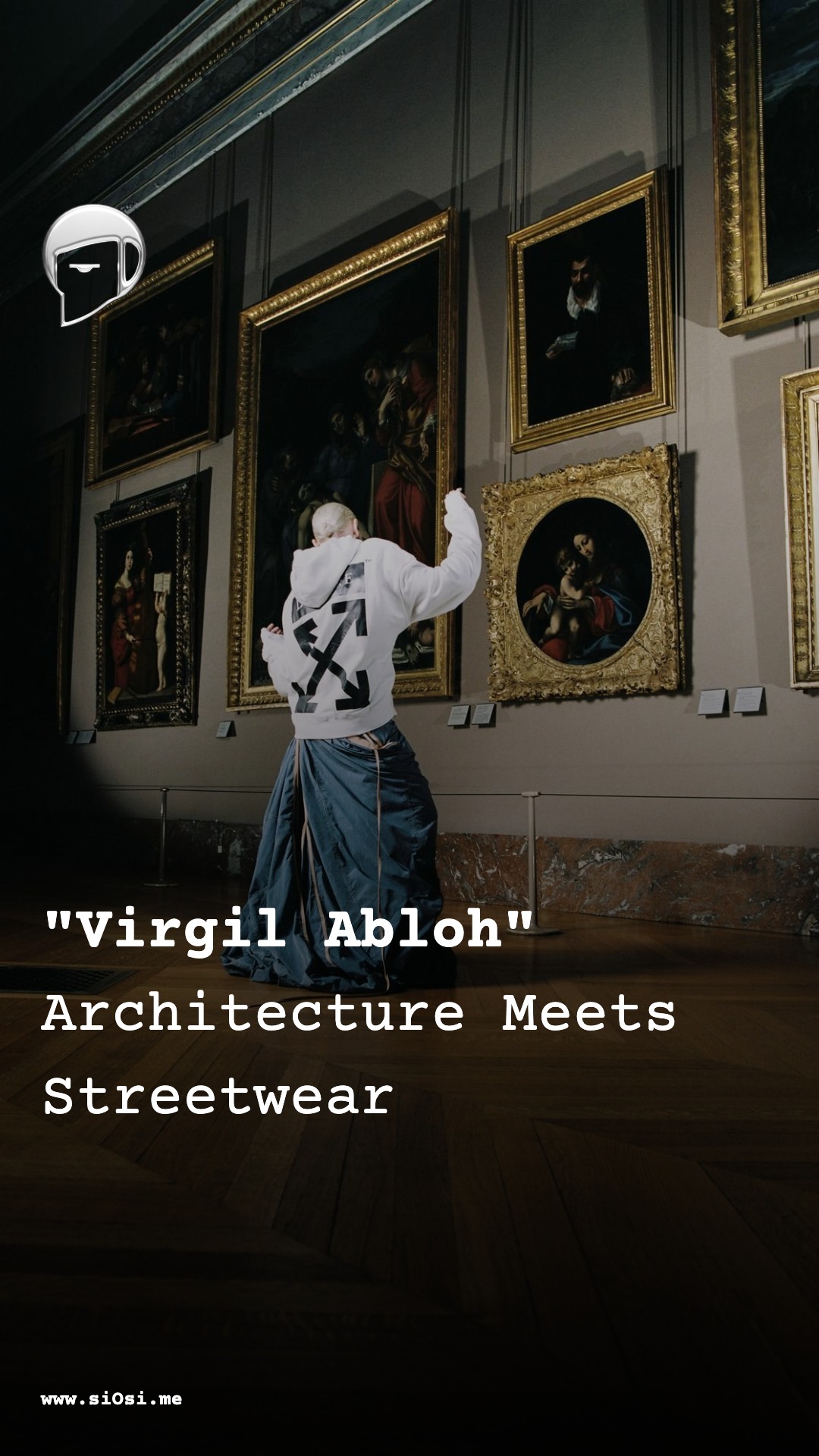
Virgil Abloh entered the world in 1980 and spent the next decades rewriting what luxury could look like. Trained as an architect, he built clothes with clean lines, negative space, and those signature quotation marks that turned every garment into a question. Diagonal stripes and exposed seams showed the construction instead of hiding it, letting the form do the talking. His Off-White hoodies carried the precision of couture while keeping the energy of the street. The result felt both sharp and welcoming, like luxury finally learned how to speak to everyone.
The Visual Language of Virgil Abloh: Architecture, Irony, and the Democratization of Luxury
Virgil Abloh's birth on September 30, 1980, in Rockford, Illinois, preceded by decades the aesthetic revolution he would eventually author—one that fundamentally altered how luxury and streetwear could coexist, not as opposing forces, but as complementary expressions of contemporary identity. His visual philosophy emerged not from fashion tradition, but from the disciplined spatial thinking of architecture, the conceptual rigor of graphic design, and the democratic ethos of hip-hop culture.
The Architecture of Restraint
Abloh's training as an architect at the Illinois Institute of Technology established the foundational grammar of his design language: clarity, proportion, and the strategic use of negative space. This architectural sensibility manifested not as ornament or excess, but as a studied minimalism—a visual restraint that paradoxically amplified meaning. His designs operated through subtraction rather than addition, a philosophy that would become his signature across both Off-White and his later work at Louis Vuitton.
The visual vocabulary Abloh developed relied upon geometric precision: diagonal stripes rendered in bold contrast, quotation marks deployed as both literal and metaphorical devices, industrial-inspired motifs that referenced construction and scaffolding. These elements possessed an almost austere beauty—clean lines, high contrast between figure and ground, a palette that favored black, white, and neutral tones punctuated by strategic color. The effect was one of intentional incompleteness, as though each garment existed in a state of becoming rather than arrival.
The Quotation Mark as Visual Gesture
Perhaps most distinctively, Abloh employed quotation marks as a recurring visual motif, a typographic gesture that conveyed conceptual distance and ironic self-awareness. This was not mere decoration; it was a philosophical stance made visible. The quotation marks suggested that fashion itself—particularly luxury fashion—warranted examination, that assumptions about taste and value deserved interrogation. They created a visual language of skepticism rendered elegant, of critique expressed through form rather than polemic.
This approach resonated profoundly with millennial and Generation Z sensibilities, audiences seeking authenticity and self-aware irony in their aesthetic choices. The quotation marks functioned as visual permission to question, to hold luxury at arm's length while simultaneously embracing it—a both/and rather than either/or proposition.
The Bridge Between Worlds
Off-White, launched in 2012 and formalized in 2013, embodied Abloh's central aesthetic preoccupation: the space between categories. The brand's very name invoked this liminal territory—neither pure black nor pure white, but the conceptual and chromatic middle ground. Visually, this manifested in garments that borrowed the silhouettes and construction methods of streetwear while employing the materials and precision of luxury tailoring. A hoodie possessed the proportions of athletic wear yet the finish of haute couture. A sneaker incorporated the graphic language of industrial design.
The aesthetic impact was one of productive tension. These garments did not resolve themselves into comfortable categories; instead, they maintained a deliberate ambiguity that forced viewers to reconsider their assumptions about what luxury could look like, what streetwear could aspire to, and how these registers might speak to one another.
Color, Texture, and Material Honesty
Abloh's palette remained notably restrained: blacks, whites, grays, and neutrals formed the foundation, with strategic interventions of color that felt considered rather than decorative. This chromatic discipline created visual clarity and allowed the structural elements—the quotation marks, the diagonal stripes, the geometric compositions—to read with unmistakable precision. The effect was one of visual honesty, as though the garment refused to seduce through color alone but instead demanded engagement with form and concept.
Texturally, Abloh favored materials that revealed their construction: visible stitching, exposed seams, industrial zippers, and hardware that announced itself rather than concealing its function. This material transparency aligned with his architectural training—the refusal to hide the mechanics of making, the celebration of structure as aesthetic in itself. A garment's construction became its ornament.
The Emotional Resonance of Accessibility
The broader cultural impact of Abloh's visual language lay in its emotional accessibility despite its conceptual sophistication. His designs possessed an approachability that belied their intellectual rigor. A viewer need not understand the architectural references or the ironic deployment of quotation marks to feel the clarity and intention embedded in a garment's proportions and construction. The work communicated simultaneously on multiple registers: as wearable fashion, as conceptual art, as social commentary, as pure visual form.
This democratization of luxury—not through price point alone, but through visual language that refused elitism—represented a fundamental shift in how fashion could express itself. Abloh's aesthetic suggested that luxury need not announce itself through complexity or ornamentation; instead, it could reside in clarity, in the precision of a line, in the integrity of construction made visible.
Legacy and Continued Resonance
The visual language Abloh established continues to evoke a particular emotional register: one of intelligent restraint, of irony held lightly, of form that respects the viewer's intelligence. His work maintains a contemporary freshness precisely because it avoided the decorative excess that dates so quickly. The diagonal stripes, the quotation marks, the geometric compositions—these elements possess an almost timeless quality, their power deriving not from novelty but from conceptual clarity.
His 2018 appointment as the first African American Artistic Director of Louis Vuitton's menswear division represented not merely a personnel decision but a visual and cultural statement: that luxury fashion could be reimagined through a sensibility rooted in streetwear, architecture, and conceptual art; that the democratization of aesthetic authority was not a threat to luxury but its evolution.